Genre-defying Canadian poet Anne Carson wins 2026 Nobel Prize in Literature
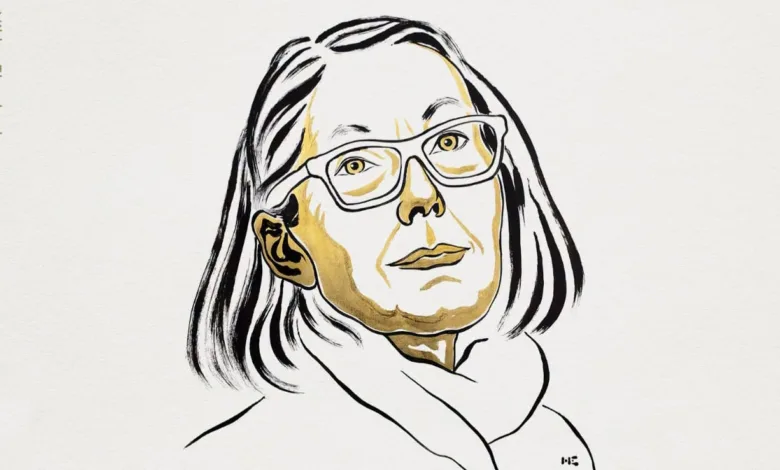
Canadian poet and writer Anne Carson won the 2026 Nobel Prize in Literature “for her bold and inventive oeuvre that, in playful dialogue with the classical tradition, has created new forms for contemporary literature”, the Swedish Academy said on Thursday.
The prize, awarded by the Swedish Academy, is worth 12 million Swedish crowns ($1.2 million).
“She was very taken by surprise,” said Ingrid Carlberg, permanent secretary of the academy, which awards the prize.
Carlberg said Carson was currently in Iceland, where she was “listening to the wind”.


Carson’s work often blends verse, prose, dialogue and translation in a genre-defying mix. Born in Toronto, the 76-year-old has also held Icelandic citizenship since 2022 and has spent considerable time on the Arctic island in recent years.
She is widely known for her translations of classical Greek literature, which heavily influences her work, ranging from opera libretti to literary criticism and verse novels such as “Autobiography of Red”, published in 1998.
“Almost all her literary production has centred upon the intersection between the philologist’s obsession with words and the poet’s desire for new meaning,” the Academy said.
It added that Carson had identified the etymology of words as the starting point for her work, while describing her translations from Classical Greek as independent works in their own right.
Her style is exemplified by “Norma Jeane Baker of Troy”, a 2019 performance piece that combines the stories of Helen of Troy in Euripides’ play “Helen” and Marilyn Monroe.
The Academy also praised Carson’s ability to explore “the possibilities of writing”, noting that the literary sketch had become particularly important to her.
It cited “Float”, a 2016 work consisting of 22 chapbooks on different subjects that can be read in any order.
Often regarded as her greatest work, “Autobiography of Red” demonstrates Carson’s ability to “actualise the classical literary tradition”, according to the Academy. The book revisits questions such as what happens when someone loves a person who will ultimately destroy them.
Drawing on more modern inspiration, Carson reflected on Albertine, one of the narrator Marcel’s love interests in Marcel Proust’s “In Search of Lost Time”, in her book “The Albertine Workout”.
Carson spent seven years reading Proust’s work and said in a 2016 interview with Canada’s CBC Radio One that she experienced withdrawal symptoms after finishing it. She subsequently wrote “The Albertine Workout” as a way of prolonging the experience.
“You think life goes on after Proust, but it seems so grey,” she said.
Carson began taking boxing lessons while in her 70s after being diagnosed with Parkinson’s disease. The sport is recommended as therapy because it helps with hand-eye coordination and sequencing of actions.
She later reflected on the disease’s effect on her handwriting during an interview at the Louisiana Literary Festival in Denmark in 2024, saying: “I scrub out whole paragraphs in shame … the shame of bad handwriting.”
Carson, who has taught classics at universities in Canada and the United States, has said she considers herself a visual artist as much as a literary one.
“I think of making a poem as making an object. I have always thought of them more as drawings than as texts, but drawings that are also physically enterable through the fact of language,” she said in the CBC interview.
Carson among favourites
Carson had been among the favourites to win this year’s prize, according to bookmakers Ladbrokes. She joins recipients including Alexander Solzhenitsyn, Alice Munro and Ernest Hemingway.
The award has often divided opinion among book lovers. The Academy has faced criticism for overlooking literary giants such as Leo Tolstoy, Virginia Woolf and Jorge Luis Borges, as well as accusations of being too obscure in its choices and snubbing US authors.
However, defenders argue that the Academy has also made popular choices, including Colombia’s Gabriel Garcia Marquez, who won in 1982, and Doris Lessing, who won in 2007. They also say part of its role is to highlight lesser-known literary traditions.
Last year’s Nobel Prize in Literature was won by Hungarian writer Laszlo Krasznahorkai.
Established in the will of Swedish dynamite inventor and businessman Alfred Nobel, the Nobel Prizes for achievements in literature, science and peace have been awarded since 1901.
Literature was the fourth Nobel Prize announced this week, following the prizes for medicine, physics and chemistry. The winner of the Nobel Peace Prize will be announced in Oslo on Friday.
($1 = 10.0190 Swedish crowns)
Credit: Reuters