Depth of Malawi’s warmth: A travelogue — by Omoniyi Ibietan
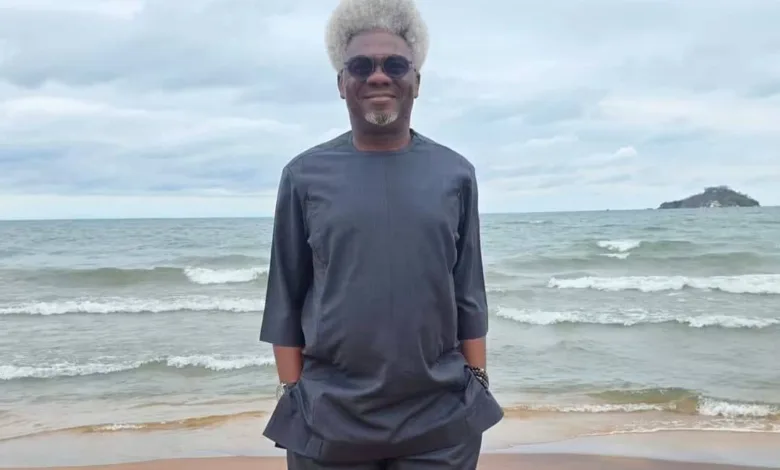
On the last leg of my return to Nigeria from Lilongwe, the aircraft went for the regulated zenith in its navigational course and headed to the western route to connect Sudan, then moved towards Cameroon en route Lagos. I did not know we weren’t going to land in Lagos at once as scheduled. The Ethiopian Airways craft, an Airbus 350-900, was massive enough but unable to dare the storm that had produced unusual turbulence some 20 minutes to Lagos. Hence, the pilot announced that we would land first in Lome and we were there for a while until it was safe to head back to Lagos.
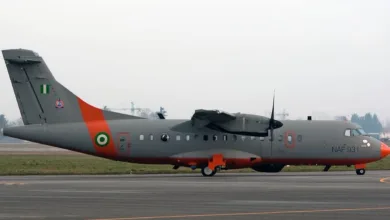
Unbeknownst to me, tragedy had struck in my country. Many people feared dead (now confirmed), as the military aircraft carrying them “disappeared from the radar”, ultimately downing somewhere in Igbokoda, Ondo State where it crashed into a swamp. May the victims’ families and those who loved the departed be comforted.
I had pieced fragments of thoughts and information together hoping to share meaning about Malawi. Then, I halted in exercise of discretion and in deference to the Presidential declaration of three-day national mourning of the victims of the air disaster. But as I had hinted, following our successful take off at Addis Ababa, my heart went back to Malawi as I reflected on all that had happened in the past week, from Lilongwe to Salima and back to Lilongwe to fly back home.
Now, to the brass tacks. As the dates scheduled for Nigeria’s hosting of the World Public Relations Forum (WPRF), which incorporates the 37th Annual Conference of the African Public Relations Association (APRA) get closer, Malawi created another opportunity for APRA to remind its stakeholders about the Abuja Forum in November. The locale is the annual conference of the Public Relations Society of Malawi (PRSM), marking its 10th Anniversary, and I had been invited to facilitate a masterclass on “ARCHITECTING INFLUENCE: COMMUNICATION, RELATIONSHIP AND LEADERSHIP EFFECTIVENESS”, to resonate with the conference’s thematic focus – “A DECADE OF INFLUENCE: ADVANCING PROFESSIONALISM AND IMPACT IN STRATEGIC COMMUNICATION”. The conference was internationalised and impeccably organised, drawing participation from Kenya, Zambia and Nigeria.


It was an auspicious moment for PRSM to give the most antiseptic expression to Malawi’s sobriquet, ‘Warm Heart of Africa’, a fitting moniker that speaks to Malawi’s reputation as a land of pleasant, welcoming, hospitable, communal and respectful people – attributes Malawians extend generously to visitors. The profundity of Malawi’s warmth is hard to capture in a single piece. It is multi-perspectival. One dimensioning of it is ecological. Hydrologically, Lake Malawi, a shared natural resource of three principal countries – Tanzania, Mozambique and Malawi – presents a depth in aquatic splendour, resources and unique biodiversity.
Otherwise called Lake Nyasa (Tanzania) or Lago Niassa (Mozambique), the Lake – whose ‘water layers do not mix’ – took life from direct rainfall and it is also fed by hundreds of rivers, with Ruhuhu being its sole major tributary, while Shire takes the lake’s water out into Zambezi, Africa’s known fourth longest river, cascading through six countries and constituting the largest deposit into the Indian Ocean. Lake Malawi is confirmed in volume as the world’s fourth largest freshwater, in area as the ninth largest lake but unarguably, it is Africa’s third largest and second deepest lake. Accommodating some 700 species of cichlid (a large, assorted fish kind), the lake is home ‘to more species of fish than any other lake in the world’.
Emblematic of Malawi’s distinctiveness, the Lake is a huge story but the depth of Malawians’ warmth is steeped in unique Africanity, especially in the gravity, electricity and connection they feel with other Africans; and the feeling is so matchless the moment you step on their soil. I got more than a feel the moment I landed in Lilongwe. I was treated like a prince by the operators of the special lounge at Kamuzu International Airport, who handled my protocols on arrival (and later departure) with speed, precision and finesse. Then, they proceeded to hand me over to the genial Vice President of PRSM, Thomas Chafunya, who came with another member of the Society to fetch me and my sister, Mwamba Chasaya Siame, former President of the Zambian Institute of Public Relations and Communication; Siame flew in from Lusaka. And we all had such a pleasant ride to Salima, the resort town venue of the Conference, some 100 kilometres east of Lilongwe. Salima, with its characteristically beautiful shoreline patronised (like Zanzibar’s beaches) by fun seekers including those getting married (I attended one in Salima), is on the southwestern-southeastern part of the great Lake. There, KM Rachel (Rachel Kalera-Mhango), Madam President of PRSM was waiting to receive us.
The reception was quite ceremonial and evocative, a unique festival whose denouement was equally significant – a cocktail sponsored by the Malawi Housing Corporation. The galaxy of sponsors and partners for the event is another story all together. It is a long list of private, public and non-governmental entities, a proof of Malawi’s collaborative, cooperative life and value creation.
The business session was huge and spectacular. We listened to the avuncular Dr. Justin Saidi, Chief Secretary of the Presidency and Cabinet of the Republic of Malawi (Malawi’s equivalent of the Secretary to the Government of the Federation in Nigeria) who was the special guest of honour. He spoke so kindly, responsibly and with agency, bringing to the process the imprimatur of the President of the Republic, Prof. Arthur Peter Mutharika. Of course, we head loud and clear Madam President’s welcome notes, prefaced by the anecdotal tribute to her dad and mentor, a dedicated patriot of Malawi. Rachel was quite thankful for her colleagues’ support and welcomed a deeper collaboration with the government to shape public relations and strategic communication in the next decade. She placed on record the commitment and sacrifices of her predecessors and the torchbearers of PRSM. Then, my brother, Arik Karani, President of the Public Relations Society of Kenya (PRSK) and concurrently the President of APRA, keynoted the conference, seizing the attention of the delegates with his profound and aesthetically pleasant presentation on storytelling.
Conference would later deepen the impact of Karani’s presentation with a panel discussion where he, Siame, myself and Lorraine Lorra Lusinje had a conversation before hundreds of participants, anchored by a leader of the APRA’s Students and Young Professionals (SYP) Group, Alex Khozi Chimbizi, a final-year student of Communication and Journalism at Lilongwe University of Agriculture and Natural Resources (LUANAR), who confessed he was not ready but did an excellent job of moderating the conference’s most interrogative and interpretive session. There, we problematised and situated African storytelling in the context of emergent global communication order. We reasoned together and shared meaning about how public relations practitioners in African can deploy orature, stay African and be authentic without losing global appeal; How strategic storytelling in public relations can have local resonance and still be scalable cross borders; What challenges might a Malawian public relations practitioner face while attempting to deploy village-level storytelling in alignment with modern public relations strategies; and how public relations professionals in Africa can adapt to the fast-paced modernisation of communication in order to preserve African orature and oramedia.
My paper, cited earlier, explored the architecture of influence, prioritising truthful, intentional, clear, coherent, sincere, adequate, empathetic, safe, ethical, evidence-based, strategic, regular and accountable communication as foundational to cultivating relationship, building trust, enabling influence and enhancing leadership effectiveness. Inspired by Òrúnmìlà’s philosophy of communication as an act of truthful, healing, “organised, disciplined and insightful expression that sustains well-being of community, helps to dispel fear, worry and generate internal and external wealth” (Ifayemi, 2022); Tomasello (2025) Theory of Intentionality; and Grice Theory of Implicature (1975), I constructed a paradigm that unpacked influence as a communicative principle in which communication, relationship, trust, influence and effective leadership exist as bands in a spectrum where the success of a band is dependent on the successes of its antecedent.
Siame too had made a great presentation outlining steps that would help the birth of PRSM’s enabling Act to be sent to the parliament of Malawi, so the Society can migrate from a legally registered going concern to a legal, chartered recognition. In a chat on the sidelines of the conference, I engaged a group of enthusiastic public relations professionals in Malawi to nudge advocacy (like in Kenya, Ghana, Uganda, and possibly elsewhere), so PRSM can join the league of Brazil (1967), Portugal (1979), Nigeria (1st June 1990), Peru (18th June 1990), United Kingdom (2005), Puerto Rico (2008), Zambia (2022) and perhaps a few other jurisdictions, where public relations practice or national public relations societies have formal, legal status/charters or officially recognised by the State. Nigeria, first in Africa, is following Brazil and Portugal globally – NIPR having been officially and legally recognised on 1st June 1990 with the promulgation of Decree No. 16 (now an Act of the National Assembly), though NIPR’s birth dates back to 1963.
Of course, there were other mind-shaping, immersive presentations on crisis management, personal branding, institutional leadership, wellness and health, public service and communication governance, and of course, the elephant in the room, AI and Data management challenges and implications for reputation, and other topical themes, delivered with warmth, thoughtfulness, civil time management, and impeccable sense of organisation that ran the gamut of the event where masters of ceremonies – Moses Gwaza, Monica Khombe and their colleagues – managed the process effectively with speed, precision and decency.
I surely enjoyed the denouement – first the CSR journey of PRSM to schools and communities in the morning of Day 4. Then, the Award and Gala Night, conducted in Malawi’s unique style – a festival of parade of beauties, styles, cuisines, drinks, music (spiced with the Nigerian genre), dances and landmark intellection. Yes! Intellection and reasoning marked by a thought leadership dinner lecture delivered by Dr. Kwanele Ngwenya, Deputy Group Managing Director of NICO, a Malawian conglomerate; and if you were there, you would love the amazing curation of the award process, particularly its detailed categorisations, objective metrics and judgement executed with rare cognition, character and candour. Really, it is he who dares that wins. Shalom, Malawi.
–Ibietan (PhD) is the General Secretary of Africa Public Relations Association