Why FG’s fuel tax cut is just like what UK and US are doing — by Okoi Obono-Obla
For the past few months, if you buy fuel you have felt it. Petrol that was around N830 is now N1,400 in many places. Many people think it is only a Nigeria problem. It is not.
The world oil market is in trouble again.
Since February this year, the fight between US/Israel and Iran got worse. Yemen’s Houthis, who are backed by Iran, have started firing missiles at Saudi Arabia’s oil facilities. Two oil tankers were attacked in the sea last week. The most important oil road in the world — the Strait of Hormuz, where 20% of the world’s oil passes — is now moving less than 15% of what it used to move.
Result? The price of crude oil that was $65 to $70 before the war is now $105 to $107 per barrel. When crude goes up, petrol goes up everywhere. In Ghana, petrol is up 20%, diesel 29%. In India, private stations like Jio-BP increased price by Rs 5 per litre on Sunday. In the UK, diesel has crossed £2 per litre for the first time.

That is the background to what President Tinubu announced on Sunday.
What did Tinubu government do?
Two things:
Government said it has left N3.3 trillion of its own money on the table. That money is from fuel import tax (15% duty they put to protect Dangote refinery) and other fuel charges. They said “we will not collect it for now” so that fuel will not be more expensive.
NNPC Retail, which has about 900 filling stations across Nigeria, said “for 30 days, we will not take our own profit.” Normally if they buy at N1,400 and sell at N1,470, that N70 is their profit to run stations. For 30 days they will sell at N1,400. They will give priority to public transport drivers — danfo, buses — so that transport fare can come down.
Government also said they want to agree with refiners and importers that wholesale price should not go above N1,350 to stop crazy price jumps.
So why is opposition saying it is subsidy back?
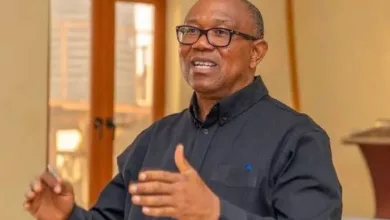
Peter Obi and others said this is “political optics” and tokenism. Their argument: The discount is less than 5%, it is only in 900 NNPC stations out of 24,000 stations in Nigeria, and it is only for 30 days. What happens on day 31? He said one NNPC station will have to serve about 243,000 Nigerians, so many people will not see it.
Some in opposition also said Tinubu has secretly returned subsidy that the Petroleum Industry Act (PIA) removed.
That last part is not correct, and this is where people need to understand the difference.
Tax cut is not subsidy. PIA did not ban tax cut.
PIA 2021 removed subsidy completely. What is subsidy? Subsidy is when government brings money from Federation Account — money that belongs to Federal, State and Local Government — and pays a marketer to sell fuel cheap.
What government is doing now is different:
Waiving tax is not paying money. It is government saying “I will not collect my own tax.” If you are a shop owner and you say “today I will not collect VAT,” you did not pay subsidy to your customer, you just left your own gain. That is what FG did with N3.3 trillion.
NNPC Retail losing profit is not subsidy. NNPC Retail is a company. It can decide to sell without profit for one month from its own pocket. Government did not transfer public money to it. In the old subsidy days, government used to pay NNPC billions to sell cheap. Now, no public money moved.
So legally, PIA is still intact. What FG did is allowed — it is called tax relief or commercial sacrifice.
UK and US are doing the same
In the UK, to stop hardship, former PM Keir Starmer extended a 5 pence fuel duty discount until end of 2026. That is tax they refused to collect, just like Nigeria. G7 countries also agreed to release 100 million barrels of oil from their emergency reserve to force diesel price down. The US pushed for it.
Chancellor Rachel Reeves in UK said they even found extra £52 million to help people using heating oil. All these are temporary relief, not subsidy.
If UK can leave its own tax and release its own reserve for temporary relief during this Middle East crisis, Nigeria leaving its own import duty and asking its own company to forgo profit for 30 days is the same common sense.
Conclusion
This is not about 2027 politics. This is about a global oil shock caused by Houthi attacks on Saudi Arabia, US/Israel-Iran war, and Hormuz blockage that has pushed oil from $70 to over $105.
What Nigeria did — N3.3tr tax waiver and NNPC Retail selling at cost for 30 days — is a standard temporary cushion that even rich countries like UK and US are using. It is not subsidy return under PIA because no public money was paid to keep price low; government only forfeited its own taxes and company profit.
The real question is not whether it is subsidy. It is not. The real question is whether 900 stations and 30 days is enough to reach ordinary Nigerians until Hormuz opens and crude price comes down. If the war continues and crude stays above $100 till end of year as experts fear, government may need to extend the relief or make it wider, just as UK extended its own till December 2026.
For now, it is a relief to cushion pain today without borrowing from our children’s future.