Social media influencers as the new political middlemen — by Adebayo Afolabi
Nigeria’s political campaigns have infiltrated spaces where no one goes looking for politics. A quick scroll through TikTok for comedy, an Instagram check for fashion, or a few minutes on X to catch up on the day, and a campaign message inevitably slips into the feed. It arrives disguised as praise for a policy, an attack on an opponent, or a casual video explaining why a candidate deserves support.
The person delivering the message may have built an audience through makeup tutorials, football commentary, skits, fitness videos or relationship advice. There is no party podium in sight, no campaign banner behind them and sometimes no indication that politics was ever supposed to be part of the page. But their access to an already attentive audience has made them increasingly useful to politicians.
Nigeria has always had political middlemen. Ward leaders, community figures, clerics, radio presenters and newspaper columnists have long helped political messages travel beyond campaign offices. Creators have entered that network with a different kind of influence. Their following is often built through years of familiarity, with audiences returning daily for parts of their lives that have nothing to do with elections.
That familiarity is valuable because political communication has a trust problem. Party statements sound like party statements. Campaign adverts announce their intentions almost immediately. Creators can carry similar talking points into spaces where followers are accustomed to hearing personal opinions, jokes and everyday observations.
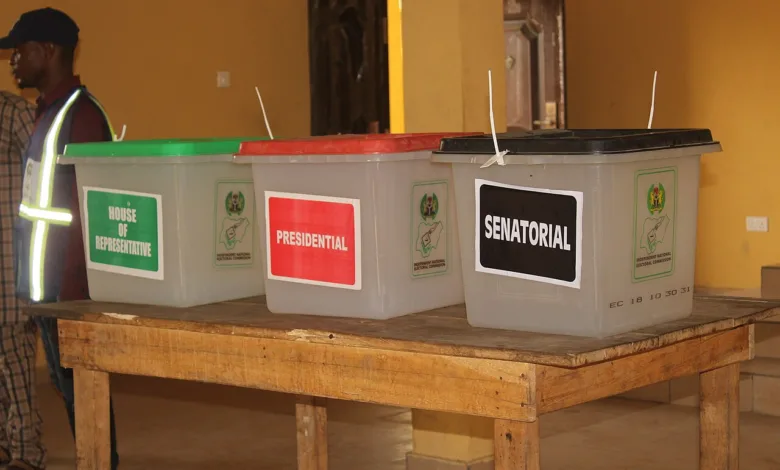
Nigeria’s 2023 election gave a clearer picture of how organised this had become. The Centre for Democracy and Development reported that political parties operated behind unofficial accounts and hired influencers as part of online efforts to promote candidates and shape political narratives. The organisation also documented increasingly organised disinformation campaigns aimed at glorifying some candidates, attacking others and weakening trust in the Independent National Electoral Commission.
TechCabal’s reporting after the election went further into how the business worked. Campaign strategists described paying influencers across X, TikTok, Facebook, Instagram and Snapchat. One influencer said paid posts could arrive already written, while posts drafted by influencers themselves could still be edited by the contractor before publication. Pay depends on audience size, but the end result is the same. Political messaging blends directly into personal content, operating far beyond the obvious footprint of a billboard or television commercial.
When a political advert does not look like one
A creator can support a politician without being hired by anybody. Many do. Others campaign openly, attach themselves to causes or use their platforms to criticise the government. The difficulty begins when paid political work looks identical to an ordinary personal opinion.
A beauty creator promoting a skincare company will often make the commercial relationship clear. Followers know they are looking at an advert. Political promotion can arrive with far less disclosure. The creator speaks in the same voice, records in the same room and posts to the same audience. Unless the relationship with the campaign is disclosed, the viewer is left to work out what sits behind the message.
The scale of formal online political spending already shows how seriously campaigns take digital attention. Between January and mid-March 2023, registered political advertisers spent ₦28.78 million on Facebook and Instagram political content, according to Meta Ad Library data cited by the European Union Election Observation Mission. Those adverts generated about 8.28 million impressions.
Official ads leave a paper trail. Influencer campaigns operate in the shadows. As 2027 approaches, that blind spot is becoming impossible to ignore.
A campaign does not need every creator on its payroll. It only needs enough people with large or trusted audiences to keep certain messages circulating. One post becomes a screenshot. The screenshot enters WhatsApp groups. A claim made on X becomes a TikTok reaction, then a discussion on radio or at a newspaper stand. CDD observed this movement between online platforms and offline conversations during the 2023 election period.
Political communication has always depended on repetition, but social media gives repetition extraordinary speed. The format also changes the message itself. Government policy is rarely simple. Fuel subsidies, exchange rates, electricity pricing, taxation and insecurity cannot be properly explained in a few catchy lines. Online, those subjects compete for attention with comedy videos, celebrity news and whatever controversy is dominating the feed that day.
Creators know what keeps people watching. A calm explanation may disappear with little engagement, while an angry accusation attracts thousands of comments and reposts. The commercial incentives of social media do not vanish when the topic turns to governance. As a result, complicated public debates get flattened.
Claims become shorter, certainty becomes more attractive and outrage travels quickly. CDD documented tactics around the 2023 election that included hashtag manipulation, controlled networks, false impersonation and manipulated audio and video. It also noted that online narratives could influence what later appeared in mainstream political coverage.
Creators can also use the same reach to do useful political work. Online campaigns helped spread information around voter registration and participation ahead of the 2023 election, while creators and other digital actors have given public complaints an audience that traditional institutions may not have provided.
That is precisely why treating every political creator as a propagandist would miss the point. Their influence comes from the fact that they occupy a space between formal politics and ordinary online life. They can explain, campaign, entertain, criticise and advertise without changing platforms or, in some cases, changing tone.
The middleman has changed
A local political organiser once depended largely on physical networks. A broadcaster needed airtime. A newspaper columnist needed a publication. A creator needs a phone, an audience and enough attention to keep that audience returning. The barriers have fallen, but the power attached to reach has not.
During the 2023 campaign, the EU mission identified hundreds of supporter accounts operating around candidates and parties. TechCabal also found that campaign teams worked with social media consultants, content creators and influencers as distinct parts of their digital operations.
By 2027, few serious campaigns will be approaching social media as an experiment. They have already seen how quickly online narratives can spread, how cheaply creators can reach tightly defined audiences and how easily a political message can be folded into content that does not resemble conventional campaigning.
It all comes down to one question: who funded the post?
People do not need protection from political opinions they dislike. They do need to know when an opinion placed in front of them was purchased by a campaign, political consultant or interested group. A sponsored political message should not become harder to recognise simply because it comes from a creator originally followed for jokes, fashion or football.
Political advertising is most powerful when the audience cannot immediately see the machinery behind it. Nigeria’s creator economy has given campaigns access to voices that already feel familiar, personal and independent. If money is helping decide what those voices say during an election, the audience should be able to see that too.
Afolabi is a Nigerian writer interested in democracy, governance, and public policy in Africa. His work examines political accountability, democratic institutions, and the ways public policy shapes everyday life.