Danger of confusing excitement with power — by Chioma Ahaghotu
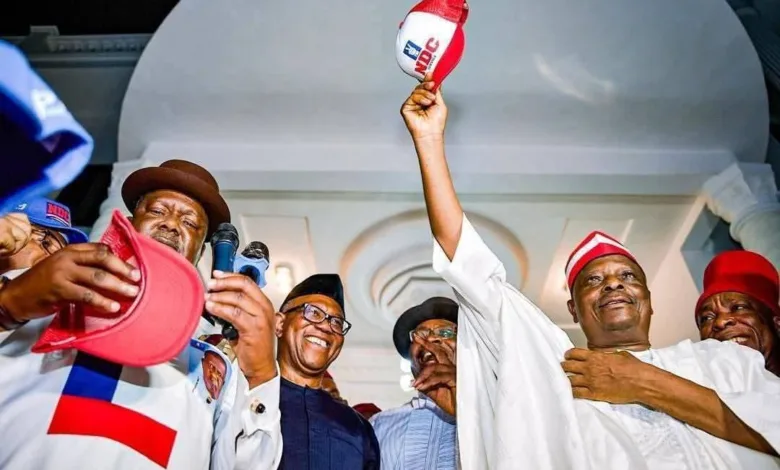
What happened in 2023 around Peter Obi was emotional alignment on a massive scale. People saw themselves in him and rallied. That kind of momentum is rare, and it should have been the foundation of something permanent.
Six million votes is not beans. It is political currency. Real currency. The kind you convert into control, party machinery, legislative blocs, loyal operators, and negotiation power. If that conversion doesn’t happen, then those votes were never leveraged. They were simply counted.
Labour Party was the one environment where Obi had clear leverage. All of the party’s national relevance in 2023 was tied to him. That created a window to shape leadership, install structure, enforce ideology, and build a pipeline of people who move when he moves.
He couldn’t shape Labour where he had leverage, was it ADC he could?

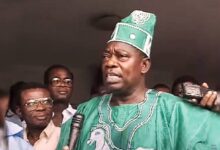
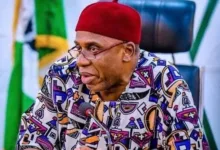
What you’re seeing now is a continuation of the same pattern. Moving into new alignments and coalitions, entering spaces he did not build, and operating within structures he does not control.
Look at Rabiu Kwankwaso for contrast. He does not “own” a party in the literal sense, but he built a movement that functions as political leverage. His base is organized, loyal, and transferable. Wherever he goes, that structure follows. That is why he remains relevant in negotiations regardless of electoral outcomes.
That is the difference.
One built a movement that can be converted into bargaining power.
The other built a movement that peaks during elections and fades after.
Now the conversation has shifted again, back to alliances, back to coalitions, back to structures that were built over time by other actors. The same structure Obidients dismissed as unnecessary.
Yet everything keeps returning to it.
Structure.
Numbers.
Machinery.
You cannot keep moving from one platform to another and call it strategy when you do not control any of them.
That pattern, stepping in during momentum and stepping out after elections, does not signal independence. It points to a lack of control. And that has been the consistent issue.
Leadership is not measured when fans are cheering. It is tested by what remains when that energy fades.
After 2023, there should have been consolidation. Party actors aligned. Elected officials should have been coordinated. A visible internal structure reflecting his ideology in action.
Instead, the lawmakers who rode that wave entered the system and blended into it. They did not form a coherent bloc or act as a pressure group. There was no consistent internal opposition that reflects his message. That absence is visible. You saw it and pretended it didn’t matter.
That is not a movement evolving into power.
It is a movement dissolving into the system it set out to challenge.
And it comes back to influence.
Influence is not what people say about you online. It is what people do because of you, especially when you are not present.
Where are the lieutenants?
Where are the operators shaped in his image?
Where is the internal resistance within the National Assembly of Nigeria that mirrors his public stance?
Even on something as visible as the SUV controversy, those who came in on that momentum could not be coordinated to reflect the same position he publicly held.
That disconnect is not incidental. It points to structural weakness.
Also stepping out after elections and returning during the next cycle is not discipline. It creates a reset. And in politics, resets cost ground. The actors who dominate systems are building continuously, placing loyalists, expanding networks, and reinforcing control.
Power is maintained daily, not seasonally.
By 2019, he had already been on a presidential ticket with Atiku Abubakar. The exposure was there. The ambition was clear. 2023 brought a new generation of voters and a level of visibility he had not had before.
That should have translated into deeper control.
Instead, the same gaps remain.
What is not addressed early becomes more difficult to fix later. The same weaknesses begin to demand more time, more energy, and more attention when pressure increases.
That is what is playing out now.
Because politics is not outrage. It is not sentiment or moral positioning.
It is numbers, structure, and machinery.
Movements bring attention but structures hold power.
What you are seeing is what happens when one is built and the other is neglected.