Braithwaite, a custodian of our national conscience — by Bisi Akande
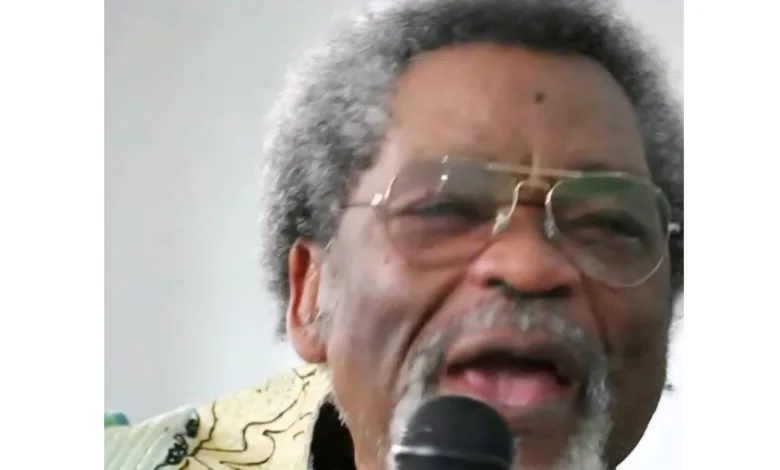
Today, we gather not merely to remember a man, but to reflect on a standard—a standard of ethics, of courage, of conviction, and of able leadership. Dr. Tunji Braithwaite was not just an ordinary lawyer, nor was he just a run-off-the-mill politician; he was, in the truest sense, a custodian of conscience in a society too often tempted by compromise.
That is why today must not be a ceremony of nostalgia; it must be a moment of interrogation—of ourselves, of our institutions, and of our leadership—because at the heart of Dr. Braithwaite’s life was one enduring principle: leadership is not a title, it is a moral burden.
In every sphere of life—government, business, civil society, even within the family—the quality of leadership determines the destiny of the people. Where leadership is disciplined, society advances; where leadership is corrupt, society decays; where leadership is courageous, the people are inspired; but where leadership is timid, the people are abandoned.
Dr. Braithwaite understood this with uncommon clarity. He stood in courtrooms and faced power without fear; he defended Chief Obafemi Awolowo in one of the most defining trials of our history, and he stood for Fela Anikulapo-Kuti when it was dangerous to do so. He did not ask who was popular; he asked what was right. That is leadership.



He stepped into politics not for convenience, but for conviction. At a time when political participation was guided by old structures and familiar interests, he dared to found the Nigeria Advance Party—a platform built on ideas, not identity—and in doing so, he preached what many feared to say: that politics must be purified, that governance must be cleansed, and that the state must not be a refuge for what he famously described as rats, cockroaches, and mosquitoes.
Some dismissed his language as too direct, but history has vindicated his message, for what is leadership if it cannot confront decay, and what is leadership if it cannot name corruption for what it is?
Dr. Braithwaite’s insistence on moral clarity is perhaps his greatest legacy. He rejected honours when he believed they had lost meaning; he rejected comfort when it required silence; he stood with the people—not in words alone, but in action—and even in his later years, he marched, he protested, and he endured the same tear gas as ordinary Nigerians.
That is leadership.
Today, Nigeria does not lack intelligence, and Nigeria does not lack resources; what Nigeria has struggled with over time is the consistency of principled leadership—leadership that is not transactional, leadership that is not situational, and leadership that does not bend with every wind.
And so, as we honour Dr. Braithwaite, we must ask ourselves difficult questions: where are the leaders who will speak truth without calculation, where are the leaders who will serve without seeking reward, and where are the leaders who understand that power is a trust, not an entitlement?
Because the future of this country will not be determined by policies alone; it will be determined by the character of those who lead. Dr. Tunji Braithwaite showed us that one man, armed with conviction, can stand against a system and remain unbroken.
He showed us that leadership is not about winning elections; it is about winning the trust of history, and long after the noise of politics fades, it is that trust that endures.
As we leave here today, let us not merely celebrate him; let us emulate him. Let us commit, each in our own sphere, to a higher standard of leadership—one defined not by position, but by principle; not by power, but by purpose; not by convenience, but by courage.
That is the only tribute worthy of Dr. Tunji Braithwaite. May his legacy continue to challenge us, may his example continue to guide us, and may Nigeria someday fully rise to the standard he so clearly set.
Thank you, and God bless the Federal Republic of Nigeria.
–Chief Akande, former Governor of Osun State and a chieftain of All Progressives Congress delivered the address at the 10th memorial anniversary of Dr. Tunji Braithwaite