FIFA World Cup: How Saka, Olise, Eze could have transformed Super Eagles
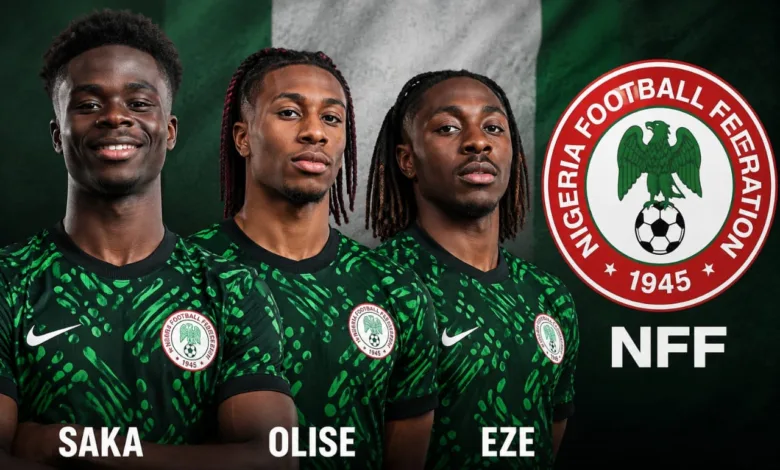
As the 2026 FIFA World Cup unfolded, many Nigerians found themselves asking the same painful question: what if these stars had been wearing green and white instead of the jerseys of England, France, Germany and Switzerland?
Bukayo Saka inspired England, Michael Olise excelled for France, Eberechi Eze showcased his creativity, Jamal Musiala remained Germany’s midfield jewel, while Manuel Akanji continued to anchor Switzerland’s defence, with at least 15 players of Nigerian heritage featuring for other countries at the tournament.
Imagine pairing Saka and Olise on the wings, Eze behind Victor Osimhen, Musiala orchestrating attacks, Calvin Bassey and Akanji in defence, and Lookman adding firepower from the bench, and it becomes difficult not to conclude that Nigeria possessed, at least by ancestry, one of the deepest talent pools at the World Cup.
Of course, international football is not won by assembling names on paper because players choose countries based on birth, upbringing, opportunity and emotional connection, but those choices are also shaped by how professionally football federations engage them from an early age.

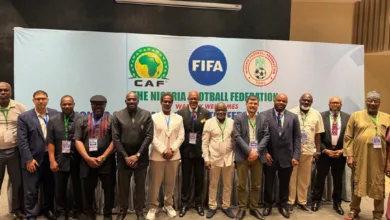
The Nigeria Football Federation deserves credit for convincing players such as Ademola Lookman, Alex Iwobi, Calvin Bassey, Ola Aina and Joe Aribo to represent the Super Eagles, but it has also been undermined by years of administrative crises, coaching instability and governance failures that have weakened confidence in the national team.
In December 2021, for example, the NFF sacked Gernot Rohr just weeks before the Africa Cup of Nations despite Nigeria qualifying comfortably for the tournament and leading its 2022 World Cup qualifying group, forcing Augustine Eguavoen into an interim role and beginning another cycle of frequent coaching changes that later included José Peseiro, Finidi George and Eric Chelle.
Financial mismanagement has further damaged the federation’s credibility. In November 2022, the BBC reported that Peseiro had gone six months without receiving his salary after his appointment, while the NFF also admitted owing former coach Rohr, players and members of the Super Falcons. By May 2023, the federation acknowledged that several national team coaches, including Ladan Bosso and Randy Waldrum, were owed months of salaries, with outstanding player bonuses dating back to 2021, reinforcing concerns about poor planning and welfare.
These shortcomings aren’t present in countries like England and France, whose federations identify dual-nationality players early, integrate them into youth systems and present clear long-term pathways to the senior team. While Bukayo Saka, Michael Olise and Eberechi Eze were progressing through structured national development programmes abroad, Nigeria was battling administrative distractions at home.
The result is a footballing version of Nigeria’s wider brain drain, where some of the country’s brightest minds thrive abroad, from thousands of Nigerian-trained doctors working in the United Kingdom and the United States to software engineers leading teams in Silicon Valley, professors shaping research in leading universities and entrepreneurs building global companies.
According to a report by the UK’s General Medical Council in November 2023, more than 12,000 Nigerian-trained doctors were licensed to practise in the UK by 2024, while Nigeria continues to lose highly skilled professionals across healthcare, technology, engineering and academia in search of better systems and opportunities.
The same institutional weaknesses driving professionals abroad are mirrored in football, where elite dual-nationality players often find more structured youth development, stable administration and clearer sporting pathways in England, France, Germany and other European countries than Nigeria is able to offer.
Rather than questioning the patriotism of Saka, Olise or Eze, Nigeria should ask why its institutions so often struggle to persuade globally sought-after talent that the country’s project is worth trusting, because no serious professional will sacrifice certainty for sentiment alone.
If Nigeria can build a transparent, professionally managed football federation that prioritises long-term planning, talent identification and genuine engagement with its global diaspora, future World Cups may no longer be remembered for the stars who wore other colours but for a Super Eagles team finally reflecting the full strength of one of the world’s richest football talent pools.