
LSETF summit: Sanwo-Olu identifies skills gap as major threat to Lagos employment
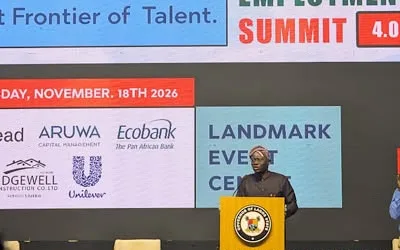
Lagos State Governor Babajide Sanwo-Olu has identified the mismatch between graduates’ qualifications and employers’ skills requirements as a major challenge facing the state’s employment sector, calling for stronger collaboration between educational institutions and industries to bridge the gap.
He said although universities, polytechnics and secondary schools continued to produce graduates, many young people remained unemployed because they lacked the practical skills required by employers, particularly in technical and emerging industries.
Sanwo-Olu spoke on Wednesday at the fourth Lagos Employment Summit, held at the Landmark Event Centre, Victoria Island, where he outlined his administration’s priorities for developing a skilled workforce capable of meeting the demands of the future economy.
According to him, employers in construction, manufacturing and technology continue to struggle to find qualified technicians, engineers, welders, electricians and other skilled workers, despite the availability of job opportunities in these sectors.




He warned that advances in artificial intelligence had made the need for continuous learning and skills development more urgent, noting that workers who acquire practical skills and remain willing to learn would be better positioned to benefit from future employment opportunities.
To address the challenge, the governor said the Lagos State Employment Trust Fund was targeting the training of 10,000 residents in technology, construction, fashion, health care and business. He directed that beneficiaries should be monitored to establish how many secured jobs or established businesses within one year of completing their training.
Sanwo-Olu also disclosed that 1,050 persons with disabilities had received training and start-up tools through the fund, insisting that inclusion of women, persons with disabilities and young people in underserved communities should become a regular feature of employment programmes.
He urged universities, polytechnics and technical colleges to involve employers in their training programmes and expose students to workplace experience before graduation. He also called on businesses to provide apprenticeship and internship opportunities, stressing that Lagos must develop a workforce whose skills match the demands of its growing economy.






 Follow our WhatsApp Channel