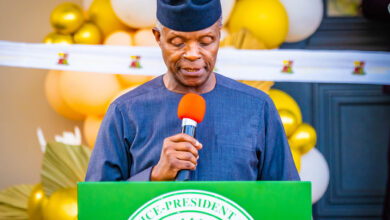
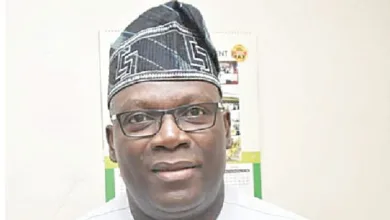
Nation building: Challenges and the way forward — by Sunday Dare
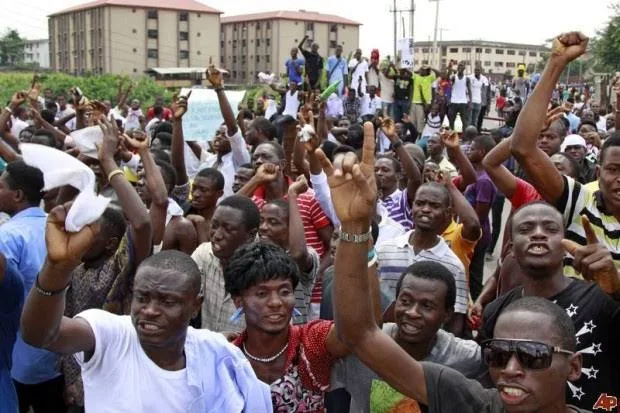
Across the world, nations are confronting profound economic, political, technological and social transformations. Established democracies are being tested. New global economic realities are reshaping trade and investment. Artificial intelligence is redefining work. Climate change is challenging traditional models of development. The expectations of citizens are changing, and institutions everywhere are under increasing scrutiny.
Nigeria is not insulated from these realities.
Indeed, our own national conversation reflects many of these same concerns. We speak about economic growth, insecurity, youth unemployment, education, constitutional reforms, social cohesion, infrastructure, public trust and the quality of governance. These are important conversations because they touch the very foundations upon which nations are built.
Yet whenever we discuss nation building, we often begin with governments. I believe we should begin somewhere else. Before governments shape nations, institutions shape citizens. Before policies influence society, values influence people. Before constitutions define a country, character defines its people.


It is for this reason that I consider it particularly significant that this conversation is being convened not by a government ministry or a political institution, but by the Nigerian Baptist Convention—a body whose own history reminds us that the work of building a nation extends far beyond politics.
Before I speak about the challenges before us, permit me to begin on a more personal note.
PERSONAL REFLECTIONS
I grew up in Jos, a city that, for many of us, represented one of Nigeria’s finest expressions of what this country can be at its best. It was a place where diversity was not merely discussed; it was lived. People from different ethnic backgrounds, languages and faith traditions lived in the same neighbourhoods, attended the same schools, traded in the same markets and pursued a shared future with remarkable ease. Long before I understood the language of national integration, I had already experienced it in everyday life.
I have been a Baptist all my life. Growing up in Jos also brought me into close contact with the enduring influence of Baptist education. I had the privilege of attending Baptist High School, Jos, – a prestigious institution l within the Naraguta community of the city. For many of us who passed through its gates, it was far more than a place of learning; it was a community where values were nurtured, character was moulded, and young minds were prepared for lives of purpose and service.
When I look back today, what stands out is not merely the classrooms or the buildings, but the culture that defined the school., and by extension, my life There was an unmistakable emphasis on discipline, respect for others, academic excellence, personal responsibility and service to the community.
Those values were not incidental; they were woven into the very fabric of the institution. The education we received sought to shape not only what we knew, but who we became.
We were taught that success was measured not simply by examination results or professional achievement, but by integrity, humility, hard work and the positive impact we would have on society.
With the benefit of hindsight, I now appreciate that those formative years offered lessons far beyond the prescribed curriculum. They reinforced a truth that has stayed with me throughout my life and public service: institutions matter. They quietly shape the character of individuals long before those individuals assume positions of leadership. They cultivate habits of excellence before excellence is demanded. They instil values that continue to influence decisions long after formal education has ended.
That is why I remain convinced that before governments shape nations, institutions shape citizens—and it is those citizens who, in turn, shape the destiny of nations. Years later, serving in different capacities in public life, I have often returned to that observation.
It taught me that institutions matter.
HUMBLE BEGINNINGS OF THE BAPTIST MOVEMENT
Institutions matter because they quietly shape the citizens who will eventually shape society. They mould character before character is tested. They cultivate habits before responsibility arrives. They influence values long before individuals assume positions of leadership. That is why the strongest nations are rarely those with the greatest natural resources. They are those with institutions capable of consistently producing citizens of integrity, competence, compassion and public spirit.
It is also why the story of the Baptist Church in Nigeria deserves to be remembered whenever we discuss nation building. Long before Nigeria became an independent nation, long before many of the public institutions we know today were established, Baptist missionary work had already begun laying foundations that would contribute significantly to the development of Nigerian society.
The arrival of the Baptist mission in 1850 under the leadership of Thomas Jefferson Bowen marked more than the beginning of another Christian denomination. It marked the beginning of a movement that viewed evangelism and social transformation as complementary responsibilities. The preaching of the Gospel was accompanied by literacy, education, healthcare, leadership development and community service. Faith was never intended to remain within the four walls of the church. It was expected to transform individuals, strengthen families and improve communities.
As Baptist congregations spread across different parts of the country, they became centres of learning as well as centres of worship. Schools were established because education was understood as a pathway to human dignity and national progress. Mission work reached communities that had little or no access to formal education or healthcare. Indigenous leaders were trained and equipped, ensuring that the work would be sustained by Nigerians who understood both the culture and the needs of their own communities.
Out of that growing missionary movement emerged the Nigerian Baptist Convention in 1914—not simply as an administrative structure, but as the collective expression of a maturing indigenous church determined to continue and expand that mission of spiritual witness and social transformation.
For more than a century, the Convention has faithfully carried that responsibility.
Its churches have become centres of worship, fellowship and community development. Its schools have educated generations of Nigerians who have gone on to distinguish themselves in public service, business, medicine, law, engineering, education, the armed forces, journalism and countless other professions. Its theological institutions have produced ministers whose influence extends beyond the pulpit into peacebuilding, education and community leadership. Through Bowen University, the Convention continues to invest in raising leaders equipped with intellectual excellence, moral discipline and a commitment to national service.
Its impact has also been felt through mission hospitals, healthcare outreach, youth development programmes, women’s ministries, rural evangelism, humanitarian interventions and community empowerment initiatives. In communities across Nigeria, Baptist churches have cared for widows, supported orphans, promoted literacy, encouraged peaceful coexistence and responded to human need with quiet consistency.
What is remarkable about this history is that much of it was undertaken long before expressions such as human capital development, social investment or nation building became part of our national vocabulary.
The Baptist Church was already building the nation—one school at a time, one church at a time, one hospital at a time, one community at a time and, most importantly, one life at a time.
That legacy carries an important lesson for all of us. Nation building has never been the exclusive responsibility of government. Governments are indispensable, but they cannot build great nations alone.
NATION BUILDING, THE BAPTIST WAY
Great nations are built when strong institutions work alongside responsible governments; when families nurture values; when schools develop minds; when churches shape character; when businesses create opportunities; and when citizens recognise that patriotism is demonstrated not merely by what we say about our country, but by what we contribute to it.
This brings us to a fundamental question.
What exactly do we mean when we speak about nation building? Too often, we reduce nation building to physical development. We measure it by highways constructed, bridges commissioned, airports expanded or housing estates completed. These are important indicators of progress, and no serious nation can neglect infrastructure.
But infrastructure alone does not build a nation. Roads connect cities. Values connect people. Buildings accommodate citizens. Character sustains societies. Economic growth creates prosperity. Integrity ensures that prosperity benefits everyone.
A nation, therefore, is much more than a geographical entity or a political expression. It is a community bound together by shared values, trusted institutions, responsible leadership and a collective commitment to the common good. It is built not only with concrete and steel but with trust, justice, discipline, compassion and hope.
History consistently teaches us that societies flourish when they invest as deliberately in people as they do in brick-and-mortar projects. The most enduring monuments any nation can build are not always visible on the skyline. They are found in the quality of its citizens, the credibility of its institutions and the strength of its moral foundations.
If that is true—and I believe it is—then the central challenge before Nigeria is not, simply how to build more infrastructure. It is how to build more leaders. How to build stronger institutions. How to build responsible citizens. How to build a culture of excellence, integrity and service.
That, ladies and gentlemen, is the conversation to which I now turn.
THE LEADERSHIP QUESTION
If there is one lesson that history teaches us with remarkable consistency, it is that nations do not drift into greatness. They are led there. Progress is rarely accidental. It is usually the product of deliberate choices made over time by men and women who understand that leadership is not about the accumulation of power but about the responsible exercise of stewardship.
Every generation inherits certain advantages and certain burdens. Some inherit peace; others inherit conflict. Some inherit prosperity; others inherit economic hardship. But every generation, without exception, inherits a responsibility to leave society better than it found it. That is the essence of nation building and Nigeria is no exception.
Ours is a nation of extraordinary promise. We possess abundant natural resources, one of the youngest populations in the world, a dynamic entrepreneurial culture, a thriving creative industry, and a people whose resilience is admired across continents. Nigerian professionals distinguish themselves in universities, hospitals, laboratories, boardrooms, sporting arenas and technology hubs around the world. Wherever opportunity exists, Nigerians compete with excellence.
The paradox, therefore, is not that Nigeria lacks potential. The paradox is that we have not always succeeded in converting our enormous potential into sustained national progress.
Why?
The answers are undoubtedly many, but they converge around one central issue: the quality of our leadership and the strength of our institutions.
Leadership is often discussed as though it belongs exclusively to those who occupy political office. That is a narrow understanding of leadership. Leadership begins long before elections are won or appointments are made. Every parent exercises leadership within the home. Every teacher exercises leadership in the classroom. Every pastor exercises leadership from the pulpit. Every judge exercises leadership in the courtroom. Every entrepreneur exercises leadership in the marketplace. Influence, wherever it is exercised responsibly, is leadership.
Public office simply amplifies that responsibility.
One of the greatest misconceptions in public life is that leadership is about authority. In truth, authority is only the instrument; service is the purpose. The Scriptures remind us of this repeatedly. Joseph did not become great because he occupied Pharaoh’s court. He became great because he used wisdom to preserve an entire nation during years of famine.
Nehemiah did not simply rebuild the walls of Jerusalem; he restored the confidence of a discouraged people and inspired them to work together for a common future. Our Lord Jesus Christ transformed humanity’s understanding of leadership when He taught His disciples that greatness is measured not by the number of people who serve us, but by our willingness to serve others.
That principle remains as relevant in the twenty-first century as it was two thousand years ago. Leadership that serves itself eventually loses legitimacy. Leadership that serves the people earns trust, and trust is perhaps the most valuable currency any nation can possess.
Trust cannot be borrowed. It cannot be legislated. It cannot be manufactured by public relations campaigns. It is earned through consistency, transparency, competence and integrity, so once lost, cannot be regained.
This is why nation building requires leaders who think beyond electoral cycles and begin to think in generational terms. Roads may be completed within a few years. Institutions require decades to mature. Character takes even longer to cultivate.
MY OWN INTERJECTIONS IN PUBLIC SERVICE
There is another reason why this leadership question is deeply personal to me. Over the years, I have had the privilege of serving Nigeria in different capacities. Each assignment has offered a different window into our national life, and each has reinforced one enduring lesson: nation building is never accomplished by slogans or good intentions alone. It is built patiently through institutions, thoughtful policies, courageous leadership and an unwavering commitment to the welfare of the people.
As Chief of Staff to then out of office, Governor of Lagos State, now President, Asiwaju Bola Tinubu, I witnessed political brinksmanship from one of its closest vantage points. Every day brought difficult choices, competing priorities and the constant responsibility of ensuring that government remained focused on improving the lives of ordinary Nigerians.
It was also a period that reminded me that behind every policy paper, there was an author, behind every budget line, a promoter, and every Executive decision an Influencer. That period also taught me that there were real people whose hopes and aspirations depend upon the quality of those thoughts.
Some of the ideas I had the privilege of advising on, were designed not merely as government programmes but as investments in the future of our nation. Social intervention programmes, including the National Home-Grown School Feeding Programme, demonstrated that public policy can become a powerful instrument for social justice when it is thoughtfully conceived and effectively implemented.
A meal served to a child in school is not simply an act of welfare. It is an investment in learning, in health, in dignity and in the future productivity of that child. It supports school enrolment, improves nutrition, creates markets for local farmers and stimulates economic activity within communities. That experience taught me that nation building often begins with seemingly ordinary interventions whose long-term impact extends far beyond what is immediately visible.
My subsequent service as Honourable Minister of Youth and Sports Development under President Muhammadu Buhari, offered another important perspective. I came to appreciate, perhaps more profoundly than ever before, that Nigeria’s greatest resource is not buried beneath the ground. It is found in the energy, creativity, resilience and ambition of our young people.
Travelling across the country, engaging with young entrepreneurs, athletes, innovators, students and community leaders, I encountered a generation that was not asking for charity but for opportunity. They wanted quality education, meaningful skills, access to finance, fair competition and an environment in which hard work and talent could flourish.
Whether through youth empowerment programmes, sports development initiatives or efforts to expand opportunities for enterprise and leadership, the objective was always the same: to help young Nigerians discover that they could become builders of the nation rather than spectators in its development.
Today, I have the privilege of serving as the spokesperson for an economic reform agenda that has polarized opinion and generated vigorous debate across our country. These reforms have demanded sacrifice. They have tested the patience of many Nigerians and, understandably, they have attracted both criticism and support.
That is the nature of reform, driven by visionary leadership in any society.
History teaches us that transformative economic decisions are rarely comfortable in the short term. They often require leaders to balance immediate hardship against long-term national interest. Every generation of reformers, in every successful nation, has confronted this difficult reality.
As someone entrusted with communicating that agenda, I have come to appreciate that policy is not merely about economics. It is about people. Behind every fiscal reform, every revenue measure, every investment initiative and every structural adjustment is a larger purpose: creating an economy capable of generating jobs, attracting investment, expanding opportunities and securing a more prosperous future for our children.
These different chapters of public service—from Lagos Governance, leadership recruitment to youth development, to economic reform—have all led me to the same conclusion. Nation building is not the responsibility of one administration, one political party, one institution or one generation.
It is a relay race.
Each generation receives the baton from those who came before, runs its own leg with courage and integrity, and passes it on to those who follow. Our responsibility is not to complete the race alone.
Our responsibility is to ensure that when we hand over the baton, Nigeria is stronger than we found her, our institutions are more resilient, our people are more hopeful, and our future is brighter than our past.
BUILDING STRONG INSTITUTIONS
Flowing from the above, history remembers leaders not merely for the projects they commissioned but for the institutions they strengthened. That distinction is important. Projects are visible. Institutions are enduring. Projects serve the present. Institutions secure the future.
When history celebrates the great nations of the world, it rarely attributes their success to charismatic individuals alone. Rather, it points to institutions that continued to function effectively long after those individuals had left the stage.
Strong institutions provide continuity. They create predictability. They reassure citizens that justice will not depend upon who they know, but upon what is right. They reassure investors that contracts will be honoured. They reassure young people that merit will be rewarded. They reassure the vulnerable that the law will protect them equally.
Without strong institutions, even the most gifted leaders eventually struggle. With strong institutions, ordinary leaders can still preside over extraordinary progress. This is one of the most enduring lessons the Baptist Church offers our nation.
Its impact has lasted for generations precisely because it invested in institutions rather than personalities. Churches became centres of spiritual formation and community service. Schools became centres of learning and character formation.
Seminaries prepared ministers who understood both theology and society. Hospitals ministered to the physical needs of communities. Mission fields became centres of hope where education, healthcare and compassion met.
The institutions endured because they were built upon values that did not change with every generation. That same lesson applies to our Republic. Nigeria’s future will depend not simply on producing remarkable leaders, but on building remarkable institutions that remain faithful to their purpose regardless of who occupies public office.
Yet institutions, important as they are, must not subject themselves to the wiles of those who lead them. Every institution ultimately reflects the values of those entrusted with its stewardship. If honesty disappears from the human heart, corruption eventually finds its way into institutions.
If discipline disappears from society, disorder eventually becomes normal. If excellence is no longer celebrated, mediocrity quietly becomes acceptable. This is why the conversation about nation building must eventually become a conversation about values.
Nations are sustained not merely by constitutions but by convictions.
Every enduring civilisation has been held together by a moral consensus—a shared understanding of what is right, what is just and what is worthy of honour. Laws alone cannot create that consensus. They can punish wrongdoing, but they cannot produce virtue. They can regulate behaviour, but they cannot shape character.
Character is formed elsewhere. It is first formed within the family, where children begin to understand honesty, responsibility and respect. It is reinforced in the classroom, where discipline meets knowledge. It is strengthened in communities where neighbours learn to trust one another. And it is nurtured by faith communities that remind us that integrity is not simply good ethics; it is obedience to God.
This is why the Church remains indispensable to nation building. Whenever the Church teaches truth, it strengthens society. Whenever it promotes justice, it strengthens democracy. Whenever it nurtures compassion, it strengthens communities. Whenever it raises men and women of integrity, it strengthens the nation itself.
The Church does not exist to replace government, nor should government attempt to replace the moral influence of the Church. Each has a distinct responsibility, but both serve the same society. A healthy nation requires effective public institutions and a healthy moral conscience. One without the other leaves society incomplete.
This truth becomes even more significant when we consider the future that lies before us.
The world our children will inherit is changing at a speed unprecedented in human history. Artificial intelligence is transforming industries. Biotechnology is extending the boundaries of medicine. Digital platforms are reshaping commerce, communication and education. The careers that today’s students will pursue may not yet exist. The skills required tomorrow will be different from those that brought success yesterday.
This reality places an enormous responsibility upon our educational institutions. Education can no longer be confined to the transfer of information. Information is now available at the touch of a screen. What education must increasingly provide is judgment, creativity, critical thinking, adaptability and character.
Knowledge will remain important. Wisdom will become indispensable. That distinction is one our educational system must embrace if Nigeria is to compete successfully in the twenty-first century.
And that is why institutions such as Bowen University have an increasingly strategic role to play. Universities must produce graduates who are not only employable but capable of creating employment; not only technologically competent but ethically grounded; not only globally competitive but deeply committed to the development of their own country.
The measure of education is not simply the number of degrees awarded. It is the number of lives transformed, and the number of problems solved.
INNOVATION, PRODUCTIVITY, SERVICE
Ultimately, that is what nation building demands. But education, however important it is, does not exist in isolation. Its true value is realised only when learning is translated into innovation, productivity and service. The classroom must ultimately connect with the workplace, the laboratory with industry, research with enterprise, and knowledge with practical solutions to the everyday challenges confronting society.
That is why Nigeria’s future will depend increasingly on our ability to build a knowledge-driven economy. Around the world, the most successful nations are no longer those that simply possess abundant natural resources. They are the nations that generate ideas, develop technologies, encourage innovation and invest consistently in human capital. In the twenty-first century, the greatest competitive advantage any nation can possess is not what lies beneath its soil, but what resides in the minds of its people.
Nigeria cannot afford to be a consumer nation in an age of innovation. We must become creators. We must become inventors. We must become problem-solvers. We must become producers of knowledge, technology and enterprise.
This places a significant responsibility on our universities, our research institutions, our private sector and indeed our governments. We must create an environment in which innovation is rewarded, intellectual curiosity is encouraged, entrepreneurship is supported and excellence becomes our national culture. Our brightest minds should see Nigeria not merely as the place of their birth but as the place where their ideas can flourish.
Yet even innovation alone cannot build a nation.
History reminds us that many societies have achieved remarkable technological advancement while struggling to maintain social cohesion. Economic progress without national unity eventually becomes fragile because prosperity cannot be sustained where distrust and division prevail. Perhaps nowhere is this challenge more evident than in societies as richly diverse as ours. Nigeria’s diversity has often been described as our greatest challenge. I respectfully disagree.
Our diversity is one of our greatest blessings.
Very few countries have been endowed with the extraordinary richness of cultures, languages, traditions and talents that Nigeria possesses. Diversity expands perspectives. It stimulates creativity. It strengthens commerce. It enriches culture.
Our challenge has never been diversity itself. Our challenge has been learning to transform diversity into national strength. The Scriptures provide a profound illustration of this principle. The Apostle Paul reminds us that the human body is made up of many parts, each different in function yet indispensable to the whole. The eye cannot dismiss the hand. The head cannot disregard the feet. Each part derives its significance from its contribution to the body.
The same principle applies to nations. Our differences need not become divisions. Indeed, they should become complementary strengths. When justice is upheld, when opportunities are fairly distributed and when every citizen believes he or she has a stake in the nation’s future, diversity becomes a source of resilience rather than conflict.
This is why nation building ultimately depends upon a shared sense of citizenship.
Citizenship is more than the possession of a passport. It is a commitment to the common good. It is recognising that while we may come from different communities, worship in different places and speak different languages, we are all custodians of the same national destiny.
Every Nigerian therefore has a role to play. Government has its responsibility. The private sector has its responsibility. Educational institutions have theirs. Civil society has its own. The media must continue to inform responsibly.
Traditional institutions remain vital custodians of culture and community. And the Church must continue to serve as the moral conscience of society. No single institution can build Nigeria alone.
Nation building succeeds only when each institution faithfully performs its own responsibility while working in partnership with others. This is precisely why gatherings such as this National Civil Leadership Summit are so important.
They remind us that leadership is not confined to public office. Leadership exists wherever individuals accept responsibility for improving the lives of others. Whether one leads a congregation, a classroom, a business, a hospital, a community or a ministry, the calling remains the same: to leave people better than we found them and institutions stronger than we inherited them.
For ultimately, nations become great not because they have perfect leaders or perfect systems, but because ordinary citizens choose, day after day, to do extraordinary things with integrity, excellence and an unwavering commitment to the common good.
And that is where the enduring role of faith becomes indispensable.
THE INFALLIBILITY OF FAITH AND THE MYSTERY OF THE CAUSELESS CAUSE
Ladies and gentlemen, every enduring civilisation has drawn strength from a moral foundation that transcended politics, economics and even the ambitions of its leaders. Nations may be governed by constitutions, but they are ultimately sustained by values. Laws can regulate conduct, but they cannot create character. Policies can influence behaviour, but they cannot inspire compassion. Governments can build infrastructure, but they cannot manufacture integrity.
Those qualities are formed elsewhere. They are nurtured within families. They are reinforced in schools. They are proclaimed from pulpits. They are demonstrated in communities. And they are lived out every day by ordinary citizens who choose to do what is right, even when no one is watching. That is why the Church has always occupied a unique place in the life of every nation.
The Prophet Jeremiah, writing to a people living in uncertain times, gave them an instruction that remains profoundly relevant today. He urged them to “seek the peace and prosperity of the city… because if it prospers, you too will prosper.” That passage reminds us that faith is never an invitation to withdraw from society. It is a call to engage it, to serve it and to seek its flourishing.
The Baptist Church has understood this truth from the very beginning of its work in Nigeria. Its missionaries did not come merely to establish congregations. They came to establish schools because they understood that an educated mind glorifies God through knowledge and service. They established hospitals because faith expresses itself through compassion. They trained indigenous leaders because they believed that sustainable transformation must ultimately be led by Nigerians for Nigeria. They entered communities not simply to preach hope but to demonstrate it.
That heritage remains one of the Baptist Church’s greatest gifts to our country. Today, that responsibility rests with the Nigerian Baptist Convention and with every Baptist congregation across our nation. The challenges before us may be different from those faced by the pioneers of the nineteenth century, but the calling remains remarkably similar. Our generation faces new questions.
How do we prepare young Nigerians for an economy increasingly shaped by artificial intelligence and digital technology? How do we strengthen families in an age of rapid social change? How do we preserve truth in an era overwhelmed by misinformation? How do we nurture integrity in a culture that sometimes celebrates success without questioning the means by which it was achieved?
How do we inspire hope among young people confronted daily by uncertainty? These are not questions that government can answer alone. Nor can the Church answer them alone. They require partnership. They require shared purpose. They require all of us.
As I reflect on the Baptist Church’s remarkable journey in Nigeria, stretching from the arrival of Thomas Jefferson Bowen in 1850 to the vibrant Nigerian Baptist Convention we celebrate today, I am reminded that every generation has added another stone to the foundation laid by those who came before.
The missionaries planted. Others watered. Subsequent generations expanded the work. Schools were built. Hospitals were established. Universities were founded. Communities were transformed. Lives were changed. None of those achievements happened overnight.
They were the product of patient, faithful and sacrificial service. Nation building demands that same spirit. It asks each generation to think beyond itself. To build institutions that will outlive it.
To make sacrifices whose full benefits may only be enjoyed by those yet unborn. There is an African proverb that says, “A society grows great when old men plant trees whose shade they know they shall never sit in.” That, to me, is the very definition of nation building. We do not build only for ourselves. We build for those we may never meet. For the child who will attend a better school because we invested in education.
For the entrepreneur who will create jobs because we strengthened the economy. For the young athlete who will proudly raise the Nigerian flag because we invested in sport. For the researcher whose discovery will improve lives because we supported innovation.
For the family that will live in peace because we chose unity over division. For the nation that will become stronger because we placed principle above politics. That is the inheritance we have the privilege to leave behind.
History will not remember us merely for the offices we occupied. It will not remember us simply for the speeches we delivered. It will not even remember us only for the projects we commissioned.
History will remember whether we strengthened the institutions entrusted to our care. Whether we expanded opportunities for others. Whether we chose justice over convenience.
Whether we spoke the truth when it was difficult. Whether we united when others sought to divide. Whether we built a nation worthy of the extraordinary potential with which God has blessed us.
CONCLUSION
Permit me, therefore, to conclude where I began. Growing up in Jos, I watched institutions quietly shape lives without drawing attention to themselves. I saw schools mould character as much as they imparted knowledge. I observed communities where people from different backgrounds could live together in mutual respect. Those experiences taught me that nation building rarely begins with grand declarations.
It begins quietly. It begins when a teacher inspires a student. When parents raise children with integrity. When a pastor counsels a troubled family. When a judge delivers justice without fear or favour. When an entrepreneur creates opportunities for others.
When a public servant places national interest above personal gain. When citizens refuse to surrender hope. Those seemingly ordinary acts become the extraordinary foundations upon which great nations are built.
Ladies and gentlemen, Nigeria’s story is still being written.
We are not merely readers of that story; we are its authors. The pages that future generations will read are being written by the choices we make today. One day, many years from now, another generation of Nigerians will walk through the gates of schools like Baptist High School in Jos, Bowen University here in Iwo, and countless other institutions across our country.
They may never know our names. They may never know the debates we held, the policies we defended or the conferences we attended. But they will live with the consequences of what we choose to build today. If we build wisely, they will inherit stronger institutions. If we lead with integrity, they will inherit greater trust.
If we invest in education, they will inherit greater opportunity. If we choose justice, they will inherit a more peaceful society. If we strengthen our economy, they will inherit greater prosperity. If we nurture our values, they will inherit a stronger nation. And if we remain faithful to God and to the ideals upon which this country must stand, they will inherit a Nigeria that more fully reflects the greatness of its people.
Dare is Special Adviser Media & Public Communications to President Tinubu