Nigeria losing 400,000 hectares of forest annually — VP Shettima
By Kunle Sanni –
Vice President Kashim Shettima has raised the alarm over Nigeria’s worsening deforestation crisis, warning that over 90 percent of the country’s original forest cover has already been lost.
Speaking through his representative, Deputy Chief of Staff Ibrahim Hadejia, at the Nigeria Forest Economy Summit 2025 in Abuja, Shettima described the situation as both an environmental catastrophe and an economic emergency.
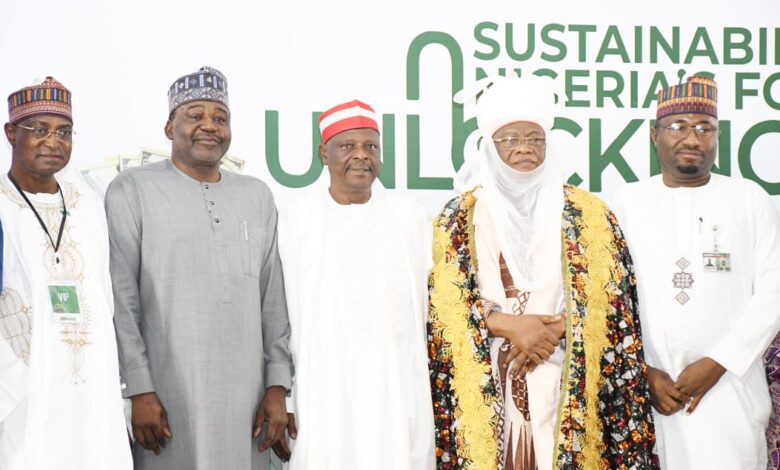
The summit, themed “Sustainability of Nigeria’s Forests: Unlocking the $2 Billion Potential for Economic and Financial Inclusion,” brought together government officials, private sector leaders, and environmental experts at the Presidential Villa.





Shettima revealed that Nigeria is losing an estimated 400,000 hectares of forest each year, calling the rate of destruction unsustainable. “This is not just an environmental crisis; it is an economic emergency. We are at a crossroads where neglecting our forest resources directly impoverishes our people and endangers our future,” he said.
He described Nigeria’s forests as treasure troves of biodiversity, timber, medicinal plants, and other valuable resources essential for agriculture, health, and climate resilience. Citing global examples, Shettima noted that Vietnam earns over $15 billion annually from forest exports, Brazil’s Amazon contributes 15 percent to its GDP, and Ethiopia has created 350,000 jobs through reforestation. He urged Nigeria to emulate these successes and position itself as a continental leader in forest industrialisation.
The Vice President also warned of emerging global trade restrictions, such as new EU regulations banning imports linked to recent deforestation. He said Nigeria risks being excluded from vital markets unless it adopts sustainable forest management practices and inclusive green economic policies.
At the summit, Sadiq Sani, CEO of tech firm Netzence, announced that his company is developing tools to monitor greenhouse gas emissions and evaluate carbon credit potential in forest ecosystems. “Our goal is to enable Nigeria to benefit from the global carbon credit market,” Sani said, explaining that the firm is building models to track forest composition and decomposition for carbon financing.
The summit concluded with a call for urgent reforms in forest governance, stronger enforcement against illegal logging, and increased investment in afforestation and reforestation. Stakeholders resolved to prioritize forest sustainability as a national development strategy and align environmental protection with economic growth.