Nigeria’s presidency is not won in Washington — by Adewale Okoya
Nigeria’s next president will be chosen by Nigerian voters, not by American congressmen, lobbyists or officials in the White House. Yet, as the 2027 general elections approach, some political actors appear increasingly interested in winning sympathy in Washington rather than convincing Nigerians of their capacity to govern. This growing habit of taking domestic political disputes abroad raises serious questions about the judgment, priorities and democratic convictions of those seeking power.
The reported decision by a Washington lobbying firm to brief President Donald Trump and members of Congress on the Independent National Electoral Commission’s handling of the leadership crisis in the African Democratic Congress (ADC) illustrates this troubling trend. The dispute was still before Nigerian courts, yet political attention was already shifting to the United States. What exactly was Washington expected to do about a disagreement governed by Nigerian electoral laws and subject to the authority of Nigerian courts?
The development is part of a wider pattern. In March, former Vice President Atiku Abubakar’s political camp reportedly engaged an American lobbying firm under a $1.2 million agreement to arrange contacts with United States officials and members of Congress. There have also been reported efforts to draw the attention of American officials to an old civil forfeiture case involving President Bola Tinubu.
The Presidency has described such moves as attempts to internationalise Nigeria’s domestic politics. Whatever the motives of those involved, the concern is legitimate. A political opposition seeking the confidence of Nigerians should not appear to place greater value on foreign attention than on domestic political organisation and the judgment of voters.


This is particularly important in the ADC leadership dispute. INEC’s reported decision not to recognise either faction pending judicial resolution was a cautious response to a contested legal situation. The courts, not foreign governments, are responsible for determining the rights of the parties. If opposition politicians believe INEC has acted unlawfully, the proper course is to challenge its decision through the judicial process.
There is nothing wrong with criticising Nigerian institutions or demanding that they act fairly. Indeed, opposition parties have a duty to hold those in power accountable. But seeking foreign political pressure while domestic legal remedies remain available risks weakening public confidence in the very institutions these politicians hope to control if elected.
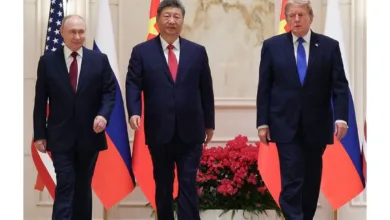
Nor should foreign courtesy be mistaken for political endorsement. When President Trump reportedly sent a letter to President Tinubu, the Presidency interpreted it favourably, while opposition parties argued that it merely acknowledged the Nigerian leader’s stated commitment to addressing insecurity. The opposition was right to question any attempt to turn diplomatic communication into an electoral endorsement.
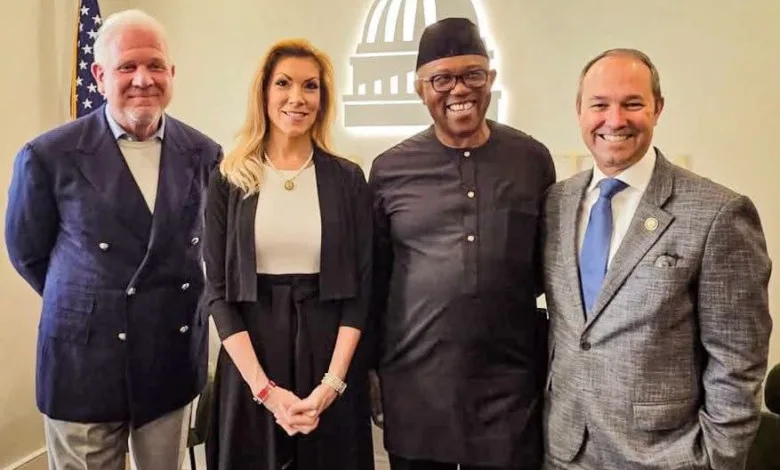
The same standard must apply when opposition figures receive attention from American officials or when individuals associated with their lobbying efforts secure appointments in Washington. Access to foreign political circles does not amount to approval of a Nigerian candidate, party or political cause.
The danger is that both government and opposition may begin treating foreign recognition as a substitute for domestic legitimacy. That would be a serious distortion of democracy.
Nigeria’s relationship with the United States is important, and there is nothing unlawful about engaging foreign governments or employing registered lobbyists. International advocacy can help draw attention to human rights abuses, threats to democracy and other matters of legitimate global concern. The public registration of lobbying contracts under American law also provides a measure of transparency.
But legality does not automatically establish political wisdom. There is a difference between informing international partners about developments in Nigeria and inviting them to become referees in the country’s domestic political contests.
The ruling All Progressives Congress cannot claim innocence in this matter. It reportedly employed American lobbying services while in opposition, and the Tinubu administration has itself faced criticism over spending on lobbying in Washington. American lawmakers have questioned such activities. It would therefore be hypocritical for the government to condemn opposition lobbying while defending similar practices when they serve its own interests.
Nevertheless, the fact that the ruling party has engaged in the same conduct does not make the practice desirable. Two wrongs cannot become a sound principle of democratic politics.
There is also a wider national interest to consider. American decisions on Nigeria, including its designation as a Country of Particular Concern over religious freedom and proposals affecting assistance, can carry diplomatic and economic consequences. Political actors should therefore be careful about encouraging foreign pressure that may ultimately affect citizens far beyond the immediate political dispute.
This does not mean that serious abuses should be concealed in the name of sovereignty. Where fundamental rights are violated or democratic institutions are threatened, international scrutiny may be justified. But ordinary party leadership disputes, electoral disagreements and political rivalries should not automatically become matters for foreign intervention.
Former Kano State Governor Rabiu Kwankwaso’s reported warning against external narratives capable of damaging Nigeria’s international image is worth considering. Political competition should not become an excuse to undermine the country’s standing abroad.
There is also the question of priorities. When a politician reportedly commits more than a million dollars to foreign lobbying, Nigerians are entitled to ask what political benefit the expenditure offers them. Could such resources not be better directed towards building party structures, developing credible policies, mobilising voters and strengthening grassroots organisation?
Nigeria’s opposition parties face serious challenges that no American lobbying firm can solve. Internal divisions, leadership disputes, weak party structures and the inability to sustain political alliances have repeatedly undermined opposition coalitions. These are problems requiring political discipline, respect for party rules and patient organisation.
Foreign influence cannot reconcile rival party factions, produce credible candidates or persuade Nigerians that an opposition party offers a better alternative. Those responsibilities belong to the politicians seeking power.
The opposition should concentrate on building public trust, presenting convincing solutions to Nigeria’s economic and security problems, defending electoral rights through lawful means and preparing to compete effectively at the polls. The government, for its part, must ensure that democratic institutions operate fairly and that opposition parties can campaign without intimidation.
Nigeria’s sovereignty should not be invoked to shield wrongdoing, just as international engagement should not become a means of bypassing domestic democratic processes.
The ultimate source of political legitimacy remains the Nigerian electorate. No meeting in Washington can replace the hard work of winning public confidence at home.
A verdict from Washington changes nothing at a polling unit in Kano or Port Harcourt. Only Nigerians can give or withhold a mandate.