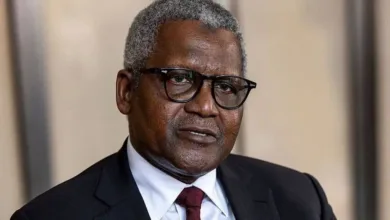
Nigeria’s security crisis — imperatives of deep structural reform, by Michael Oluwagbemi

Nigeria today faces one of the most complex security emergencies in the world. A country of more than 225 million people—Africa’s largest population and its most diverse democracy—is being strangled by violence on multiple fronts: Islamist insurgencies in the Northeast, banditry and mass kidnapping in the Northwest, separatist militancy in the Southeast, piracy and oil theft in the Niger Delta, and rising urban crime in nearly every major city.
Yet behind the headlines lies a quieter, more devastating truth: Nigeria’s security institutions were never designed for a country of this size, complexity, or geopolitical importance. And the costs of refusing to confront this reality—human, economic, social—are rising beyond calculation.
A Security Apparatus Built for a Different Country
Nigeria’s entire security architecture is badly outmatched by the threats it confronts.




•   The Nigerian Armed Forces have roughly 230,000 active personnel.

•   The Nigeria Police Force has about 370,000 officers, but fewer than 300,000 are deployable due to VIP protection, administrative duties, and obsolete deployment models.
In total, barely 600,000 security personnel are tasked with safeguarding 225 million Nigerians across 4,047 kilometers of land borders and 853 kilometers of coastline.
This means one security officer is responsible for roughly 375 Nigerians—one of the worst ratios of any large democracy. The United States, Brazil, and India each maintain far higher policing densities, despite facing far fewer simultaneous internal threats.
The consequences are visible and brutal:
•   More than 80,000 Nigerians have died in conflict and terrorism over the past decade.

•   Over 4 million people have been displaced.

•   Oil theft drains up to $12 billion annually, more than the budgets of the Army, Navy, and Air Force combined.

•   Foreign investment has cratered by almost 70 percent, largely due to insecurity.

•   The economy loses an estimated $40 billion each year to violence, disruptions, and lost productivity.
These losses are not the result of unstoppable forces. They are the direct cost of inaction, of refusing to reform institutions that everyone agrees are no longer functional.
Nigeria’s Police Cannot Be Fixed Without Structural Reimagining
The uncomfortable truth is this: the Nigeria Police Force, as currently structured, cannot police Nigeria, no matter the funding, equipment, or reforms attempted.
The system is too centralized, too divorced from the communities it serves, and too politically manipulated to perform even basic policing functions. Nigeria must do what functional federal systems do—devolve policing downward, not upward.
And it must use the current national crisis as the catalyst. As the saying goes: never waste a crisis.
Here is a path forward.
⸻
A New Architecture for a Safer Nigeria
- Devolve 85% of Federal Police Officers to Their Local Government of Origin
Nigeria is perhaps the only federation in the world where the police are fully centralized. Officers are routinely deployed to states and regions they do not understand, do not trust, and in which they hold no social stake.
This must end.
Eighty-five percent of the Nigeria Police Force should be devolved to their Local Government Areas (LGAs) of origin, where they are culturally embedded, socially accountable, and more motivated to defend their own communities.
Only Mobile Police, Counter-Terrorism Units, Special Investigations, and senior officers should remain rotational.
- Create Local Police Boards—No Constitutional Amendment Needed
Section 216(1) of Nigeria’s Constitution already allows the Police Council to delegate its authority.
It simply has never done so.
The Police Council—comprising the President, Governors, and Inspector General—can tomorrow morning issue an order devolving management of each LGA’s police formation to Local Police Boards consisting of:
•   traditional rulers

•   teachers and academic unions

•   faith-based organizations

•   reputable civil society groups
No members should be elected or salaried; all should serve short, fixed tenures of two years to minimize political capture. These Boards would recommend promotions, oversee discipline, evaluate performance, and approve new recruits into the devolved community police structure, in sync with the federal Police Service Commission.
- End the Colonial Barracks System
Police officers should live among the people they serve—not in isolated, dilapidated barracks designed by the British in 1940.
A devolved police force must be given housing allowances and encouraged to live within their communities. Officers defend what they are part of. When their families live in the LGA they police, insecurity will no longer feel abstract—it will be personal.
- Establish Local Security Trust Funds
Every LGA and community association should be encouraged to create Local Security Trust Funds to provide bonuses, equipment, and community-driven motivation for their devolved police formations.
Implementing the Supreme Court’s ruling requiring the Federal Government to directly fund LGAs would make this far easier. This is a simple reform with profound implications.
- Only After 18–24 Months Should Nigeria Approve State Police
State Police should not be rushed. Nigeria must first stabilize a devolved federal police model.
After 18–24 months, constitutional amendments should be passed—but with safeguards:
•   A Federal Judge must approve any federal takeover of a State Police service.

•   Such interventions cannot exceed six months without judicial review.

•   Federal crimes should remain under federal jurisdiction.

•   State Police should be limited to non-military small arms—pistols and tasers, not assault rifles.
This ensures State Police do not become instruments of political repression.
- Limit State Police Firepower and Federalize Serious Crimes
State Police should not carry weapons more lethal than those of the Federal Police or military. Intelligence, communication, rapid response, and non-lethal tools should be their focus. Any federal crime must be handed over to the national police or federal investigators.
- Consolidate Nigeria’s Many Fragmented Security Agencies
Nigeria’s habit of creating overlapping uniformed agencies has produced bureaucratic chaos, not security.
The FRSC, Civil Defense, Forest Guards, and even enforcement arms of the EFCC and ICPC should be consolidated into:
•   a streamlined Federal Police Service, and

•   a modern Federal Investigation Bureau (FIB), the equivalent of the FBI.
Forest Guards should be a specialized federal police unit, not a standalone force.
Nigeria must prioritize consolidation over the constant creation of new agencies.
- Create a Militarized Border Patrol Force—National Guard and Coast Guard
Nigeria’s borders—4,047 km of land and 853 km of sea—cannot be secured by Customs and Immigration officers whose primary roles are trade facilitation and migration processing.
Nigeria urgently needs a militarized Border Patrol Force, comprising:
•   a National Guard for land borders, and

•   a Coast Guard for maritime borders.
This force should recruit 50,000–100,000 personnel, trained to military standards, led by its own Chief of Staff, and reporting to the Ministry of Defense.
Border security is a military function. Nigeria must finally treat it as such.
⸻
What Nigeria Pays for Delay
Every year that Nigeria postpones structural security reform, it pays:
•   billions lost to oil theft, illegal mining, kidnapping, and piracy

•   hundreds of lives lost to terrorism and armed groups

•   investors fleeing to safer markets

•   communities emptied by displacement

•   a slow but steady erosion of national cohesion
The price of inaction is staggering. And it grows every month.
Nigeria is not too big to govern—but it is too complex to be policed by a 1940s system.
Reforming the security architecture is no longer optional. It is the only pathway to a stable, prosperous, and united Nigeria.
-Oluwagbemi, a governance and development expert resides in Abuja