Ondo vows power sector overhaul, targets 700MW to end chronic electricity shortfall
The Ondo State Government has reassured residents of its commitment to electricity sector reforms, acknowledging that resolving decades of under-generation, weak transmission and infrastructural deficits is complex but remains a priority for the state.
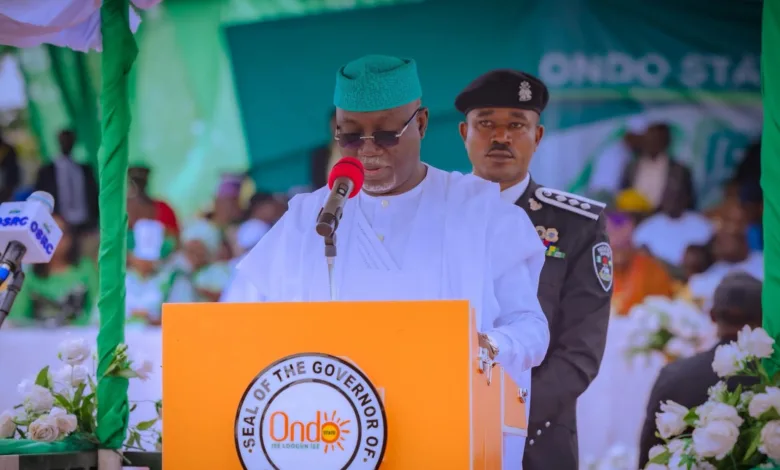
The Commissioner for Energy and Mineral Resources, Engr. (Dr.) Johnson Alabi, gave the assurance while featuring on a state government-owned television programme, where he addressed issues surrounding power supply irregularities, metering challenges and ongoing government interventions in the sector.
Alabi dismissed claims that Band A customers are prioritised solely for revenue generation, explaining that electricity distribution companies are required by national service agreements to guarantee Band A customers a minimum of 22 hours of power supply daily.
“Nigeria currently generates about 5,000 megawatts on the national grid, despite having higher installed capacity. After national power rationing, only about nine per cent of available power is allocated to Ondo, Ekiti, Edo and Delta states combined, with Ondo State receiving approximately 30 megawatts, which is grossly inadequate,” he said.
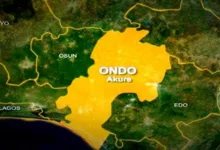
He added that Ondo State requires about 700 megawatts to meet its electricity needs, stressing that the government is working towards direct power procurement to reduce reliance on poor and unreliable national allocations.
The commissioner emphasised that public cooperation, particularly through metering, is crucial to resolving electricity challenges. He described metering as a key solution for accurate billing, energy conservation, efficient management and the elimination of estimated billing.
According to him, the state government has introduced a subsidised metering initiative to accelerate electricity reforms across Ondo State and urged residents to take advantage of the opportunity.
Responding to complaints of power supply irregularities in parts of Akoko South, Alabi advised affected residents to formally report the issues to Benin Electricity Ondo Limited (BEOL) for prompt intervention. He also encouraged residents to adopt metering to avoid being charged for electricity not supplied.
He disclosed that some Akoko communities currently receive power from the Abuja Electricity Distribution Company (AEDC) Okene due to the absence of a national grid connection from the Ondo axis. To address this, he said the state has developed an Electricity Roadmap aimed at establishing a state-owned smart grid across the southern, central and northern districts.
“Having set up our own electricity market, we must take full responsibility for our grid. Our goal is to end over-dependence on the national grid,” he said.
On metering costs, Alabi clarified that O’Datiwa meters are officially priced at ₦120,000 for single-phase and ₦220,000 for three-phase, warning that any meter sold below these prices is not issued by the state government.
He also addressed the Federal Government–World Bank Distribution Sector Recovery Programme (DISREP) metering initiative, noting that the scheme does not include installation charges and advising that deployment should be routed through states with established electricity markets to ensure effective monitoring and accountability.
The commissioner reaffirmed the Ondo State Government’s commitment to ensuring access to stable and quality power supply, stressing that the development of a state-owned power grid is essential for electricity balance and sustainable economic growth across the state.