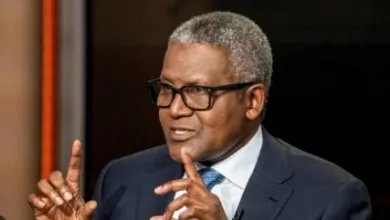
Presidential aide tackles CBN over tightened interest rate policy

Special adviser to President Bola Tinubu on economic affairs, Tope Fasua has called on the Central Bank of Nigeria’s (CBN) to rethink its monetary policy framework, stressing that Nigeria’s economic structure makes an aggressive interest rate regime less effective in tackling inflation while constraining growth.
He spoke on Wednesday at the seventh Africa Emerging Markets Forum in Abuja.
The president’s aide said Nigeria’s economy differs significantly from those of developed countries and even South Africa, making the relationship between interest rates and inflation less direct.
He said maintaining a prolonged tight monetary policy stance risks “caging growth” without delivering the desired impact on inflation.


“There seems to be a slightly monotonous relationship between interest rates and inflation in Nigeria. The pass-through is not as direct as you would find in many developed countries,” he said.
“So we run the risk that we may end up slowing down growth, or caging growth, while we’re trying to manage inflation.”
Fasua said although institutions such as the World Bank have continued to advise Nigeria to sustain a tight monetary policy to curb inflation, policymakers must recognise the peculiarities of the country’s economy.
He added that Nigeria is dominated by micro, small and medium enterprises (MSMEs), with a large informal sector that remains weakly connected to the formal credit market.
According to Fasua, while fintechs and digital banks have improved payments and deposit mobilisation, access to credit remains limited.
“Nigeria is not a credit economy, not even as much as South Africa, where you still find many people holding credit cards,” he said.
“In Nigeria, very few banks offer credit cards to people.”
He also said this weak transmission mechanism complicates monetary policy decisions because reductions in the monetary policy rate (MPR) may have only a marginal effect on lending rates.
“If you reduce the MPR, banks will probably reduce their lending rates by just one percent,” he said.
The presidential adviser also argued that inflation in Nigeria has largely been driven by supply-side constraints and market dynamics rather than excessive consumer demand.
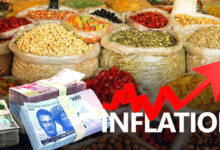
He recalled that inflation climbed to 34.8 percent in December 2024, fuelled partly by global commodity price shocks following the Russia-Ukraine war, before moderating to about 16.6 percent.
Fasua further said Nigerians spend most of their income on food, housing, education and other essential services where consumers have little bargaining power.
“Most Nigerians are price takers,” he said.
“It is what they see in the market.”
Fasua added that government interventions beyond conventional monetary tools, including engagements with market associations to discourage arbitrary price increases, also contributed to slowing inflation.
He urged policymakers to develop economic policies that reflect Nigeria’s unique realities rather than relying solely on conventional monetary prescriptions.
“We need to own our economy, own the structure of the economy and own the stage at which the economy is right now in order to make the right choices between monetary policy rates and other ways of tackling the future of the economy,” he said.
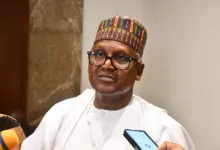
Earlier, Sani Abdullahi, deputy governor of CBN on corporate services, said Africa must increasingly shape its future through African-led ideas, institutions and policy solutions.
The deputy governor said the continent faces significant challenges, including geopolitical tensions, inflationary pressures, food insecurity and climate change, but also possesses vast opportunities through digital innovation, renewable energy, regional integration and a growing youthful population.
Abdullahi said the forum would focus on practical, evidence-based policy solutions to strengthen governance, improve economic resilience and promote inclusive growth across the continent.