To our beloved brothers in South Africa — by Femi Fani-Kayode
William Shakespeare’s Julius Caesar is, in my view, one of his best plays ever written by history’s greatest bard and playwright, and it is indeed amongst my favourites.
It speaks of mob psychology, ambition, power, treachery and the most brutal and painful expression of betrayal by a loved one.
Caesar loved Brutus, his protege above all else, but at the end of the day, it was Brutus, after others had stabbed him all over the body with their knives, that struck the fatal blow deep into his ageing chest and killed him.
The shock of the betrayal by a loved one and his famous last words, “et tu Brute”, as he slowly bled and died (which, when translated from Latin to English, means “and you too, Brutus?”) conveyed his anguish and pain. It was not just Brutus’ blade that finally took his life, but also a broken heart.

That is how the Nigerian people feel today as they witness the torment and sheer wickedness that their compatriots are being subjected to in South Africa, a nation that most of us love so deeply and dearly and that we sacrificed so much for historically.
The purpose of this contribution is to critically examine what has been going on there and, for the record, these are my personal views and assessment, and I do not share them in a representative capacity.
Permit me to begin.
According to the Nigerian consulate in Johannesburg, at least two Nigerians have been killed as a consequence of the xenophobic tensions and attacks.
Their names are Amaramiro Emmanuel and Ekpeyong Andrew.
The News Agency of Nigeria reported that Ninikanwa Okey-Uche, the consul-general of the Nigerian embassy in South Africa, said that Emmanuel died from injuries allegedly sustained after being beaten by personnel of the South African National Defence Force (SANDF) on April 20.
This raises even more concerns than the ones previously held.
It appears that it is not just the South African citizenry that is targeting our people, but also elements in the South African Police Force.
Surely, Nigerian lives matter as well.
The killings, beatings, persecution, humiliation, violence and discrimination that Nigerians, and other African nationals, are being subjected to in South Africa are unacceptable and stand condemned.
Nigerian children are being turned back from schools, Nigerian patients are being thrown out of hospitals, Nigerian shoppers are being bundled out of shops, Nigerians stores are being ransacked and forcefully shut, Nigerian workers are being sacked and cast out of their offices and work places, Nigerian homes are being raided, ransacked and burnt, Nigerian diners are being thrown out of restaurants and Nigerian men, women and children are being beaten, insulted, mocked and humiliated in the streets for no just cause and even when and where their immigration papers are complete.
South Africans are marching through the streets of their major cities, half-naked in tribal wear, singing war songs, brandishing spears and other crude weapons and hunting black African immigrants, including Nigerians, as if they were animals.
There is also video footage of mobs of angry and violent South African women beating up African immigrant women in the streets, even whilst the latter were praying and holding up Bibles.
Worse of all are the cases of wild and hostile crowds of South African males chasing and stripping African immigrant women, including Nigerians, naked in the streets, beating them to a pulp and sexually violating them in the full glare of a sea of angry, wild and depraved young men who recorded the disgusting spectacle with their telephones.
Several years ago, the great South African reggae singer Lucky Dube was killed by a mob of angry South Africans simply because they believed that he was a Nigerian. That is how deep the hatred for their fellow Africans has eaten into the psyche and afflicted the minds of some of our South African brothers and sisters.
This surely is bedlam. It is evil. It is wicked. It is cruel. And it is like a scene from Dante’s seventh circle of hell.
Thankfully, the United Nations has cultivated the courage to condemn these brutal and merciless attacks, but much more needs to be done.
I call on the Government of South Africa to secure the lives and property of our citizens and to do all it can to enhance the respect, fraternity & support that both of our nations have traditionally accorded to one another.
The two largest economies on the African continent must work together in order to bring peace & stability to Africa and strengthen our collective voice on the world stage. What we must not do is allow our citizens to kill one another or subject themselves to barbaric and inhumane treatment, violence, discrimination and danger.
I have no doubt that the South African government, which is a responsible and civilised government that is rooted in the most noble and sacred traditions and heritage of Nelson Mandela’s ANC, will do the right thing, live up to its expectations in this respect and arrest the ugly situation.
Nigeria assisted and funded the struggle against apartheid more than any other during the apartheid years and President Olusegun Obasanjo (who at that time was our military head of state) even went as far as to nationalise British Petroleum (BP), the UK’s then largest oil company, to punish the British when Prime Minister Margaret Thatcher refused to place economic sanctions on the white minority government of South Africa.
President Thabo Mbeki, the former president of South Africa, and other ANC leaders lived in Nigeria during those years, and we were honoured to have them. After his release from prison and after being elected, President Nelson Mandela came to Nigeria to thank us for our support for his country during those difficult years. That was 36 years and three months ago.
He was accompanied by his beautiful wife Winnie Mandela on that visit, and when she mounted the podium, she said the following words, “We owe much of our freedom to Nigeria. I want to take this opportunity to say ‘thank you, Nigeria’.”
On his part, President Cyril Ramaphosa, the sitting president of South Africa, said, just a few days ago, that “African countries helped during the anti-apartheid struggle” and that “South Africa won its freedom from apartheid and racism “on the crest of a wave of support from other nations and particularly African nations”.
This is a confirmation of an incontrovertible and indisputable fact which we appreciate.
We donated billions of dollars to the ANC and to arming Umkhonto Wesizwe (AKA the Spear of the Nation), its armed wing.
We did the same for Zimbabwe, too, and funded President Robert Mugabe’s ZANU and Joshua Nkomo’s ZAPU in their armed struggle against Prime Minister Ian Smith’s white minority Rhodesian government.
This is not to mention what we did for Namibia, Mozambique, Angola, Tanzania, Somalia, Congo and others in Africa, and our efforts in West African nations like Liberia, Sierra Leone, and Chad during their bitter conflicts in which we contributed our treasure & sacrificed our blood.
In all these arenas of war, Nigeria played her role, paid her dues and earned the admiration of all, even though many appear to have forgotten.
As Obasanjo said in an interview with Mr Soni Irabor, General Murtala Mohammed, the military head of state to whom he was second in command and who was his predecessor in office, “we fought against colonialism & apartheid”.
They did this with courage and strength, and many are of the view that Mohammed was assassinated primarily because he supported those anti-colonial movements in Angola and apartheid forces in South Africa.
The people of Nigeria and South Africa were ONE at that time, and we STOOD shoulder to shoulder against apartheid.
I recall that many of us from Nigeria, including yours truly, participated in student demonstrations whilst studying at a university in the United Kingdom in the late 1970s and early 1980s against the barbarism of South Africa’s white minority rule.
I remember that when I was at Harrow School in the United Kingdom before going to university that I had a very brutal fight with a blond haired, blue-eyed racist white Afrikaaner South African boy who came from one of their top families in that country right in the classroom after he referred to all black people as animals and told me that in his country we would have been kept in cages.
He also called me a “dirty kafir” (kafir is the “N” word in Afrikaans), and my response to that was a dirty slap to his Boer face. He forgot that I was not only a member of the school’s boxing team but also that up until then, I had never lost a boxing match.
I broke his nose in that encounter, and after that, he never opened his mouth to speak ill about black people again in my presence. This happened in 1975 when I was 15 years old, and I still remember those events vividly.
I also remember his name, but because he hails from one of the oldest, most distinguished and most respected families in South Africa till today, and we became the best of friends years later, I will not mention it here.
I was punished by the school authorities for giving him the beating of his life after reminding him that, unlike others, Nigerians do not take rubbish from anyone, but I never regretted what I did, and as a matter of fact, I enjoyed it.
This behaviour was replicated by countless other sons of Nigerian elite families who met their white South African counterparts in top British private schools in the 1970s and 1980s.
I remember that my childhood and family friend Kio Amachree, the son of the highly respected Chief Godfrey Jaja Amachree QC, Nigeria’s first solicitor-general and a former under-secretary of state of the United Nations, did the same thing to another white South African student when he was at Eton College just as his younger brother and one of my closest friends Tonye Amachree, who I attended Holmewood House School with in Tunbridge Wells years earlier, did to yet another racist white South African that we bumped into in a restaurant in Brighton!
I also remember being arrested by the British police in 1979, along with hundreds of other members of the University Students Union and members of the Students Anti-Nazi League, at a protest and demonstration that I participated in against the South African Barbarians Rugby team (a multi-racial invitational side) who had been allowed to come to play in Coventry on October 17th 1979, during their tour of the UK.
We marched in our thousands singing songs of protest and refusing to be dispersed outside the rugby stadium, and we were arrested in our hundreds. It was a proud moment for us all, and that was the least we could do for the struggle.
That is how passionately we all felt, even as young students, about what the apartheid Government of South Africa was doing to our black brothers in their country.
Such was the intensity of these protests all over the UK that the last leg of their tour and their final match, which was scheduled to take place in another city, had to be cancelled and they were sent back home to South Africa with their tail between their legs.
In those days, as students, we felt the same passion and anger and perhaps even more, as the students that are marching all over the world for the Palestinian people and for Gaza are doing today.
Permit me to go deeper and enlighten those that are too young to know, those that were not properly taught history or educated in their schools and those with short memories about the pure evil that apartheid really represented and about some of the things that Nigeria did as their contribution towards the emancipation and liberation of the black majority population of South Africa from the hands of the Afrikaans-speaking white Boers and farmers that literally regarded them as little better than animals and that sought to break their spirits, bodies and souls with the most cruel and crude system of human degradation and institutional bondage that humanity has ever known and which was, in my humble estimation, even worse than the evil of Zionism and Nazism.
That system was called “apartheid” (meaning “separate development”) and, worse of all, the defunct Roman Dutch Church of South Africa attempted to justify its pervasive, perfidious and insidious perpetration with passages from the Holy Bible.
This evil system denied blacks the right to live amongst whites, have sexual relations with them or have equal opportunities with them.
Blacks were confined to living in designated and barren homelands, filthy slums and heavily policed, isolated and crime-ridden satellite towns.
They were forced to carry passes to enter cities, were compelled to learn Afrikaans (a derivative of Dutch and the language of their white oppressors) in school and were only allowed into the city to do the most menial and dirty jobs.
The whites controlled all the levers of power in government, headed and manned the entire civil service and all the security forces and owned 100% of the land and 100% of the companies and businesses in the country.
Blacks owned nothing, headed nothing, led nothing, were not allowed to vote and were described as the biblical “hewers of the wood and drawers of the water”.
They were regarded as nothing but a slave force that was seen as being little better than animals.
Black protestors and demonstrators were arrested, tortured and beaten, and if they were arrested up to three times, they were summarily executed by the police without trial or due process.
As far as the authorities were concerned, the only thing the black man was good for was to be worked to death in South Africa’s farms and gold and diamond mines and to clean their toilets, sewers and homes.
In spite of this savage repression, black South Africans and the horrendous mindset and challenges they were subjected to, they remained strong, resilient, fearless, courageous, heroic and showed no sign of fear, cowardice or weakness.
Even as their children were being mowed down in the streets of Soweto and elsewhere by the guns of the Afrikaaner security forces, they just kept coming back in waves and proving to the Boers that the black man cannot be held down and subjugated in perpetuity.
Despite their circumstances, black South Africans went to their own schools and Universities and built up a very strong ideological and intellectual base, which formed the backbone of the resistance.
This is remarkable given what they had been subjected to and where they were coming from for hundreds of years.
With joy and much nostalgia we still revere and shall always remember heroes of the South African struggle like Steve Biko (who was arrested and beaten to death by the apartheid police and thereby martyred) Joe Slovo (a white South African and one of the most decent, courageous and selfless men that ever walked the earth), Walter Sisulu, Oliver Tambo, Bishop Desmond Tutu and Rev. Allan Boesak.
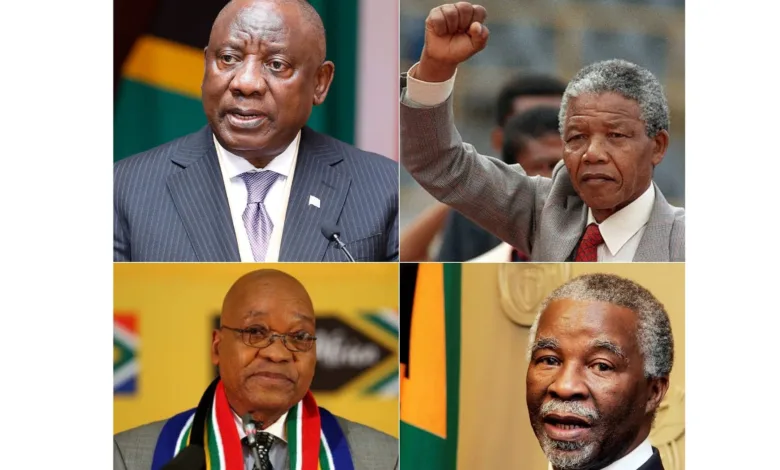
Together with Nelson Mandela, Jacob Zuma, Thabo Mbeki, Cyril Ramaphosa and the relatively young Julius Malema, these were men and women whose names were known, loved and respected in virtually every household and school in Nigeria during the apartheid and post-apartheid years.
They were not just South African heroes, but African heroes.
They represented the pride and dignity of black people everywhere for refusing to bow down before tyranny and the most brutal and bestial expression of racism.
From the day Nigeria gained independence in 1960, it opposed apartheid in South Africa.
We banned Shell and Barclays Bank because of their links with apartheid South Africa.