Nigeria’s 2026 budget : Priorities, gaps, and who really benefits — by Chioma Ahaghotu
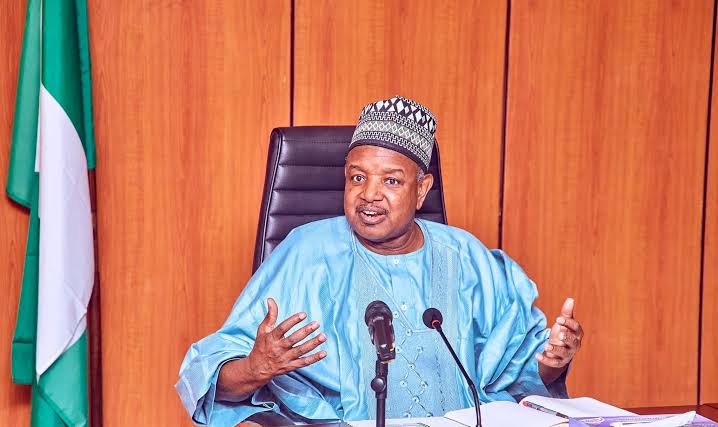
President Tinubu’s ₦58.18 trillion 2026 budget is being marketed as the “Budget of Consolidation, Renewed Resilience and Shared Prosperity.”
I took my time to review the budget and the below is my review.
On paper, the budget prioritizes security, infrastructure, and human capital. But when you look closer, some of the numbers reveal a mix of bold ambition, structural strain, and difficult trade-offs that will shape the direction of Nigeria’s economy for years to come. The rest remain questionable.
Security takes the lion’s share with ₦5.41 trillion allocated to defence and national security. The government is clearly focused on tackling insurgency, terr0rism, banditry, oil theft, and violent crime. Security is necessary, no doubt. But allocating almost one-tenth of the entire budget to this sector raises a deeper question. Are we investing enough in the social and economic foundations that prevent insecurity in the first place?
Infrastructure receives ₦3.56 trillion for roads, rail, power, and economic connectivity. This is critical. Without infrastructure, growth stalls. However, Nigeria’s history is filled with well-funded projects that suffered from poor execution, cost overruns, or abandonment. Allocation is one thing. Delivery is another.
Education gets ₦3.52 trillion, roughly 6 percent of the total budget. While this is an improvement from prior years, it remains far below international benchmarks for transformative reform. Nigeria still battles millions of out-of-school children, underpaid teachers, overcrowded classrooms, and decaying facilities. A country with one of the youngest populations in the world cannot afford symbolic funding of its future workforce.
Healthcare remains tragically underfunded relative to population size and public health demands. Primary healthcare centres across rural communities remain poorly equipped. Maternal mortality and preventable diseases are still major challenges. If human capital is truly a priority, health and education should reflect that commitment more aggressively. This budget stumbles in that regard.
The digital economy allocation was reduced from ₦412 billion in 2025 to ₦268 billion in 2026, a cut of approximately ₦144 billion, nearly 35 percent. This is one of the most concerning shifts in the entire budget.
At a time when global economies are aggressively investing in AI, broadband infrastructure, tech innovation, cybersecurity, and startup ecosystems, Nigeria is scaling back public funding in one of its strongest growth sectors. The digital space has been a rare bright spot, powering fintech expansion, remote work opportunities, creative exports, and youth employment.
Why make this cut?
Is the government betting that the private sector will carry the load?
Is funding being redirected toward immediate security pressures?
Is this simply a reflection of revenue constraints and the weight of debt servicing?
Or does it signal a shift away from aggressive digital expansion as a core economic strategy?
Whatever the reasoning, reducing investment in technology while trying to diversify the economy away from oil seems contradictory. Digital infrastructure is not a luxury. It is a growth multiplier.
Debt and fiscal pressure dominate the structure of the budget. With a ₦23.85 trillion deficit and ₦15.52 trillion going to debt servicing alone, a huge portion of national revenue is tied up in past borrowing. That means less room to invest in schools, hospitals, power, agriculture, and innovation.
Recurrent expenditure remains high, with a large share of funds going to salaries, overhead, and government operations. Capital expenditure, while significant, still competes with the growing cost of maintaining the machinery of government.
Luxury and comfort spending for officials remains deeply troubling. Billions allocated for vehicles, renovations, furnishings, and administrative perks stand in stark contrast to underfunded classrooms and clinics. When citizens are tightening their belts, the symbolism of political comfort matters. Governance is not only about numbers. It is also about ethical messaging.
Revenue assumptions also deserve scrutiny. Oil production targets and revenue projections must hold up in a volatile global market. If they do not, the deficit could widen further, increasing borrowing and future debt burdens.
Execution remains the ultimate test. Nigeria has historically struggled not only with allocation but with transparency, accountability, and project completion.
Without strong oversight, even a ₦58.18 trillion budget can fail to meaningfully improve everyday life for Nigerians.
The 2026 budget reflects clear intentions in securing the country and pushing infrastructure. But massive deficits, heavy debt servicing, underfunded health and education, a ₦144 billion cut to the digital economy, high recurrent spending, optimistic revenue assumptions, and continued luxury allocations reveal structural imbalances.
For real progress, Nigeria needs disciplined execution, transparent monitoring, stronger revenue reforms, and a genuine rebalancing of priorities so that education, healthcare, digital innovation, and citizen welfare take precedence over political comfort.
The question is not whether the budget is big.
The question is whether it can be implemented in the right places.