The politics of changing minds: Reno and Bwala as a case study — by Kayode Adebiyi
There is a need to clear a few things up. Many Nigerians are pathetically naïve about politics and how it is played, not only in Nigeria but across the world.
The fact that I wrote a critique of Daniel Bwala’s interview with Mehdi Hasan on Head to Head does not suggest that I am against him as a person, nor does it mean I oppose the fact that he later came out to support President Tinubu after previously opposing and criticising him fiercely during and after the election.
Politics is not like robotics. It’s not some mechanical system where people are programmed once and expected to stick to the same beliefs forever.
Politics is a human endeavor—fluid, dynamic, and always influenced by new information, changing realities, and evolving beliefs. Any political culture that insists on unwavering ideological consistency from individuals misses the essence of democracy.


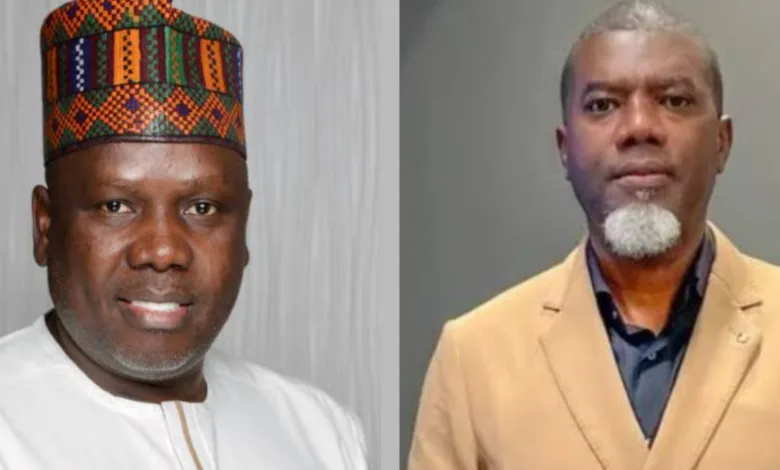
That’s why the attacks from certain opposition groups and their online supporters against Daniel Bwala and Reno Omokri are not just misguided; they’re also incredibly hypocritical. Their alleged crime? They once opposed Bola Ahmed Tinubu but later decided to support and defend his policies.
But let’s be real: changing your mind in politics isn’t strange or wrong. In fact, it often shows that someone is intellectually engaged—ready to reassess facts, review evidence, and shift their stance when the situation calls for it.
Politics Is Built on Evolution. Political history in well-established democracies like the United Kingdom and the United States is packed with instances of politicians who have shifted from criticizing a candidate or policy to supporting it wholeheartedly.
Take Senator Lindsey Graham, for example. He was quite vocal in his criticism of Donald Trump during the 2016 Republican primaries, even warning that nominating Trump could spell trouble for the party.
However, once Trump secured the Republican nomination and later took office as president, Graham transformed into one of his staunchest supporters in Washington.
Similarly, Senator Ted Cruz, who had a notoriously bitter rivalry with Trump during the primaries, eventually came around to being a strong advocate for his presidency.
Another good great example of this is JD Vance. Before he stepped into the political arena, Vance was one of the most vocal conservative critics of Donald Trump during the 2016 election.
He didn’t hold back in questioning Trump’s fitness for the presidency and stood alongside other conservatives who were quite sceptical of his candidacy.
However, as politics shifted and situations evolved, Vance took a fresh look at his stance. Today, he not only backs Trump but also holds the position of Vice President.
This clearly demonstrates that it’s not uncommon for someone to change their political views. It’s a natural aspect of democratic politics, where people reconsider facts, reevaluate their opinions, and adjust their positions as needed.
In Britain, Boris Johnson once held more moderate views on Europe before eventually becoming the most prominent champion of Brexit, leading the campaign for Britain to leave the European Union and later implementing that policy as prime minister.
These examples demonstrate a simple truth: political positions evolve.
Even within Nigeria, the same phenomenon exists. A striking example is Peter Obi himself whose supporters are the most vicious against Bwala and Reno.
In the 2019 Nigerian presidential election, Obi served as the running mate to Atiku Abubakar under the PDP. They contested the election together but were defeated.
In the run-up to the 2023 Nigerian presidential election, however, Obi left the PDP. At the time, he criticised elements within the party’s structure, describing the internal political environment in very harsh terms and suggesting it had become incompatible with the values he wanted to represent. He called them a structure of criminality.
Yet politics, as always, evolves. Today, Obi finds himself politically aligned again with figures within that same political ecosystem he once referred to as the structure of criminality in ADC.
That was that the first time he changed political direction. Obi had previously served two terms as governor of Anambra State under the APGA, a party founded by late Ikemba Chukwuemeka Odumegwu Ojukwu.
At one point, Obi vowed that he would never leave that platform. Yet he eventually left APGA and joined the PDP ahead of the 2015 general election.
These shifts are not anomalies. They are standard features of political life. Grapevine just informed me that he may soon be moving out of ADC in the days and weeks to come. Watch this space!
The outrage directed at Daniel Bwala and Reno Omokri, therefore, has little to do with principle. It has far more to do with political loss.
From 2022, both men were among the loudest and most articulate critics of President Tinubu in the media space. They were visible, persuasive, and highly effective communicators across television, print, and digital platforms in Nigeria.
When such figures shift political alignment, the opposition does not simply lose two individuals. It loses two influential voices capable of shaping narratives and influencing public discourse. That loss hurts, and that pain explains the relentless attempt to discredit them by opposition foot soldiers.
Now to the obvious point of contention: Daniel Bwala’s appearance with Mehdi Hasan on Head to Head.
Yes, the interview did not go well. But the problem was not the legitimacy of changing one’s mind. The problem was that Bwala did not clearly articulate the intellectual journey behind his change of position.
Medhi Hasan did what any skilled interviewer would do by presenting past statements and asked Bwala to reconcile them with his present views. That is where stronger preparation could have made a difference.
Interestingly, Reno Omokri might have handled such a confrontation more effectively. Omokri has built a reputation for responding to criticism with detailed explanations, timelines, and documented evidence.
A notable example involves the long-running controversy about whether President Tinubu attended Chicago State University. Omokri was once among the critics who questioned that claim. However, instead of relying solely on political rhetoric, he undertook his own fact-finding visit to the university.
After examining records firsthand, he concluded that Tinubu indeed attended the institution and publicly revised his earlier position. That is not hypocrisy—it is intellectual honesty.
The real hypocrisy comes from those who insist that political views should never change. Let’s be honest, people aren’t robots. We learn, we dig deeper, and we uncover new information. We also take a fresh look at our old beliefs.
In the realm of science, this is known as evidence-based reasoning.
In philosophy, it’s referred to as intellectual humility.
But in politics, critics often label it as betrayal.
That argument doesn’t hold up when you consider the lessons of history. Daniel Bwala and Reno Omokri aren’t the first to shift from opposition to support, and they certainly won’t be the last. Political evolution has been part of democracy since its inception.
The anger directed at them is less about principles and more about the political landscape. The opposition is upset because it has lost two influential voices in shaping public opinion.
However, just because there’s outrage doesn’t mean people can’t change their minds. Democracy flourishes precisely because individuals have the freedom to rethink, reassess, and realign their beliefs when new evidence or experiences come to light.