One-on-one with Dr. Kadri Obafemi Hamzat on LTV — by Bola Bolawole
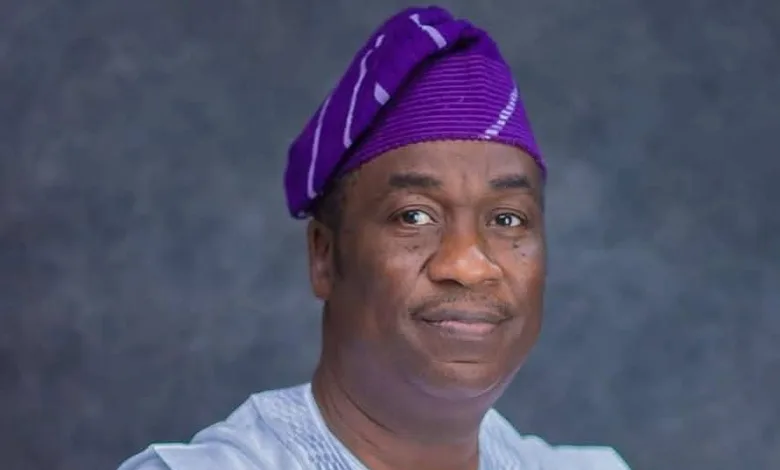
Yesterday, Tuesday, October 20, 2026, I was invited by my professional colleagues at the Lagos Television (LTV), Agidingbi, Ikeja, Lagos as an analyst to review the Lagos State Deputy Governor, Dr. Kadri Obafemi Hamzat’s face-to-face grilling by a team of top LTV journalists. LTV tagged the encounter “One-on-one with Dr. Kadri Obafemi Hamfat” but the Deputy Governor caused roaring laughter when he described it as “three-on-one” encounter!
He was right. His interviewers, though courteous, pulled no punches as they grilled him, asking comfortable as well as uncomfortable questions about the Babajide Sanwo-Olu government, in which Hamzat is the Nos. Two. What will Hamzat do differently when he steps out of Sanwo-Olu’s shadows and becomes his own man? Hamzat is the All Progressives Congress (APC) governorship candidate in the forthcoming 2027 governorship elections.
To start with, I was surprised Hamzat chose – or agreed – to be the guest of LTV. Our leaders have the penchant of abandoning what is theirs while promoting and reinforcing what belongs to others – even when such platforms spew pepper in their face! If Hamzat is elected, I expect him to build LTV and the Lagos state radio stations to world-class standards! Who says they cannot rival or even out-perform the private stations that our governments run to, even when those ones hold no secret of their deliberate act of rubbishing them!
As I sat down to write this, I first asked the question whether the “Dr.” in Hamzat’s name is academic or honoris causa. Remember the Federal Government has decreed that only academic doctorate degree holders now qualify to put “Dr.” before their name. So I asked, and this is what I got: “Dr. Kadri Obafemi Hamzat’s doctorate degree is an academic Ph.D. Degree type: Ph.D. in Process Systems Engineering (or Systems Process Engineering). Institution: Cranfield University, United Kingdom. Year Earned: 1992.” So the coast is clear! We can now comfortably address the APC governorship candidate as Dr. Kadri Obafemi Hamzat! For obvious reasons, he is the man to beat in next year’s governorship election in Lagos state.

Since the beginning of the current democratic experiment in 1999, the political tendency to which Hamzat belongs has had a firm grip on the politics of Lagos, beginning with the first governor, Asiwaju Bola Ahmed Tinubu (1999 – 2007). Since then, Tinubu has remained the godfather of Lagos politics. Every candidate put forward and backed by him has effortlessly coasted home to victory. Since 2011, whoever Tinubu backed has won the governorship election in Lagos state. But that is just one factor that may work in Hamzat’s favour.
Another factor is the pedigree of Hamzat himself. His kind of experience and exposure to the nuances and internal workings of the Lagos State government is unrivalled by his fellow contestants. To start with, his academic qualifications are impressive: B.Sc. (1986) and M.Sc. (1988) in Agricultural Engineering from the University of Ibadan and, as stated above, Ph.D. in Systems Process Engineering from Cranfield University, England (1992). He served as the Lagos State Commissioner for Science and Technology (2005 – 2011); Commissioner for Works and Infrastructure (2011 – 2015); Special Adviser (Technical) to the Minister of Works, Power and Housing (2016 – 2018); and Deputy Governor, Lagos State from 2019 to date.
I don’t think there is anyone competing for the post of governor with Hamzat that has his level of cognate experience. One advantage this gives is that he has what it takes to hit the ground running – if elected. The flip side, however, is that it will not take long for him to disappoint the people if he does not hit the ground running – because he will have no excuse for not doing so!
At yesterday’s one-on-one (or three-on-one!), Hamzat demonstrated a good grasp of the issues, problems and dreams of Lagosians. He reeled out facts and figures and explained policy thrusts that would convince anyone that he is not just a “spare tyre” that was sparingly used. This is commendable of himself and his principal for, as they say, it takes two to tango.
Hamzat touched on many issues, few of which I will dwell on here. To ensure that more Lagosians are carried along by the government, he said they will begin to translate the state budget into the Yoruba language. That is a good one. I was particularly happy when one of the interviewers asked the Deputy Governor to also explain to his listeners in Yoruba language all that he had said – and Hamzat did not disappoint. Our languages must not be allowed to go into extinction, either by error of omission or commission.
The APC governorship candidate spoke on the problem of housing deficit and what the government is currently doing about it; he will continue in the same direction, he said. He also spoke on the rail sector linking various parts of the state. Brilliant ideas, but I would like him to also consider, in addition, the solutions that other countries have provided: fast-moving trains that link not just the different parts of Lagos (Epe, Badary, Ikorodu, Ibeju–Lekki, Alimoso, etc) to the capital, Ikeja, but that also link Lagos to, at least, the adjourning states.
Lagos has a very small land mass; yet, the rate of rural-urban migration into the city is astronomical. Statistics show that up to 1.1 million people migrate into Lagos every year and over half of them stay put. As Hamzat himself rightly said, Lagos state accounts for a miniscule 0.4% of Nigeria’s total land mass but about 11% of its population.
With the rate at which Lagos is growing within a land mass that is choking up everything, there is no number of housing projects that will adequately address the problems of housing deficit and escalating cost of house rent; and there is no infrastructure provided that will not be overstretched within a short period. The rural-urban migration must be stemmed. What people are running to Lagos to get or enjoy should be provided for them in the towns and villages from which they are fleeing.
Fast-moving trains should be provided that will allow, for instance, that I live in my own compound at Owo but commute by train to Lagos to work and return the same day to Owo with no stress at all. That way, Lagos will automatically be decongested; the strain on public infrastructure will reduce; escalating rents will abate, and our rural areas will receive a new lease of life.
Hamzat spoke of the beautiful idea of turning waste into wealth by using it to generate power. This is one stone that has the potential of killing two birds at a time as it solves both the problem of waste as well as generates power. But that is just at the tail end of the problem. The government must find a way to collect waste at source so as to prevent it getting onto the highways. One way this can be done is to ensure that people pay for the disposal of the waste they generate as well as use whatever structure is put in place to collect waste at source; otherwise, our streets and highways will continue to be littered through the indiscriminate dumping of waste.
New dumpsites are being constructed, which is good, but I heard a sorrowful story of one of such contractors who worked at the Agbowa site but has been thrown into debt. This contrasts sharply with what Hamzat said was the Lagos State Government’s policy of promptly paying its contractors. What, then, could have gone wrong?
Hamzat gave assurances that the Fourth Mainland Bridge will be built but explained how costly the project is and why foreign partners must be brought on board. The technicalities are being worked out, he said. The earlier, the better because costs keep going up by the day.
Is Lagos doing well in the education sector? There are areas that need its urgent attention. How, for instance, can the running costs given to the principals of secondary schools still remain at Two Hundred and Fifty Thousand Naira per month, despite the astronomical inflationary trend and the huge depreciation of the Naira? There is also the aching issue of shortage of teachers in many of our secondary schools, with many principals forced to recourse to the employment of ad-hoc teachers. Old students’ associations and parents-teachers associations also fill the yawning gaps that inadequate funding creates.
In all, the one-on-one encounter was worth the while. But as I sat down to write this, a long-standing friend who just retired as a Level 17 step 9 Director (Vice-principal of a Lagos State secondary school) informed me in tears that her monthly pension is 70,000 Naira while in neighbouring Ogun, Oyo and Osun states, it ranges between 250,000 and 350,000 Naira monthly for retirees on a similar scale.
My immediate younger sister, who retired as a primary school teacher in Lagos state, once told me her pension was 45,000 Naira. Besides, it is said that it takes years after retirement before pensioners can begin to draw their pension in Lagos while those in other states draw theirs immediately after retirement.
I know Lagos is the Centre of Excellence and the doyen of Nigeria’s 36 states. What, then, can the matter be?
- Former Editor of PUNCH newspapers, Chairman of its Editorial Board and Deputy Editor-in-Chief, BOLAWOLE was also the Managing Director/ Editor-in-Chief of The WESTERNER newsmagazine. He writes the ON THE LORD’S DAY column in the Sunday TRIBUNE and TREASURES column in the New Telegraph newspaper on Wednesdays. He is also a public affairs analyst on radio and television.