2027: Why Tinubu will reclaim Abuja – The Wike and Aduda factors — by Okoi Obono-Obla
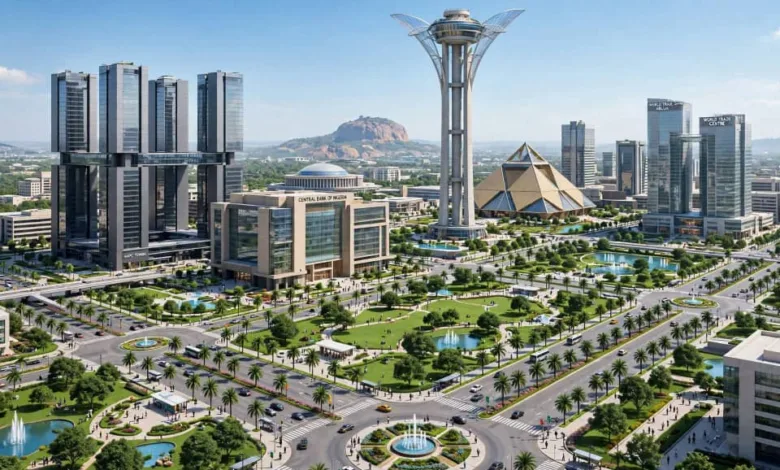
In 2023, the Labour Party presidential candidate, Peter Obi, in one of the major surprises and upsets of the election, won the Federal Capital Territory, Abuja, defeating Bola Ahmed Tinubu and Atiku Abubakar.
The defeat of the APC in the FCT was driven by several factors: high energy costs, shortages of petroleum products, currency scarcity and excruciating hardship exacerbated by the naira redesign policy, a tinge of overconfidence in the APC campaign in Abuja, and the conspiracy by certain elements in the APC-led Federal Government against then-candidate Bola Ahmed Tinubu.
But in 2027, the tide has dramatically changed.
President Bola Ahmed Tinubu appointed as Minister of the Federal Capital Territory Administration, Barrister Nyesom Wike, former Governor of Rivers State and leader of a powerful faction of the Peoples Democratic Party (PDP), with whom he had sealed a deal in Rivers State to support him. Wike delivered, with Tinubu winning Rivers State — one of the politically powerful states with a voting strength that can swing the pendulum of presidential elections. The Supreme Court nevertheless held that President Bola Ahmed Tinubu won Rivers State fair and square, and therefore those who still dispute the result of the election in Rivers State are just being academic.
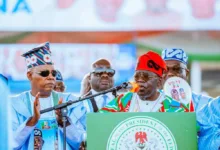

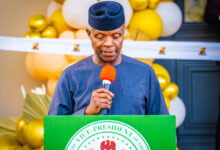
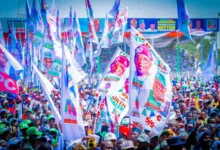
Wike has performed exceptionally well in the Federal Capital Territory, with tremendous improvements in its infrastructure, leading to the completion of projects that had been partially or completely abandoned for years. Wike is an intelligent, fire-eating and shrewd politician, and combines these sterling qualities with a dosage of humour, lightheartedness and performance which always leaves his detractors awed. He is the campaign director of President Tinubu’s campaign in Abuja and has promised to deliver, otherwise he will resign his appointment.
In the last Area Council elections, he ensured that the APC won — a party that did not have a good record of winning Council elections in the FCT since it came to power in 2015.
Abuja is supposed to be a no-man’s land, and one of the reasons why the government in 1975 decided to move the capital from Lagos to Abuja was to stop any of the three big ethnic nationalities in the country from laying claim to it in their struggle to outwit one another in the politics of who gets what, when and how in a usually fractious country. However, constitutionally, Abuja has the status of a State even though it is not counted among the 36 States of the Federation of Nigeria.
The 2027 Projection
The question now is: using the above factors, who among President Bola Ahmed Tinubu (APC), Peter Obi who is running under a new platform, and Atiku Abubakar under the African Democratic Congress (ADC) — two platforms that have not really established strong footing in Abuja unlike in 2023 when they ran under Labour Party and the PDP — will win Abuja in both the presidential and National Assembly elections? Abuja has two seats in the House of Representatives and one senatorial seat.
- Presidential Election: Advantage Tinubu
The pendulum has swung back to the APC in the FCT for three reasons.
First, the Wike Factor. In 2023, the APC had no political structure in Abuja. In 2027, it has an incumbent FCT Minister who controls the bureaucracy, the area councils and the massive infrastructure budget. His promise to deliver Abuja or resign has turned the FCT election into a referendum on his own performance.
Second, the Indigenous Vote. In 2023, Peter Obi won the FCT because he swept both the elite urban vote in AMAC/Bwari and the indigenous vote. With the APC now fielding Philip Aduda, an experienced parliamentarian and an ethnic Gbagyi — one of the small ethnic groups indigenous to Abuja — who is seen as a folk hero, the indigenous vote in Abaji, Kwali, Kuje and parts of AMAC that previously went to the PDP and Labour is likely to split heavily in favour of the APC. This directly strengthens Tinubu’s presidential numbers.
Third, party structure. The Labour Party in 2023 had a movement. The new platforms are yet to build polling-unit structures across the 62 wards of the FCT. Without that structure to protect votes, even a popular candidate will struggle against an entrenched APC.
On this basis, President Bola Ahmed Tinubu is projected to win the FCT in 2027.
- National Assembly: APC Set to Reclaim Ground
Senate: The FCT Senate seat has historically been won by a native or someone perceived to champion native interests. Ireti Kingibe (Labour) won in 2023 on the Obi wave against Aduda. In a rematch, with Aduda now on the ruling party platform, with federal backing and his Gbagyi base intact, the APC is projected to retake the FCT Senate seat.
House of Representatives: Abuja is divided into two federal constituencies: AMAC/Bwari and Gwagwalada/Kuje/Kwali/Abaji. In 2023, Labour won both seats. In 2027, the outcome is likely to be split. The AMAC/Bwari seat, which is urban, civil servant and youth-dominated, will remain highly competitive and could still go to the opposition if Obi’s personal popularity holds among the urban middle class. The Gwagwalada/Kwali/Kuje/Abaji seat, which is more indigenous and rural, is projected to go to the APC on the back of the Aduda/Wike alliance and the Area Council structures.
In summary, the APC enters 2027 in the FCT not as the party that was rejected in 2023, but as the party with the Minister, the Councils, and the indigenous candidate.