Lagos gives residents until December to obtain health insurance
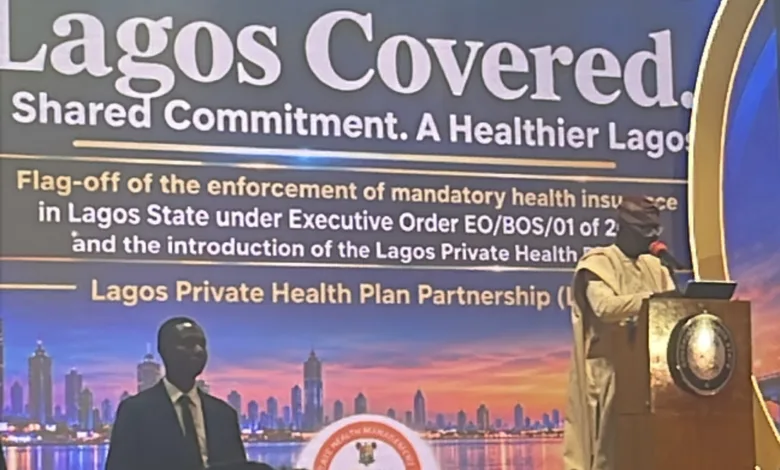
Lagos State Governor Babajide Sanwo-Olu has given residents, employers and workers until December 31, 2026, to obtain health insurance, ahead of the full enforcement of mandatory coverage from January 1, 2027.
The governor announced the deadline on Tuesday while unveiling the Lagos Private Health Plan (LPHP), a scheme designed to extend health insurance to salaried workers and corporate organisations. The new plans complement the existing Ilera Eko scheme, which caters to vulnerable residents and people in the informal sector.
Sanwo-Olu said the policy, introduced under Executive Order EO/BOS/01/2024, was aimed at reducing out-of-pocket healthcare expenses and preventing medical bills from pushing families into financial hardship. He, however, announced a moratorium until December 31, 2026, to allow individuals and organisations to enrol before enforcement begins.
The governor said 21 health maintenance organisations had endorsed participation in the private health plans, adding that licensed actuaries had reviewed nearly two million claims and enrolment records to determine the cost of providing coverage for the formal sector. He also announced the establishment of an implementation steering committee and an enforcement task force to coordinate the rollout and ensure compliance.




According to Sanwo-Olu, the state will monitor participating health maintenance organisations to ensure timely payment of hospital claims and the delivery of services covered by insurance plans. He said at least 70 per cent of every naira collected as premiums must be spent on healthcare, while quarterly monitoring results would be published to promote transparency and accountability.
The governor added that contributions to the private health plans would support the Lagos State Health Equity Fund, which provides coverage for residents unable to afford premiums. He said the policy would also help improve the availability of drugs, medical equipment and personnel in public health facilities, while urging healthcare professionals to reconsider emigration as improved financing could strengthen the sector.
In his remarks, the Commissioner for Health Akin Abayomi described the policy as a major shift from the state’s reliance on out-of-pocket payments, which he said exposed households to excessive expenses when illness occurred. He explained that insurance spreads healthcare costs across a pool of contributors, giving families greater financial protection and hospitals a more predictable source of income.
Abayomi said Lagos had about two million insured residents and was targeting at least 10 million, stressing that broader participation was necessary to make the system sustainable. Meanwhile, the Chairman of the Lagos State Health Management Agency board, Adebayo Adedewe, said the agency was intensifying public awareness through radio campaigns, billboards, digital advocacy and partnerships with traditional rulers, market associations and transport unions.
Adedewe also disclosed that the Lagos State Health Equity Fund had increased from N1 billion to N3 billion to strengthen support for vulnerable residents. He said the agency would continue expanding enrolment and community engagement to ensure that traders, artisans, transport operators and other residents outside the formal workforce could access health insurance.