Tiananmen Square and Lekki Toll Gate: Memory, violence and selective outrage — by Cally Ikpe
On April 15, 1989, following the death of Hu Yaobang, a former Chinese Communist Party leader regarded by reform-minded citizens as sympathetic to political liberalisation, university students began gathering at Tiananmen Square in Beijing to mourn him. What started as a memorial gathering soon evolved into a mass protest demanding political reforms, greater civil liberties, an end to corruption and government accountability.
The demonstrations attracted hundreds of thousands of participants, including workers and ordinary citizens. On May 20, the Chinese authorities declared martial law. On the night of June 3 and into June 4, the People’s Liberation Army (PLA) moved into central Beijing to suppress the demonstrations. Soldiers deployed firearms and armoured vehicles against protesters and other civilians, resulting in widespread casualties.
The exact death toll remains disputed, with estimates varying considerably. Nevertheless, the scale of the violence and its place in China’s modern political history are undeniable. The crackdown attracted international condemnation, while public discussion and commemoration of the June 4 incident remain heavily restricted in mainland China. It demonstrates how governments can seek to control not only the circumstances of historical events but also their subsequent remembrance.
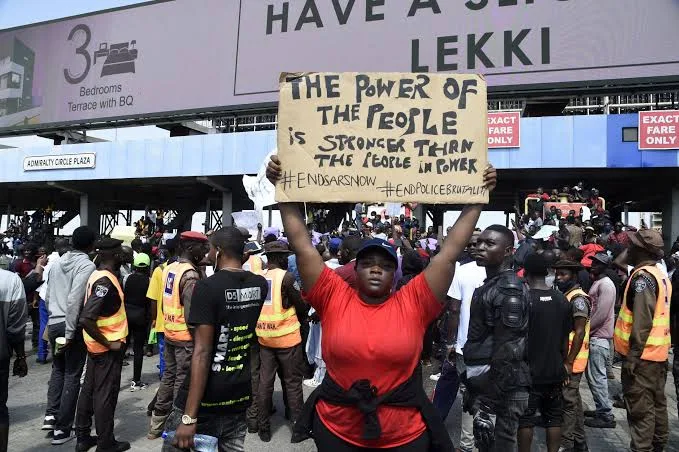
In Nigeria, a comparable episode occurred at the Lekki Toll Gate in Lagos on October 20, 2020, during the nationwide #EndSARS protests.




Thousands of predominantly young Nigerians had taken to the streets demanding an end to police brutality, particularly abuses associated with the notorious Special Anti-Robbery Squad (SARS). The movement soon transcended police reform, becoming an expression of wider frustrations over governance, unemployment, accountability and the state of the nation.
Although largely peaceful, the protests witnessed escalating tensions in several locations. On the evening of October 20, soldiers were deployed to the Lekki Toll Gate, where protesters had continued their demonstration despite a curfew announced by the Lagos State Government.
Amnesty International reported that at least 12 people were killed by security personnel at two Lagos locations, Lekki and Alausa. Subsequently, the Lagos State Judicial Panel of Inquiry identified nine confirmed deaths and four presumed deaths in connection with the Lekki incident. It concluded that soldiers shot, injured and killed unarmed protesters without justification, describing the incident as a massacre. The Lagos State Government’s subsequent White Paper disputed significant aspects of the panel’s findings.
Lekki became the defining symbol of #EndSARS, amplified by mobile phones, social media and real-time documentation. Unlike earlier generations of protesters, these young Nigerians could transmit developments almost instantaneously, transforming a local incident into an international controversy.
The movement’s decentralised structure, without a universally recognised leadership, also complicated conventional government engagement. However, concerns about its political direction should not be confused with established evidence of an organised insurrection or regime-change conspiracy.
The more fundamental question is whether the extraordinary attention devoted to Lekki is matched by an equally consistent national concern for other tragedies that have punctuated Nigeria’s history.
This is not to diminish Lekki, excuse official wrongdoing or discourage its annual remembrance. Rather, it raises a question about our collective memory and the apparent hierarchy of tragedies in our national consciousness.
Consider, for instance, the Asaba Massacre of October 1967 during the Nigerian Civil War. In one of the most horrific acts of violence on Nigerian soil, civilian residents of Asaba gathered to demonstrate their loyalty and support for federal troops. Instead, soldiers separated the men and older boys from the women and executed an estimated 800 people in cold blood, leaving behind a generation of orphans and widows. It remains the darkest single day of the civil war and one of the most grievous massacres in modern African history More than five decades later, demands for adequate acknowledgement, remembrance and accountability remain important to survivors and their descendants.
Particularly, the colouration of the Lekki incident invites comparison with Tiananmen, although disputed casualty figures make definitive numerical comparisons misleading. The more important point is that every civilian life lost through unjustifiable violence deserves recognition.
Other Nigerian tragedies reinforce this argument:
The Aba Women’s War of 1929: Women across colonial southeastern Nigeria protested oppressive colonial policies, including fears of taxation and increased administrative control. British colonial forces and police violently suppressed the protests, killing approximately 50 women according to historical accounts. The uprising remains an important landmark in the history of women’s resistance and political participation.
The Nigerian Air Force C-130 crash of September 26, 1992: One of Nigeria’s worst aviation disasters occurred when a military transport aircraft crashed shortly after taking off from Lagos. All 159 people aboard perished, including military personnel and civilians. The tragedy remains a painful reminder of the human consequences of institutional and operational failures.
The Odi Massacre of November 1999: Following the killing of 12 policemen by an armed gang, Nigerian soldiers invaded Odi, a community in Bayelsa State. The operation resulted in widespread destruction and the deaths of hundreds of civilians, according to Human Rights Watch. Community estimates placed the toll considerably higher, although the figure of 2,000 sometimes cited has not been independently established. Whatever the final number, collective punishment of an entire community was indefensible.
The Zaki-Biam Massacre of October 2001: Following the abduction and killing of 19 soldiers, the military launched reprisal operations across communities in Benue State. Human Rights Watch documented more than 200 civilian deaths, alongside widespread destruction of homes and infrastructure. The incident remains a disturbing example of the dangers of extending responsibility for individual crimes to entire communities.
The Ikeja Cantonment explosion of January 27, 2002: A fire at an ammunition depot within the Lagos military cantonment triggered massive explosions, forcing residents of surrounding communities to flee. Many, including children, drowned in a nearby canal while escaping. Initial World Health Organization reporting put the death toll at approximately 700, while subsequent accounts placed it above 1,000. The disaster exposed grave concerns about the storage of military explosives within densely populated civilian environments.
The bombing of the United Nations House, Abuja, August 26, 2011: A suicide bomber attacked the UN complex, killing 23 people and injuring more than 80, according to the United Nations. The attack, claimed by Boko Haram, targeted an institution dedicated to humanitarian assistance, development and international peace. It underscored the growing threat of terrorism to Nigeria and the international community.
These are by no means exhaustive. Nigeria’s history is replete with massacres, communal conflicts, terrorist attacks, military operations and electoral violence that have claimed thousands of lives.
The question, therefore, is not whether Lekki deserves remembrance. It certainly does. Every community has the right to remember its dead, seek justice and demand accountability. The question is whether our compassion is becoming selective, influenced more by political convenience, generational identification, social media visibility or contemporary disagreements than by an unwavering commitment to human life.
Part of the explanation for Lekki’s prominence lies in its timing and communication environment. Social media gave a generation the capacity to document and circulate events as they unfolded. But suffering does not become more deserving of recognition simply because it is better documented or more widely publicised.
There is also the danger of turning remembrance into a political instrument. When tragedies are invoked principally to discredit opponents, advance partisan interests or settle contemporary political scores, victims risk becoming instruments of agendas that have little to do with justice. The sudden embrace of human rights causes by political actors without a consistent record of such advocacy deserves particular scrutiny, especially when their interventions coincide conveniently with political calculations.
Ultimately, a nation’s humanity is measured not merely by the tragedies it remembers, but by its willingness to acknowledge all victims without discrimination. The dead of Lekki, Asaba, Odi, Zaki-Biam and countless other tragedies do not compete for sympathy. Their memories should complement one another in our collective demand for justice, accountability and a safer society.
Selective empathy cannot produce national healing. Neither can political exploitation of human suffering build a peaceful society. If Nigeria must move towards a violence-free future, it must learn to condemn injustice consistently, irrespective of who suffers, who governs or which political interest stands to benefit.
Human life has no political colour, and the right to remembrance should have no hierarchy.
Cally Ikpe, Ph.D. is a broadcast journalist, and Convener, Road to a Vilence-free Nigeria Initiative. Email: [email protected]