A case for pluralism in Igbo politics — by Marshall Israel
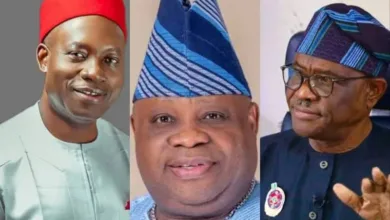
Why should an Igbo man be bullied for not supporting Peter Obi? Why should anyone be threatened for supporting Tinubu or Atiku? Is Peter Obi an “Igbo candidate” or a Nigerian candidate?
Across Nigeria, political disagreement exists within every ethnic bloc. In Yorubaland, not everyone supports Tinubu. In the North, not everyone supports Atiku Abubakar. Yet, dissenters in those regions are rarely branded as traitors or “saboteurs.” Ironically, within Igboland, political difference is increasingly framed as betrayal.
At the return to civil rule in 1979, Igbo politicians and voters were split across major parties. Many aligned with Nnamdi Azikiwe’s Nigerian Peoples Party and Shehu Shagari’s National Party of Nigeria. Yet prominent Igbo elites also worked with Obafemi Awolowo in the Unity Party of Nigeria.
Notably, Chinua Achebe aligned politically with Aminu Kano in the People’s Redemption Party — a minority party at the time. No one branded him a saboteur for making an independent political choice.

When Chukwuemeka Odumegwu Ojukwu returned from exile in 1982, he aligned with the ruling party led by Shehu Shagari. Even this move — by a figure deeply associated with the civil war — was not framed as betrayal of Igbo collective interest.
During the short-lived Third Republic, Igbo politicians were visibly present in both SDP and NRC. Again, pluralism was normal. In the Fourth Republic, Igbos spread across PDP, APC, APGA, and other parties. Diversity of political alignment was not seen as treachery.
This culture began to change around 2015, following the widespread Igbo rejection of Muhammadu Buhari. The emotional weight of that political moment revived wartime language — especially the labelling of dissenting Igbo voices as “saboteurs.”
As the Indigenous People of Biafra under Nnamdi Kanu became the loudest critic of Buhari, opposition to IPOB’s methods increasingly became equated with betrayal of Igbo identity itself. This blurred the line between supporting Igbo interests and supporting a specific movement or leader.
By 2021, the climate of fear deepened. Disagreement with secessionist narratives in some parts of the South-East carried real risks: social exclusion, threats, and in extreme cases, violence. The result was a shrinking of free expression in a region historically known for loud debate and ideological diversity.
Branding dissenters as “Sabo” revives the worst instincts of wartime politics: silencing, intimidation, and moral absolutism. It narrows political imagination and weakens collective bargaining power. When a people punish internal diversity, they reduce themselves to a single storyline — and that makes them easier to marginalize nationally.
Supporting Tinubu, Atiku, Obi, or any other candidate is not an ethnic crime. Business figures, cultural icons, and private citizens who make personal political choices are exercising constitutional rights, not betraying their people.
From pre-colonial times to the First Republic and beyond, Igbo political culture has thrived on argument, dissent, and competitive ideas. Disagreeing with the majority has never been sabotage.
The real sabotage is the attempt to silence minority opinions. A confident people do not fear internal disagreement. They debate, persuade, and move forward.
Igboland is, by history and culture, an individualistic society. This is not a recent development or a product of modern politics; it is a foundational feature of Igbo civilization carefully shaped by our ancestors. The Igbo political and social system was never built around blind conformity or centralized authority. It was built around strong personalities, autonomous communities, debate, dissent, and the freedom of the individual to choose their own path. From village assemblies to market squares, disagreement was not treated as treachery; it was part of how decisions were refined and consensus was reached.
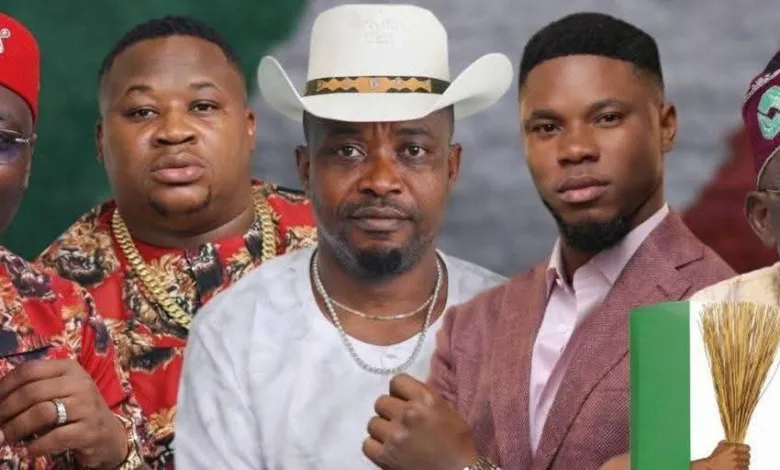
Within this cultural framework, no Onye Igbo commits a crime by supporting a candidate that differs from the dominant sentiment of the moment. Public figures like Obi Cubana, Cubana Chief Priest, and Zenco did not betray Igboland by supporting Bola Ahmed Tinubu. They exercised the same civic freedom that millions of Nigerians exercise during every election cycle. Political preference is not a blood oath, and ethnic identity is not a political prison.
To insist that every Igbo person must support one candidate is to deny the very essence of Igbo political culture. It reduces a historically pluralistic society into a monolithic bloc and replaces persuasion with intimidation. A people known for enterprise, debate, and independent thinking cannot afford to descend into herd politics. The strength of Igboland has always come from its diversity of thought, its competitive ideas, and its refusal to be mentally conscripted.
In the end, political loyalty should be earned through ideas, performance, and persuasion — not enforced through threats, social bullying, or the weaponization of ethnic identity. A confident and self-aware people do not fear internal disagreement. They argue, they differ, and they choose freely. That freedom of choice is not betrayal; it is the soul of Igbo political identity.