FG’s borrowing must be directed toward productive, rather than recurrent consumption, says stakeholders
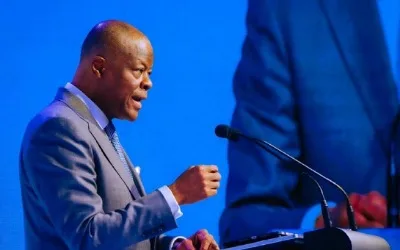
A group of stakeholders have expressed that debt sustainability is a central fiscal objective, stressing that borrowing must be directed toward productive, growth-enhancing investment rather than recurrent consumption.
They also expressed that the current Central Bank of Nigeria (CBN) Monetary Policy Rate (MPR) of 27 per cent is misaligned with prevailing market realities.
They were speaking at the just concluded Proshare’s 6th Economist Conference focused on the theme: “Debt, Rates, and Growth: Can Nigeria Fund Itself Without Killing Private Investment?.”
The Special Adviser to the President on Finance and the Economy, Mrs. Sanyade Okoli clarified that the government’s approach to borrowing is intended to stimulate economic activity and fund strategic capital investment rather than to merely cover recurrent expenditure.
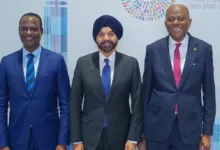

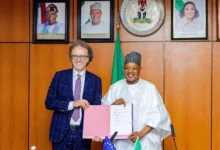

She noted that the risk of the government crowding out the private sector is under active examination, and emphasised that government borrowing is not confined to the domestic market. She cited Nigeria’s recent Eurobond issuance, which was oversubscribed, as evidence of continued access to international capital markets on credible terms. Nonetheless, she underscored that revenue mobilisation remains a higher-order priority, and that macroeconomic stability, particularly on the inflation front, is essential for sustaining the growth trajectory.
On fiscal communication, she conceded that the government could do more, noting that work is underway to introduce quarterly fiscal engagement sessions.
On his part, Group Chief Executive Officer, Cowry Asset Management, Mr. Johnson Chukwu noted that with external debt estimated at approximately $47 billion, projected debt service of around N15.5 trillion against revenues of N34 trillion, and unrelenting domestic borrowing requirements, debt service obligations could consume nearly half of total government revenue, leaving severely constrained fiscal space and heightening the risk of a financing squeeze.
On asset management, he expressed reservations about outright asset sales, characterising the government’s proposed N189 billion asset sale as insufficient relative to the N23.85 trillion 2026 budget deficit. He advocated instead for converting non-performing or underutilised public assets into income-generating ventures through commercial concessioning or structured private-sector partnerships, and cautioned strongly against divesting strategic, high-performing assets. He also underlined the importance of prioritising social infrastructure spending.
He suggested that the MPC should consider a moderate rate easing, noting that the current policy stance no longer appears aligned with market realities.
Department of Economics, University of Calabar, Prof. Frances Obafemi questioned whether anything fundamentally new would be said before affirming that the real problem in Nigeria is not a shortage of ideas for optimising debt but a chronic deficit of political will and disciplined implementation.
She argued that borrowing has never been Nigeria’s fundamental problem. The central issue is what the country borrows for and how those borrowings are deployed. In the current environment of ongoing reforms, she argued that Nigeria must undertake two simultaneous shifts: an expenditure switch and a borrowing switch.
The expenditure switch, as she described it, is a deliberate reduction in borrowing for consumption purposes, including financing elections and recurrent obligations such as salaries, and a corresponding reorientation toward borrowing to support productive investment. The borrowing switch recommends that commercial banks increase their lending to the private and real sectors rather than channelling resources into high-yield government instruments, thereby capitalising on current market conditions while avoiding the crowding-out dynamic that undermines broader economic activity.
Professor Obafemi identified poor coordination between fiscal and monetary policy as a structural source of the persistent gap between the monetary policy rate and actual market rates.
She also recommended that Nigeria’s debt priorities should be anchored in strengthening the Fiscal Responsibility Act and in borrowing explicitly tied to growth-enhancing, productivity-raising projects.
One of the guest speaker contributions, Dr. Ayo Teriba, who is also the Chief Executive Officer, Economic Associates commended the administration for its success in ending the Central Bank’s Ways and Means financing and completing its securitisation, describing this as an important milestone in fiscal discipline.
However, he argued that the government’s continued heavy reliance on debt as its primary financing instrument is both unnecessary and suboptimal, given that Nigeria operates a buoyant capital market.
His core recommendation was for the government to list public sector assets on the Nigerian capital market, enabling equity issuance, independent risk rating, and market-determined valuations. He noted that the current naira appreciation environment provides a liquidity tailwind for the equity market, and expressed confidence that the stock market is likely to double in value through 2026 and potentially triple in 2027, reflecting a trajectory similar to 2006 and 2007 when the naira was last at a comparable point of stability and appreciation.
He expressed strong concern about the misalignment between the CBN’s MPR of 27 percent and prevailing market rates, describing the MPC as disconnected from current economic realities. On the exchange rate, he diverged from Mr. Chukwu, arguing that the naira remains undervalued and that continued appreciation will, over time, support higher liquidity and reduce input costs and production costs for domestic manufacturers.
Another contributor, the chief Executive Officer, The CFG Advisory, Mr. Tilewa Adebajo, who focused primarily on the sustainability of Nigeria’s external debt, estimated at approximately $46 billion, alongside domestic debt of approximately N80 trillion.
He argued that the government should not be borrowing dollars to convert them into naira for domestic operational purposes, describing this as a structurally unsound approach. He acknowledged that net reserves exceeding $30 billion provide near-term stability but argued that this buffer must not lead to complacency.
He also expressed concern about the necessary disclosure in the federal government’s balance sheet and the availability of data required for credible independent analysis. He argued that reliance on official announcements rather than audited, detailed accounts creates analytical blind spots for investors and market participants.