How Iranian president’s trip to New York brought his country together
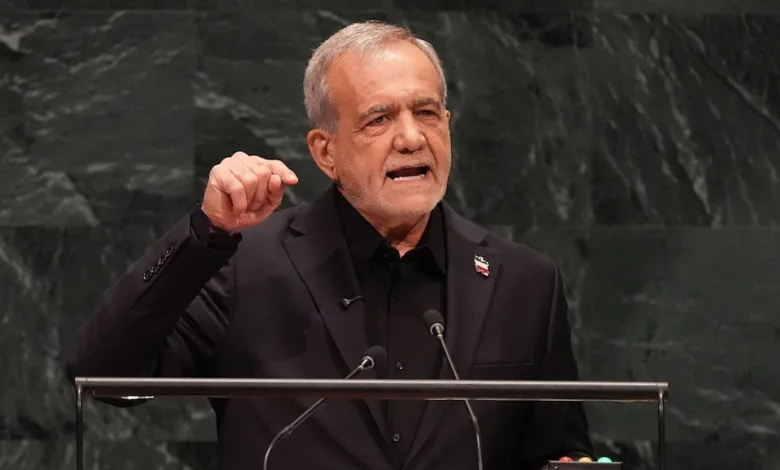
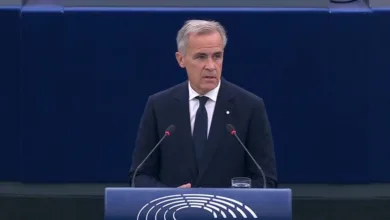
When Masoud Pezeshkian, the Iranian president, stepped up to the rostrum of the UN General Assembly on Wednesday, there were nerves in New York and Tehran.
The Iranian delegation had faced fierce criticism from within its own country for daring to travel into enemy territory and sit down with its “wicked leaders”.
But then Mr Pezeshkian started talking.
He held up photographs of the slain supreme leader and children bombed to death by US forces in their classrooms.

“Yesterday, the president of America said we are terrorists,” Mr Pezeshkian told the chamber. “We are the victims of terrorism.”
The Americans walked out.
It was a strong message delivered just as much to the leaders at home in Iran as the leaders in the room.
Praise poured in from reformists and hardliners, generals and clerics, the speaker of parliament and the men around the throne.
They stood behind a president many of them had spent the past year trying to weaken. Some had called him a “compromiser”, which in Iranian political vocabulary translates as “traitor”.
Analysts in Tehran framed the New York trip as more than theatre.
They pointed to meetings with Steve Witkoff and Jared Kushner, America’s chief negotiators. They noted how Abbas Araghchi, the foreign minister, shook hands and sat down with Ed Miliband, the Foreign Secretary. And they even saw their president on Fox News.
Nooreddin Ahei, one such analyst, said “negotiation is also a kind of struggle”, and that Tehran’s real task was “preventing the formation of a consensus against Iran”.
Threats, Mr Pezeshkian warned, “only make our nation more united”. Iran was “ready for dialogue, but we will not accept the language of force”.
At the podium, Mr Pezeshkian moved between sadness and anger.
He described a school in Minab and a sports hall in Lamerd struck by US missiles, killing children.
And then he turned to Israel.
“The nuclear bomb is in Israel, but the inspectors are in Iran. Israel kills, but Iran is sanctioned,” he said with a flourish.
Israel has never confirmed or denied possessing nuclear weapons, but has the capabilities to build one, and is considered a de facto nuclear weapon state by the UK.
At home, the reviews scored well across every factional divide.
Mohammad Reza Aref, the vice-president, said it was “not Dr Pezeshkian but a nation” that had spoken “in one voice”.
Mohammad Bagher Ghalibaf, the chief peace negotiator, said the president had spoken on behalf of a millennia-old civilisation.
Gholam Hossein Mohseni Ejei, the judiciary chief, said he had “disgraced the American and Zionist criminals”.
Even Hossein Shariatmadari, the hardline Kayhan newspaper editor who has long scorned the moderate administrations, called the speech “a documented response to Trump’s nonsense” and ran his front page on Thursday with a bold line: “Well done Mr President.”
It is rare in Iran for so many voices to be united.
Mr Pezeshkian then appeared on American television screens. When asked by Fox News whether Iran wanted a nuclear bomb, he said: “Not at all. Not at all,” citing a fatwa that said weapons of mass destruction were “unholy”.
Tehran was “willing to dilute” its enriched uranium and “submit ourselves to verification”, he pledged. The Islamic Republic had also offered that days before bombs started falling on Tehran in February.
The unity, though, did little to mask the fact that one voice was still missing: Mojtaba Khamenei, the supreme leader.
When Fox News asked Mr Pezeshkian when was the last time he had seen Khamenei in person, the Iranian president said they had met “about a month ago” and “conducted talks”.
“I don’t remember the dates. About a month, a month and a half ago,” he said. “We met for about seven hours.”
Pressed for a health update or whether Khamenei was fit to govern, Mr Pezeshkian responded: “Very much so, completely,” adding that his administration was being consulted and directed by Khamenei.
When asked why the supreme leader had yet to address the public since the start of the war, Mr Pezeshkian blamed Khamenei’s absence on the “lack of security that was created by the action of foreigners”.
“The message from Tehran has always been that we are ready for peace and we are not scared of your bombs and threats,” one senior Iranian official told The Telegraph from Tehran.
He added: “The trip has had a good impact, both to the people and top officials, which no statement from Mojtaba could have in the past seven months.
“You can sense unity again but there are still voices, especially from generals who are not really happy with what happened in New York. Pezeshkian will be welcomed with open arms from nearly all political groups in Tehran.”
Mr Pezeshkian, a moderate who won the 2024 election on the promise of bringing personal libraries to Iranians, the official said, delivered what “no past president of Iran could have done in their New York visits”.
Mr Ahei in Tehran said: “In today’s conditions, New York is an important opportunity to defend Iran’s national interests and Iran’s narrative, and to open new diplomatic paths.
“Defending Iran is not only about describing our victimhood. National interests are secured when Iran’s narrative turns into diplomatic power.”
Credit: The Telegraph