Leaders of China, Russia, North Korea and Iran gather in Beijing for huge military parade in challenge to the West
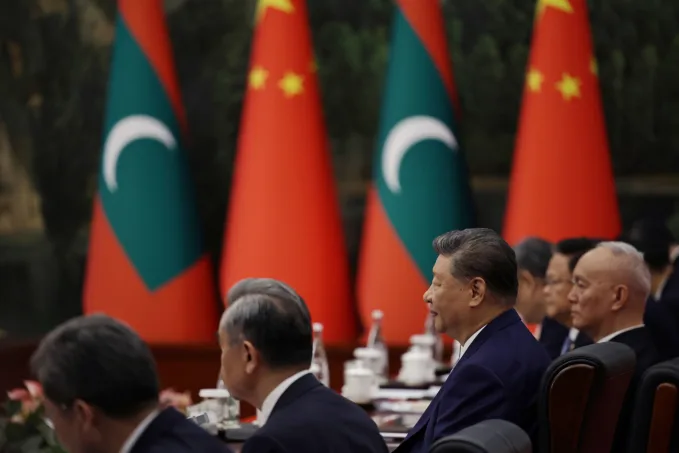
For the last three days, Xi Jinping has played host in one of China’s busiest port cities, welcoming leaders from across Asia and the Middle East for a carefully choreographed summit designed to showcase his vision of a new world order.
Now, the Chinese leader is set to exhibit a very different image with an ostentatious show of military might.
On Wednesday he will commandeer Beijing’s main artery – the Avenue of Eternal Peace – for a major military parade showing off the country’s cutting-edge hypersonic weapons, nuclear-capable missiles, and undersea drones, alongside thousands of goose-stepping soldiers.
Xi’s message with his multi-day exercise of soft and hard power is clear: China is a force that wants to reset global rules – and it’s not afraid to challenge those of the West.
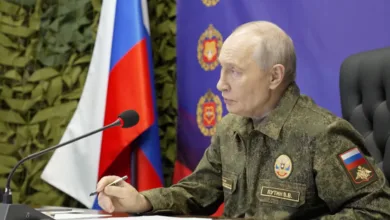
Hitting that message home is Xi’s guest list for the gathering, a cohort of more than two dozen China-friendly world leaders topped by Russian President Vladimir Putin and North Korean leader Kim Jong Un, which also includes Iranian President Masoud Pezeshkian.
That marks the first time that the leaders of a quartet of nations Washington strategists warn are converging to form an anti-American “axis of upheaval” will be together in one event.
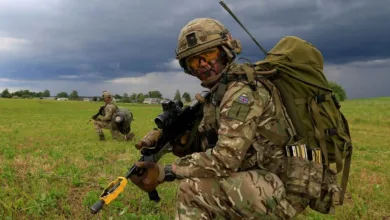
For Western leaders seeking to ramp up pressure on Putin to end his war in Ukraine, those optics appear stark.
Iran, North Korea, China and Russia are seen by some in the West as an emerging anti-American axis because Tehran and Pyongyang have supplied Moscow with weapons and, in North Korea’s case, troops, while China has bolstered Russia’s war-torn economy and industry.
By giving them prominence on a symbolic day for China, Xi is signaling that he has the stature to influence Putin but will not do so on Western terms.
For Xi, China’s longest-serving and most powerful leader in decades, the symbolism – and its timing – is deliberate.
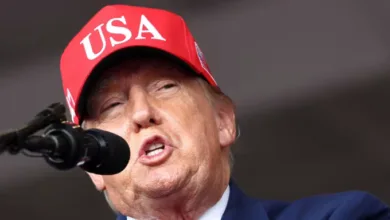
Under President Donald Trump, the United States is shaking up alliances and causing economic strain worldwide through a global trade war. Xi sees an opening to make his boldest demonstration yet of China’s alternative vision to a West-dominated order.
Already the optics are paying off. Images of the summit showed camaraderie among leaders, with Indian Prime Minister Narendra Modi and Putin chatting animatedly with Xi, Modi embracing Putin, and several leaders greeting the Russian president warmly as he walked beside Xi.
Analysts say these moments are as significant as official statements, signaling a convergence of leaders outside the West’s orbit.
“What Xi is trying to convey is certainty about China’s role in international affairs. This signals to people throughout the region that China has arrived as a great power and it’s not going anywhere,” said Jonathan Czin of the Brookings Institution.
Throughout the Shanghai Cooperation Organization (SCO) summit, Xi emphasized stability, development, and opposition to what he called “bullying practices” – Beijing’s code for US actions. He pledged new grants and proposed reforms to the international system.
Xi framed the moment as one of global uncertainty in which China could act as a responsible power. “The house rules of a few countries should not be imposed upon others,” he said.
For countries facing US tariffs and wavering support, that message is resonating. India, for example, was recently hit with steep US tariffs on its exports, fueling frustration in New Delhi. Modi’s warmth toward Xi in Beijing reflected this changing dynamic.
China is also positioning itself as a defender of a “post-war” order rooted in its World War II legacy, alongside Russia. Both Xi and Putin argue that today’s conflicts, including Ukraine and North Korea’s nuclear ambitions, stem from Western disregard for their “legitimate security concerns.”
By hosting Putin, Kim, and Pezeshkian at a parade marking Japan’s defeat in World War II, Xi is reinforcing a narrative of resistance to Western dominance and projecting China as the leader of an alternative global system.
“Xi is pressing ahead with a campaign to delegitimize US leadership, weaken Western solidarity, and elevate China as a credible alternative,” said Tong Zhao of the Carnegie Endowment for International Peace.
As the parade unfolds, the sight of the leaders of China, Russia, North Korea and Iran standing together in Beijing will underline Xi’s ambition to reshape the balance of global power.
Credit: CNN