Nigeria at UNGA 81: Why focus should be on results not physical presence — by Akinremi Bolaji
This is my Opinion as a retired senior Director of Nigeria Foreign Ministry and Author of the 7-Star Diplomat.
There has understandably been public discussion about the decision of President Bola Ahmed Tinubu not to attend physically the high-level week of the 81st United Nations General Assembly in New York. While a presidential presence at the United Nations is always symbolically significant and would undoubtedly have added visibility to Nigeria’s participation, the absence of the President in person should not become a distraction from the substantive objectives Nigeria has pursued — and the results already being recorded — at UNGA 81.
The more important question for a sovereign country such as Nigeria is not simply who was physically present, but what national objectives were established, who was mandated to pursue them, and what outcomes were delivered.
The United Nations itself recognises that the General Debate is addressed not only by Heads of State and Government but also by other high-level representatives. The 81st General Assembly’s General Debate runs from 22–28 September 2026, with high-level representatives participating throughout the programme.
Against this background, Nigeria’s delegation has demonstrated that presidential representation can be strategically deployed through a coordinated team of senior officials.
A PRESIDENTIAL PRESENCE WITHOUT PHYSICAL PRESENCE
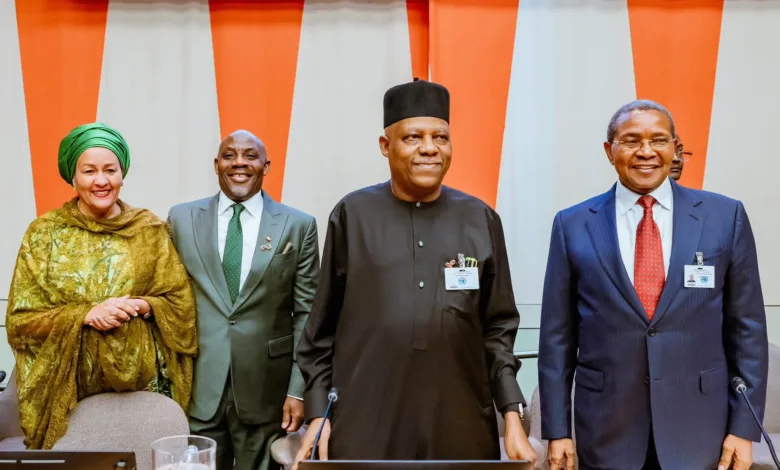
President Tinubu’s participation was not absent from the education agenda. On 23 September, at the high-level Global Partnership for Education (GPE) event co-hosted by Nigeria and Italy, the President delivered a video message supporting the campaign to mobilise US$5 billion for global education financing. Vice President Kashim Shettima represented him physically at the event.
This is important because the event was not merely another side meeting. It placed Nigeria at the centre of one of the major development issues confronting the international community: financing education, strengthening human capital and ensuring that children — particularly those in developing countries and vulnerable circumstances — are not left behind.
Nigeria and Italy jointly championed the GPE financing campaign, while the event brought together senior international leaders, including UN Deputy Secretary-General Amina Mohammed, GPE Board Chair Jakaya Kikwete and education advocate Malala Yousafzai. The Italian Government announced a €50 million contribution to GPE programmes, while governments and donors announced substantial additional commitments during the wider pledging process.
The event therefore provided Nigeria with something more important than ceremonial visibility: a platform for advancing a concrete international development objective.
THE STRENGTH OF THE TEAM MATTERED
The physical representation of Nigeria was also not limited to the Vice President.
The Nigerian delegation included senior officials responsible for Foreign Affairs, Education, subnational development and multilateral diplomacy. The presence of Vice President Kashim Shettima, Foreign Affairs Minister Ambassador Mrs Bianca Ojukwu, Education Minister Dr Tunji Alausa, participating state-level leadership and Nigeria’s Permanent Mission to the United Nations created a broad institutional platform through which Nigeria’s interests could be advanced.
The GPE meeting itself illustrated the value of this coordinated approach.
Vice President Shettima presented Nigeria’s education financing as an investment in economic productivity, prosperity and national stability. He also emphasised that international financing should complement, rather than substitute for, domestic investment. He cited initiatives including the Nigerian Education Loan Fund and Nigeria’s collaboration with the World Bank and GPE through HOPE-EDU, which is expected to reach approximately 29 million children and 500,000 teachers.
This was a significant diplomatic message: Nigeria was not appearing simply as a country asking others to finance its development; it was presenting itself as a country prepared to invest in its own human capital while seeking international partnerships to multiply those efforts.
That positioning is particularly relevant at a time when development assistance is under pressure globally.
THE GPE SUMMIT WAS A MEASURE OF DIPLOMATIC COORDINATION
The outcome of the education summit also deserves attention in assessing Nigeria’s participation at UNGA 81.
The event was substantially subscribed and attracted senior international participation. Major pledges and commitments were announced, including Italy’s €50 million contribution. The broader GPE campaign seeks to mobilise US$5 billion for education and leverage international resources to support partner countries.
The significance of this achievement goes beyond the financial figures.
Nigeria, as co-host, was able to put education, youth, teachers, girls’ education, human capital development and innovative financing firmly on the international agenda. It also provided an opportunity to connect Nigeria’s domestic education reforms with the global conversation on SDG 4.
Credit therefore deserves to go to the Ministry of Foreign Affairs, the Permanent Mission of Nigeria to the United Nations and the wider Nigerian delegation for the preparation, coordination and diplomatic engagement that enabled the country to host and participate effectively in such a high-level programme.
THE VICE PRESIDENT’S BROADER ENGAGEMENTS
The Vice President’s role during the UNGA week should equally be viewed in the context of his wider programme.
Representing the President provides an opportunity to undertake bilateral engagements, participate in multilateral discussions and communicate Nigeria’s priorities directly to international partners.
His engagement with Nigerians in the diaspora at Nigeria House also provided an important additional dimension to the visit. Such interactions allow government to hear directly from citizens abroad, communicate national priorities and strengthen the relationship between Nigeria and its diaspora community.
The cumulative value of these engagements should not be reduced to whether the President himself was physically in the room.
THE UNITED NATIONS IS A MULTILATERAL SYSTEM, NOT A PRESIDENTIAL PHOTO OPPORTUNITY
There is also a broader diplomatic reality that should inform the Nigerian conversation.
UNGA is an annual multilateral process involving 193 sovereign Member States. While Heads of State and Government traditionally feature prominently during the General Debate, the UN framework expressly accommodates other high-level representatives. The United Nations describes the General Debate as a forum where Heads of State and Government and other high-level representatives address the Assembly.
Countries also make different choices about the level at which they are represented, depending on their national circumstances, priorities and diplomatic calculations. Singapore, for example, has historically not required its Prime Minister to be physically present at every UN General Assembly high-level week.
The relevant principle is therefore not that every country must adopt the same model, but that each sovereign government determines how best to deploy its leadership and diplomatic machinery in pursuit of national interests.
Nigeria is equally entitled to make that determination.
THE PRESIDENT’S ABSENCE SHOULD NOT ERASE THE COUNTRY’S ACHIEVEMENTS
It would certainly have been an added advantage for President Tinubu to attend personally. Presidential presence provides visibility, facilitates direct engagement with fellow Heads of State and Government and can create opportunities for high-level diplomacy.
But acknowledging that advantage should not lead to the opposite extreme — treating his absence as if Nigeria therefore failed to participate meaningfully.
That conclusion would overlook the actual work undertaken.
President Tinubu participated in a major GPE event through a video message. The Vice President physically represented him. Nigeria co-hosted a major international education financing initiative with Italy. Nigerian ministers and senior officials engaged in the UNGA programme. Nigeria’s Permanent Mission worked within the multilateral system. International partners made significant education commitments. And Nigeria projected its domestic education reforms as part of a broader international partnership agenda.
These are measurable elements of diplomatic engagement.
WHAT SHOULD MATTER NOW: DELIVERY
The real test should now move beyond the question of attendance to implementation.
Nigeria should ensure that the diplomatic gains from UNGA 81 are converted into practical outcomes:
Follow through on the GPE commitments and partnerships generated during the summit.
Translate international partnerships into measurable benefits for Nigerian children, teachers and education institutions.
Strengthen the Nigeria–Italy education partnership, particularly around teacher development, skills, technology and opportunities for young Africans.
Use the Permanent Mission and Ministry of Foreign Affairs to sustain engagement with GPE, donor governments, multilateral development banks, philanthropy and the private sector.
Ensure that Nigeria’s domestic education commitments remain the anchor, with international financing serving as a multiplier.
Maintain strong diaspora engagement, using Nigeria House and other diplomatic platforms to connect Nigerians abroad with national development opportunities.
Document and communicate measurable outcomes, so that the Nigerian public can assess what was secured, what was promised and what was ultimately delivered.
CONCLUSION
The 81st UN General Assembly should therefore not be reduced to the question of whether President Bola Ahmed Tinubu was physically present in New York.
A President is not the entirety of a nation’s diplomatic machinery.
Nigeria is a sovereign Member State of the United Nations, and its President, as Head of State, has the constitutional and diplomatic prerogative to determine how the country is represented at international engagements. The Nigerian Government has chosen a model in which the President participated virtually in a strategically important GPE initiative while the Vice President and other senior officials handled physical engagements in New York.
The results of the 23 September education summit demonstrate that representation can still be purposeful when backed by preparation, coordination and clear national objectives.
Indeed, the most important question for Nigeria should be: What did we go to UNGA to achieve, and what did we achieve?
On the evidence emerging from the GPE summit, Nigeria succeeded in placing itself at the centre of an important global conversation on education financing, human capital and development. The impressive international participation and financial commitments provide a platform that Nigeria must now convert into tangible outcomes.
The expected delivery of Nigeria’s national statement by Vice President Kashim Shettima on behalf of President Tinubu on 24 September will provide another opportunity to articulate Nigeria’s priorities at the General Debate.
Ultimately, international diplomacy should be judged by the advancement of national interests, the quality of partnerships secured, the commitments obtained and, most importantly, the benefits delivered to citizens.
The President’s physical absence may have reduced the optics of Nigeria’s presence, but it should not be allowed to obscure the substance of Nigeria’s engagement.
The appropriate response is neither to over-celebrate nor to over-criticise. It is to recognise the diplomatic work already undertaken, demand accountability for the commitments secured, and ensure that Nigeria converts its UNGA engagement into enduring national gains.
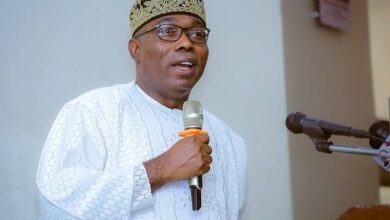
I am glad to have witnessed and participated in the 81st UNGA High Level debate. So great to be back in the Economic & Social Council (ECOSOC) Room. Let share some photographs taken at margins
–Akinremi is retired Director of Ministry of Foreign Affairs