Osun gender expert debunks myth linking FGM to promiscuity
By Deborah Oladejo, Osogbo –
A gender expert has dismissed the belief that female genital mutilation (FGM) prevents promiscuity, describing it as a myth with no scientific, medical, psychological or religious evidence.
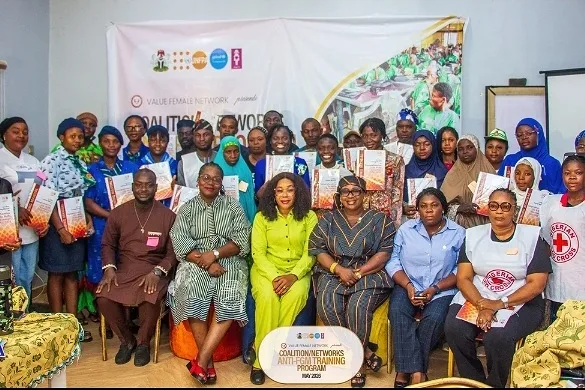
This formed part of discussions at a three-day Networks/Coalitions Anti-FGM programme organised by Value Female Network, with support from the UNFPA and UNICEF Joint Project on Ending Female Genital Mutilation.
Speaking at the programme, the Director of Gender Affairs at the Osun State Ministry of Women Affairs, Children and Social Welfare, Mrs. Lola Adewale, said FGM remains one of the harmful traditional practices that violate the rights, dignity, health and future of women and girls.




Adewale said the practice has no health benefits, but instead causes both short- and long-term consequences, including shock, complications and, in some cases, death.
“FGM is the cutting off of the female genitalia. The belief that it prevents promiscuity is a myth because promiscuity is a matter of the mind, what a person thinks and chooses to do,” she said.
She called for collaborative efforts to discourage the act, noting that Osun State has sustained sensitisation and awareness campaigns aimed at eliminating FGM. “In 2013, Osun State had a prevalence rate of 76.6 per cent. Today, with the collaborative efforts of stakeholders, including UN agencies and NGOs, it has reduced to 21.6 per cent according to the National Demographic Health Survey,” she added.
Also speaking, UNFPA Gender/FGM Analyst, Mrs. Uzoma Ayodeji, who described coalitions and networks as engines of social change, noted that FGM persists due to silence, social norms and misconceptions.
Earlier, the Programme Manager of Value Female Network, Samuel Abimbade, said participants would be trained as Comprehensive Sexuality Education (CSE) experts to take knowledge back to their communities.