Reform in a furnace: Tinubu’s Nigeria between fire and forging — by Abayomi Ishola
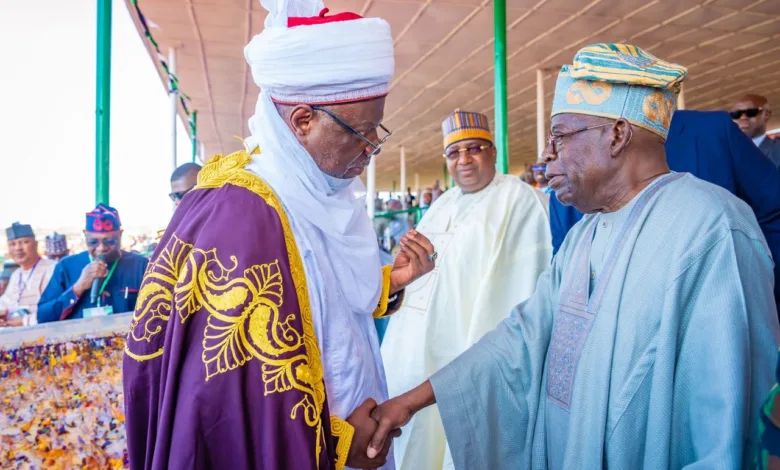
When Bola Ahmed Tinubu stood before the nation on May 29, 2023, and pronounced that “subsidy is gone,” it sounded less like a sentence and more like a spark. In a country long drenched in fiscal petrol, the flame leapt instantly. Nigeria did not begin that day, but a reckoning did. The old order, expensive, evasive, and elastic, met a new impatience. Reform arrived like a surgeon with a steady hand and a blunt knife: necessary, decisive, and undeniably painful.
Before judging the present, one must remember the past without romantic perfume. Under administrations led by Olusegun Obasanjo, Goodluck Jonathan, and Muhammadu Buhari, fuel scarcity was not an emergency; it was an expectation. Cars coiled in queues like metallic pythons. Drivers slept in their vehicles as though exile had begun at the filling station. An oil-rich nation importing refined fuel was an oxymoron so loud it echoed across decades.
The subsidy regime, politically sweet but fiscally sour, consumed trillions of naira annually. It became a fertile field for rent-seeking and opacity. By 2022, subsidy costs had ballooned to levels that strained federal finances under Buhari. Tinubu’s abrupt removal was therefore not an invention but an acceleration of a long-debated inevitability. Where others postponed, he pulled the plug.
Yet policy logic does not cancel social shock. Petrol prices surged overnight; transport fares followed like obedient shadows. Inflation swelled; hardship hardened. Reform proved to be a beautiful brutality, economically rational, socially ruthless. Critics argue the cushioning measures were insufficiently sequenced. Supporters insist delay would have deepened decay. Between them stands the Nigerian citizen, counting coins in a marketplace that seems to inhale prices and exhale despair.
The foreign exchange market tells a similar tale. Under Buhari, the Central Bank of Nigeria maintained multiple exchange windows, a maze of managed rates that created opportunity for arbitrage and opacity. The official rate and the parallel market rate coexisted in uneasy contradiction. Businesses planned in fog; importers speculated on access. The naira appeared stable, but stability was propped up like scaffolding around a fragile building.
Tinubu’s administration unified the exchange rate and allowed the naira to float. The currency depreciated sharply, at one point spiraling beyond ₦1,500 to the dollar before partial stabilization. The float exposed years of artificial support; the market inhaled reality and exhaled volatility. It was painful clarity—an honest wound after years of cosmetic calm. Still, depreciation translated into higher import costs, feeding inflation and fraying patience.
Debt hovered like a storm cloud long before Tinubu arrived. By 2022, Nigeria’s debt service-to-revenue ratio exceeded 90 percent, meaning federal retained revenue was largely consumed by servicing obligations. Oil theft further weakened the state; hundreds of thousands of barrels per day were reportedly lost at peak levels. Production fell short of potential, and fiscal breathing room narrowed.
Tinubu inherited this brittle balance sheet. Efforts to improve oil output and revenue collection have shown modest signs of recovery, but structural fragility remains. Nigeria’s economy, dependent on crude exports, still seeks diversification like a tree stretching for new sunlight.
Education, too, carried the scars of repetition. The Academic Staff Union of Universities had turned strike action into a recurring ritual. Under Buhari, the 2022 strike stretched for about eight months, elongating academic calendars until a five-year degree became a seven-year saga. Dreams drifted; ambition aged.
Tinubu introduced the Nigerian Education Loan Fund (NELFUND), a structured framework to support student financing. For the first time in years, there is a coordinated attempt at scalable educational loans. Implementation challenges remain, as bureaucratic gears grind and adjust, but the architecture marks a shift from inertia to experimentation.
Insecurity remains a stubborn specter. Under Buhari, banditry metastasized in the Northwest, insurgency persisted in the Northeast, and kidnapping became a national affliction. Tinubu’s administration has intensified operations, and there are reports of improved security along certain corridors and in some communities. Yet insecurity in Nigeria is hydra-headed; progress is uneven, victories incremental. The battlefield is quieter in places, louder in others.
Even bureaucracy shows flickers of reform. The Nigeria Immigration Service has introduced changes that reportedly reduce passport processing times in major urban centres. Where once applicants aged in waiting rooms unless they “knew someone,” there are accounts of smoother procedures. It is not a miracle, but it is a movement.
Food prices, the most intimate measure of economic health, remain a sensitive subject. While seasonal harvest cycles and policy adjustments have moderated some prices in certain markets, national food inflation has remained elevated. Claims of dramatic collapses in staple prices appear overstated when measured against broader data. Nigerians still feel the squeeze; markets are merciful in patches, not across the board.
Overlaying these economic debates is another narrative circulating in some circles: the impending release of investigative files abroad, particularly in the United States, and the belief that they will unveil explosive revelations about Tinubu. Anticipation hums like distant thunder. For some critics, these files are imagined as dormant dynamite; for supporters, they are dismissed as recycled dust.
Here, clarity matters. Investigative files are not the same as criminal convictions. Law enforcement agencies may compile records during inquiries, but the existence of investigative material does not automatically equate to a criminal record. A criminal record follows a conviction in a court of law. Conflating the two is like mistaking an accusation for a verdict, or a shadow for the substance casting it. To label pending or historical investigative documents as “criminal records” without a judicial conviction reflects either misunderstanding or rhetorical inflation. That distinction between inquiry and indictment, between a file and a felony, is fundamental in any legal system that values due process.
Equally, it is speculative to assume that declassified or released files will necessarily reveal unprecedented truths. Much of what is discussed publicly about such matters has circulated for years in media and political discourse. The release of documents may clarify context, but expecting seismic novelty may be a triumph of anticipation over evidence. In a polity prone to hyperbole, paperwork is sometimes imagined as prophecy.
What distinguishes Tinubu’s presidency, then, is less its perfection than its pace. He chose immediacy over incrementalism. Where others hesitated, he accelerated. Reform, under his watch, has been a furnace, hot, relentless, reshaping. Whether that heat tempers steel or melts morale remains an unfolding question.
Critics are right to demand better sequencing, stronger social buffers, and transparent communication. Supporters are right to note that subsidy distortion, forex fragmentation, ballooning debt, and institutional weakness predate 2023. Both realities coexist like twin truths in a divided mirror.
History will not judge Tinubu by the noise of outrage or the comfort of applause. It will judge him by metrics: inflation trends, growth patterns, security improvements, institutional resilience. Reform is neither saint nor saboteur; it is a gamble between pain and possibility.
Nigeria stands in the furnace still. The fire was lit long ago; Tinubu chose to stir it. The air is thick with anxiety, yet furnaces are not only for burning, they are for forging. If the metal emerges stronger, this season will be remembered as necessary heat. If it cracks, the blaze will be blamed. Between accusation and achievement, between file and fact, between fire and forging, lies the future of a nation still learning that memory must be honest, reform must be humane, and judgment must be fair.