Russia maintains nuclear test moratorium unless provoked by U.S.
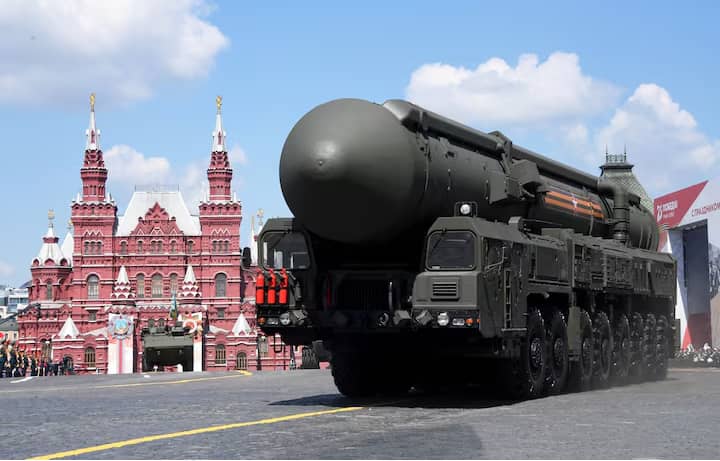
Russia will not conduct nuclear tests as long as the United States refrains from doing so, according to Sergei Ryabkov, Deputy Foreign Minister and President Vladimir Putin’s point man for arms control. This statement follows speculation that the Kremlin might abandon its post-Soviet nuclear test moratorium amidst growing global tensions.
As the U.S. and its European allies deliberate on allowing Ukraine to strike deep into Russian territory with Western missiles, concerns have surfaced that Russia might resume nuclear testing. Last week, the Russian state-run newspaper Rossiyskaya Gazeta published an interview with Andrei Sinitsyn, head of Russia’s nuclear test site at Novaya Zemlya, affirming that the site is fully prepared for full-scale tests.
President Putin, who holds ultimate authority over Russia’s nuclear arsenal, has repeatedly tied any resumption of nuclear testing to the actions of the U.S., stating there is currently no need to use such weapons to win the ongoing conflict in Ukraine.
“Nothing has changed,” Ryabkov told Russian news agencies, reiterating that Russia could conduct nuclear tests but would not proceed unless the U.S. does the same. He noted that preparations at the Novaya Zemlya test site were made in response to U.S. activities, which have improved its nuclear testing infrastructure.

In recent years, Russia, the U.S., and China have all upgraded their nuclear test facilities, including the construction of new tunnels at their respective sites. While Russia has not conducted a nuclear test since the dissolution of the Soviet Union, the U.S. last tested in 1992. North Korea remains the only country to have carried out a nuclear explosion in this century.
Ryabkov also expressed alarm over reports that the U.S. has no immediate plans to withdraw a mid-range missile system deployed in the Philippines, indicating that Russia is considering its response, including potential military actions.
The ongoing war in Ukraine, now in its third year, has led to the worst confrontation between Russia and the West since the 1962 Cuban Missile Crisis, which brought the two Cold War superpowers perilously close to nuclear war. In the aftermath of that crisis, U.S. President John F. Kennedy and Soviet leader Nikita Khrushchev began exploring the possibility of a nuclear test ban.
In 2023, President Putin formally withdrew Russia’s ratification of the Comprehensive Nuclear Test Ban Treaty (CTBT), aligning Russia with the U.S., which has not ratified the treaty. A resumption of nuclear testing by either nation could signal a new, precarious era in global nuclear politics, as Russia, the U.S., and China continue to modernize their arsenals.
Washington identifies Russia and China as its most significant national security threats, while Moscow and Beijing, whose partnership has strengthened during the Ukraine war, regard the U.S. as a declining superpower responsible for global instability.
The Soviet Union shocked the world by testing its first nuclear bomb in 1949 in Kazakhstan, marking the beginning of the nuclear arms race. The U.S. initiated the nuclear era with a 20-kiloton test in Alamogordo, New Mexico, in July 1945, followed by the atomic bombings of Hiroshima and Nagasaki a month later to conclude World War II.
For many scientists and campaigners, the extensive nuclear testing during the Cold War represents the peril of nuclear brinkmanship, which they warn could ultimately devastate humanity and render the planet uninhabitable for thousands of years.
Credit: Reuters