Sanwo-Olu: The untold story, by Dele Sobowale
Facts speak for themselves”. That is what most of us have been led to believe. But like most common statements, when put to the test, it has not always been the case. Back in the 1970s, working with a research firm in Boston, USA, we set out to put that statement to the test. Actors were drafted to stage a fight in Boston Gardens. It would invariably start with a loud argument between the two people and end up in fisticuffs.
One of them gets bloodied; then three “policemen” arrive to arrest them and start asking onlookers to volunteer to determine how the fight started. Five eye-witnesses told five different stories – each insisting that they were stating facts. None, it turned out, was even fifty per cent accurate. Those of us old enough can remember the fable of the three blind men who touched an elephant; one the trunk, another, the leg and the third the side. The first said an elephant is like a long and thick rope. The second likened it to the stem of a tree, and the third was certain that it was a broad wall. All were being “factual”.
But, were they correct? To some extent, any government is like the elephant and we are like the three blind men. Nobody, not even the head of government – President, Governor or Chairman of the Local Government – can see and describe the entire organization as it is. Our observations are often distorted by previous experience, education, ethnicity, religion, politics, personal and group interests and situations in life. To most Nigerians alive today, life is hell.
But, for Dangote, Rabiu, Adenuga, Otedola, Elumelu etc, this is the best Nigeria they ever experienced. For that matter, to those newly elected to top posts, life cannot be better. So, which is the correct Nigerian economy to which we all refer when we talk about the current situation? That is why, being conscious of my limitations, I avoid commenting on aspects of the national life where my knowledge is scanty. I don’t select the team to play for the Super Eagles for instance.
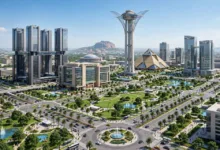
As much as possible, I stay close to economics and finance, farming and food production and Marketing/Sales. On those, I am ready to battle anybody. That explains why it is so difficult to assess governments; especially a government like the Lagos State Government. We have been told that Lagos State, if ranked by Gross Domestic Product, GDP, would be the sixth largest economy in Africa. The population estimated at 22 to 24 million would have made it one of the top ten on the continent – if it is a separate country. Remarkably, like Japan, it has no natural resources and very little farmland.
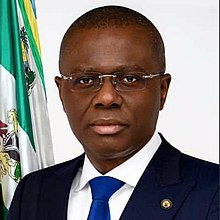
Yet, it consumes more resources and food than the next three states put together. Its Governor is the second most important official after the President. It is intriguing how Babatunde Sanwo-Olu, a soft-spoken, self-effacing, serious-minded man, whom one would expect to be a Pastor instead of a politician, could emerge as the state Governor. Yet, those human attributes are propelling him to become one of the best Governors the state has ever known. Has he made mistakes? Certainly! But, as a sage has told us, “The man who makes no mistakes does not usually make anything”. (Edward Phelps).
All our leaders make mistakes, and we will never have a perfect Governor in Lagos. So, forgive me for not dwelling on faults. Instead, my focus of attention is on the things that the man is doing which now position him as second only to Jakande in terms of solid achievements and lasting legacies in the history of Lagos. Permit me again to mention just a few for now. There will be an opportunity to elaborate on them in the future.
Sanwo-Olu has exceeded all the others, Jakande included, in maintaining continuity in the execution of government programmes. Because this article is not intended to indict anybody else choked up and raise unnecessary controversy, we will stick to an appraisal of the Sanwo-Olu Government. Among other major projects, which will stand the test of time, he has finally got the Mile 2 to Lagos Island (Blue Line) and Oyingbo to Agbado (Red Line) train services running.
The road leading from MMI International Airport, Ikeja, once the shame of the nation, is now something we can all be proud of. He didn’t start it, but he completed it. The Ikeja and Oshodi transport exchanges were also left uncompleted; he finished them. His legacy projects are just as impressive. Lagos has needed a fourth bridge since Military Governor Marwa opened up Ikorodu, Ogijo, Ijede, Gberigbe, Imota and Agbowa-Ikosi to people seeking escape from choked up Lagos Island, Mushin, Ojo, Alimosho etc.
That demographic revolution brought about more congestion on the Third Mainland Bridge – which has served all Nigerians for so long. Sanwo-Olu is now set to launch the Fourth Mainland Bridge. Given how long it takes to build a long bridge, it is doubtful if it will be completed by the time he leaves office. History will, however, record that he was the Governor who grabbed the bull by the horns and delivered to Nigerians one of the most valuable infrastructures of this era. Lekki Sea Port, Lekki Airport and Lagos Airline form a troika of breath-taking initiatives which leave the perceptive observer wondering why nobody else ever thought of them before. But, because it is my intention to touch on these matters later this year, I will stop for now…
This article was first published by Vanguard Newspaper.