When labour unions become saboteurs: Strikes and the abuse of labour rights — by Olabode Opeseitan
There is a sacred truth at the heart of every just society. A labourer deserves his wage. It is Biblical, it is moral, it is legitimate. No nation can prosper when its workers are oppressed or silenced. Nigerian workers must use every lawful and honourable instrument available to defend their rights. On this, there is no equivocation. But there is another truth that must be spoken with equal clarity. In fighting for their rights, labour leaders must not trample on the rights of millions of other citizens. This is where the Nigerian labour movement has lost its way.
Each time they call workers out on strike, they do not merely seek redress. They seek paralysis. They want to grind the system to a halt. They want to grind the economy to a halt. They want to grind the nation itself to a halt. It is a philosophy of disruption and destruction masquerading as activism. It is a strategy of sabotage dressed up as solidarity. And it is time someone told them that this approach is reckless, irresponsible and fundamentally anti‑social.
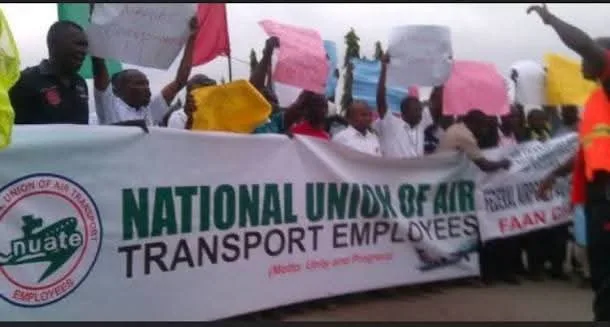
Yesterday’s events are a fresh reminder of this dangerous pattern. Members of the Nigeria Labour Congress and the Trade Union Congress, working in tandem with their aviation affiliates, stormed the Murtala Muhammed Airport in Lagos and blocked the Alpha and Zulu terminals. They barricaded Terminal 2. They transformed bustling travel hubs into a hostage situation for hundreds of innocent passengers. Families were left stranded on the hot tarmac, important business meetings were shattered, and vital medical trips were ruined. They halted a 6:30 AM flight and triggered cascading cancellations across the entire Air Peace network. They extended their blockade to Abuja, shutting down entry points at the Nnamdi Azikiwe International Airport. Up to 100 flights were disrupted or cancelled for nearly eight hours across the country. Aviation stakeholders estimated the preliminary loss in service revenue at ₦2 billion. These are not acts of advocacy. These are acts of sabotage.
The irony is painful. The Air Peace workers the labour unions were supposedly fighting for publicly distanced themselves from the protest, stating they did not want unionisation. They said they were satisfied with twelve years of regular pay, stable HMO plans and direct channels for dialogue with management. Yet, labour leaders insisted on shutting down the entire aviation ecosystem. If they have issues with Air Peace, must they cripple every airline? No flight must take off or land. How myopic. How irresponsible.



This is not the first time. In 2024, drunk on the intoxicating illusion of untouchability, labour leaders sabotaged the national grid. They plunged the country into darkness. They endangered hospitals, airports, security operations and millions of livelihoods. To this day, it remains a mystery why the Nigerian government did not charge them to court for that height of national irresponsibility. No democracy can survive when unelected actors repeatedly weaponise essential services.
Under Nigerian law, aviation is an essential service. The Trade Disputes (Essential Services) Act empowers the government to proscribe any union that disrupts services vital to national life. The Trade Unions Act permits peaceful picketing, not terminal blockades. The Criminal Code prohibits unlawful assembly, trespass and economic sabotage. International labour law is even clearer. The International Labour Organization recognises that the right to strike can be restricted in essential services where interruption endangers public safety. Aviation falls squarely within that category. Labour leaders know this. They simply do not care.
Can you imagine. They even cited the non‑remittance of the 5% Ticket Sales Charge as one of their primary reasons for picketing Air Peace. Since when did the government appoint labour unions as its tax collectors. The Federal Government announced recently that it granted waivers to airlines and that the carriers are already liquidating the legacy debts they owed. Only a meddlesome busybody inserts himself into matters that are already being resolved just to leave innocent passengers stranded. So what exactly is the basis of this agitation? What kind of needless, self‑appointed activism is this?
The economic implications are severe. Every hour of airport blockade destroys millions in commerce. Perishable cargo is lost. Aircraft lease penalties accumulate. Flight crews are stranded. Schedules collapse. Foreign insurers raise premiums. International investors mark Nigeria as unstable. Airport concessioning becomes unattractive. A handful of union officials, in pursuit of narrow interests, can inflict national damage that takes weeks, months or even years to repair. This is not activism. It is economic vandalism.
Nigeria must respond with firmness anchored in law. The government can seek immediate injunctions from the National Industrial Court, though I know the renegades may choose to disobey a court order as they have done in the past. Also, Nigeria can deploy law enforcement to clear illegal barricades. It can prosecute union leaders for economic sabotage. It can de‑certify unions that repeatedly violate statutory provisions. These remedies exist because no society can allow self‑appointed champions of labour to become outlaws who operate above the law.
The Nigerian labour movement must return to moral clarity. Workers have the right to fight for their rights. They have the right to demand fair wages, humane conditions and dignified treatment. But they do not have the right to hold the nation hostage. They do not have the right to weaponise essential services. They do not have the right to inconvenience millions in the name of a dispute that is often poorly understood and sometimes entirely misrepresented.
Nigeria needs a labour movement that is courageous, principled and lawful. Not one that behaves like saboteurs. Not one that confuses disruption with leadership. Not one that mistakes recklessness for relevance. The country deserves better. The workers deserve better. And history will remember those who fought for justice without destroying the very society they claimed to defend.