When office becomes stewardship: Adegboyega Oyetola at 72 — by Razaq Abubakre
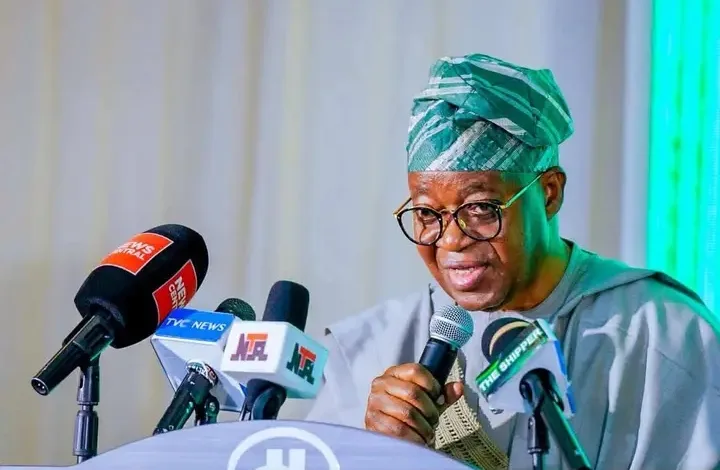
The true measure of public service often becomes clearer after the applause has faded.
Office attracts attention. Legacy requires something harder. It requires that institutions work better, that opportunities widen, that scarce resources are treated with care, that difficult decisions are confronted rather than postponed and that the people who come afterwards inherit something stronger than what came before.
As Adegboyega Oyetola marks his 72nd birthday, there is value in looking beyond the familiar rituals of birthday celebration. His anniversary offers a useful occasion to ask a larger question about leadership itself. What should society expect from those entrusted with authority?
The answer cannot simply be visibility.

Nor can it be the accumulation of titles.
The serious business of leadership is stewardship.
That distinction matters because authority is always temporary. A governor eventually leaves Government House. A minister eventually leaves the cabinet. A chief executive eventually vacates the corner office. Even the most powerful signature loses its official force. What remains is what happened to people, systems and possibilities while that authority was held.
Oyetola’s professional journey is instructive partly because it did not begin in the arena by which he is most widely known today.
He studied Insurance at the University of Lagos, graduating in 1978, and later earned an MBA from the same university. His working life took him through Leadway Assurance, Crusader Insurance and Alliance and General Insurance before he established Silvertrust Insurance Brokers. He later moved into senior public administration, serving as Chief of Staff in Osun State from 2011 to 2018, Governor from 2018 to 2022, and, since 2023, Minister of Marine and Blue Economy.
There is an interesting intellectual thread connecting these apparently different worlds.
Insurance begins with a simple but powerful idea. The future is uncertain, but uncertainty does not absolve us of responsibility. We identify risk, estimate exposure, prepare for adversity, protect value and allocate finite resources against competing possibilities.
Good government requires much the same discipline.
A society cannot eliminate uncertainty. It can build institutions capable of absorbing shocks. A government cannot satisfy every demand simultaneously. It must make choices. A leader cannot guarantee favourable circumstances. He can strengthen the capacity of institutions to respond when circumstances become unfavourable.
This may help explain why financial discipline, institutional processes and measured execution have featured prominently across Oyetola’s public career. It would be simplistic to attribute every outcome of an administration to one person. Government is collective work. Civil servants, professionals, legislators, agencies, communities and many others determine whether policy succeeds. Leadership nevertheless matters because leaders establish priorities, allocate attention and create the conditions within which institutions either improve or deteriorate.
During Oyetola’s tenure as Governor of Osun, the state participated in the World Bank-supported States Fiscal Transparency, Accountability and Sustainability programme. The reforms associated with that programme included stronger fiscal disclosure, improvements in expenditure management, debt sustainability measures and the use of a Treasury Single Account.
These subjects rarely generate the excitement associated with commissioning a large physical project. Yet they are fundamental.
A road is visible. A stronger accounting system is not.
A new building photographs well. Better expenditure controls do not.
But nations are weakened as much by invisible institutional failure as by visible infrastructural decay.
Research on government effectiveness repeatedly reaches a similar conclusion. Citizens are more likely to trust institutions when they experience competence, reliability, integrity and useful public services. Trust is not generated sustainably by communication alone. It grows when systems repeatedly demonstrate that they can do what they were created to do.
This is why good governance must eventually become operational.
The citizen should not need a relationship with someone powerful before a hospital works. A business should not need extraordinary intervention before a port functions efficiently. A pensioner should not require political access before receiving what is legitimately due. A young entrepreneur should not have to know the right person to obtain an ordinary government service.
The highest form of institutional development occurs when access becomes routine rather than exceptional.
Healthcare provides a useful example from Oyetola’s years in Osun. His administration pursued the revitalisation of primary healthcare centres across the state’s 332 wards and supported the health insurance architecture intended to improve access to care, particularly for vulnerable citizens.
The deeper lesson is not the number 332.
It is the philosophy behind taking essential services closer to people.
A primary healthcare centre in a community is not merely a government structure. Properly staffed and functioning, it can mean an infection treated before it becomes fatal, a pregnancy monitored before complications arise, a child vaccinated before disease strikes, or a low-income family receiving care without having to choose between treatment and food.
Public policy becomes meaningful at precisely that point where an administrative decision changes the range of choices available to an ordinary human being.
Nation building is therefore less mysterious than we sometimes make it.
It happens whenever public action enlarges human possibility.
It happens when a child receives a better education, when a farmer reaches a market faster, when a business clears goods more efficiently, when a vulnerable citizen receives healthcare, when public money becomes easier to trace and when an institution becomes less dependent on personal discretion.
This same institutional question now confronts Oyetola at the federal level in a very different domain.
Nigeria’s decision to establish a dedicated Ministry of Marine and Blue Economy recognised something that geography has always made obvious but policy has not always sufficiently exploited. A country with an extensive coastline, major ports, inland waterways, fisheries, shipping interests and substantial marine resources possesses economic possibilities that extend well beyond oil.
But natural advantage is not economic destiny.
A coastline does not automatically produce prosperity. Ports do not automatically produce competitiveness. Fish stocks do not automatically produce food security. Maritime geography must be converted into economic value through infrastructure, regulation, finance, security, technology, skills and competent institutions.
That is the harder task.
Under Oyetola’s ministerial leadership, the ministry and its agencies have been developing a national marine and blue economy policy intended to provide a coherent framework for maritime transport, shipping, fisheries, aquaculture, marine resources, innovation and environmental sustainability.
That matters because countries rarely transform sectors through isolated projects. They do so by creating an architecture within which investment, regulation, infrastructure and human capability reinforce one another.
The work around the Cabotage Vessel Financing Fund illustrates another part of the challenge.
For years, the fund had represented an unresolved question within Nigeria’s maritime industry. More recently, approvals and financing arrangements have advanced towards giving qualified indigenous shipowners access to capital through designated lending institutions.
The economic logic is important.
A country cannot speak seriously about local participation in shipping while domestic operators lack access to the long-term finance required to acquire competitive vessels. Nor is ship ownership merely about national pride. A stronger domestic maritime industry can create demand for seafarers, marine engineers, lawyers, insurers, financiers, logistics specialists, technology providers and numerous supporting services.
One intervention can therefore have consequences across an ecosystem.
This is the difference between thinking in projects and thinking in systems.
Port reform raises the same issue. Nigeria’s ports sit at the intersection of manufacturing, agriculture, retail, foreign exchange, logistics, government revenue and international competitiveness. Every avoidable delay has an economic cost that eventually reaches somebody far beyond the port gate.
Modernising ports, improving digital processes and supporting trade facilitation therefore concern more than ships and containers. They concern the price of doing business in Nigeria.
The return of Nigeria to the Council of the International Maritime Organization for the 2026 to 2027 biennium after a fourteen-year absence also illustrates the importance of patient institutional diplomacy. Such outcomes are necessarily collective. They involve the ministry, maritime agencies, diplomatic institutions and sustained engagement with other countries. Their significance lies in restoring a Nigerian voice to an important forum of global maritime governance.
None of these developments means that Nigeria’s maritime problems are solved.
They are not.
The sector still faces serious questions around infrastructure, inland-waterway safety, financing, implementation capacity, regulation and competitiveness. Celebrating leadership responsibly should never require pretending that unfinished work is finished.
Indeed, one of the strongest signs of mature leadership is the capacity to distinguish progress from completion.
There is another reason Oyetola’s 72nd birthday deserves reflection, particularly for younger Nigerians.
We live in an age that can make achievement appear instantaneous.
A twenty-five-year-old scrolls through his/her telephone and encounters founders who became wealthy before thirty, entertainers commanding global audiences, influencers with millions of followers and stories of sudden success that downplays the years of preparation that preceded them.
It can create a dangerous illusion that if recognition has not arrived early, life is somehow behind schedule.
Oyetola’s trajectory offers a different lesson.
He graduated from university in the 1970s. He spent years learning a profession. He worked across several organisations. He built a business. He accumulated managerial experience. He served for years behind the scenes in senior administration before becoming governor in his sixties. He entered the federal cabinet later still.
Whatever one’s field, the principle is worth considering.
Do not confuse early visibility with eventual value.
Some of life’s most important preparation occurs when nobody is applauding.
Competence compounds quietly.
So does character.
The analyst who learns to interrogate numbers carefully, the young civil servant who refuses to falsify a document, the entrepreneur who treats customers fairly when the business is still small, the lecturer who prepares diligently for students, the engineer who insists that specifications are followed, and the young professional who keeps promises that nobody important is monitoring are all constructing something.
They are constructing themselves.
Great responsibility rarely improves character. More often, it exposes the character already formed.
This is why young people should resist the temptation to pursue influence before usefulness.
Become good at something.
Read beyond examinations.
Learn to solve difficult problems.
Understand money.
Understand people.
Write clearly.
Listen carefully.
Build relationships before you need favours from them.
Protect your reputation.
Learn how institutions actually function.
Take small responsibilities seriously.
And resist the belief that integrity is naïve simply because shortcuts sometimes appear profitable.
Research on public service motivation suggests that institutions benefit when people are animated not only by private reward but also by duty, social responsibility and commitment to the public good. This does not mean that human beings cease to have ambition. It means ambition acquires a larger purpose.
There is nothing wrong with wanting to succeed.
The more demanding question is what success is for.
Wealth can improve one’s circumstances. Knowledge can improve one’s judgement. Networks can expand one’s access. Authority can increase one’s capacity to act. But the moral quality of achievement ultimately depends on what one does with these advantages.
Success becomes significance when private capacity produces public value.
This distinction is essential for societies such as ours.
Nigeria does not suffer from an absence of gifted people. Nigerians excel in universities, boardrooms, hospitals, technology companies, financial institutions, creative industries and professions across the world.
The national challenge is converting enough individual excellence into institutional excellence.
That requires a different conception of ambition.
The accomplished Nigerian must ask not only, “How far can I go?” but also, “What can work better because I was there?”
The business leader must build an organisation that survives him.
The professor must produce students who eventually exceed her.
The senior civil servant must improve the system rather than merely master its privileges.
The wealthy citizen must recognise that philanthropy, mentoring and institution building are forms of national investment.
The person in public office must remember that the authority being exercised was never personal property.
It was lent.
Stewardship begins with understanding the difference.
Recent scholarship in public administration describes stewardship in terms of placing the long-term interest of an institution above immediate self-interest. The concept seems simple. Its implications are demanding.
The steward thinks beyond tenure.
He does not ask only what can be completed before the next ceremony. He asks whether the institution will possess greater capability after he has gone.
He is prepared to plant trees beneath whose shade somebody else may sit.
That is also where altruism acquires practical meaning.
Selflessness in leadership is not the absence of self. It is the refusal to make self the measure of everything.
Every generation inherits institutions it did not build, knowledge it did not discover, roads it did not construct, freedoms it did not personally secure and opportunities created by people whose names it may never know. Civilisation itself is an inheritance accumulated through the contributions of strangers.
We therefore owe the future something.
At 72, Adegboyega Oyetola has travelled from Iragbiji through professional life, entrepreneurship, state administration, governorship and national service. Those chapters provide reason for congratulations. More importantly, they provide material for reflection.
Birthdays are usually treated as celebrations of longevity. Perhaps they should also be audits of usefulness.
Not simply: How many years have I lived?
But: What have those years produced in other lives?
Not simply: What positions have I occupied?
But: What institutions became stronger?
Not simply: Who knows my name?
But: Who had a better opportunity because I exercised responsibility well?
There will always be another title to pursue, another possession to acquire and another room in which recognition is distributed. Yet time ultimately strips life of these accessories and leaves something far simpler.
Contribution.
On this 72nd anniversary of his birth, I wish His Excellency Adegboyega Oyetola, CON, good health, wisdom, peace and many more years of useful service to Nigeria and humanity.
May the years ahead bring not merely greater recognition, but greater consequence.
And may his birthday challenge younger people, public servants, business leaders and all of us to reconsider what a successful life should mean.
For when the ceremonies are concluded, the offices surrendered and the titles eventually become history, perhaps the most demanding question any of us can answer is also the simplest:
What became better because we were here?
Prof. Abubakre is a former University Vice Chancellor and a leader of the APC in Osun State.