When will Nigeria’s building collapse crisis end? — by Eboselume Olutola
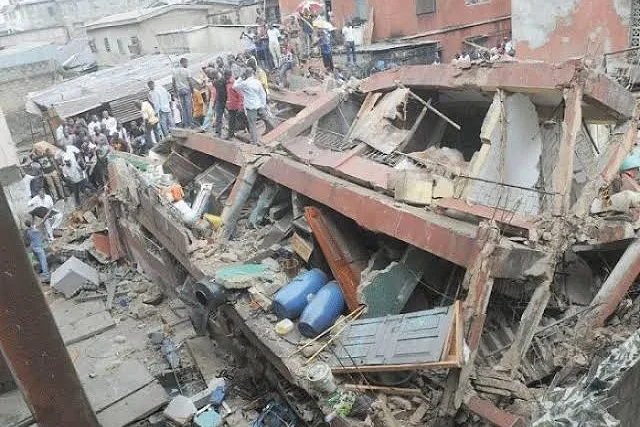
For many Nigerians, the sound of a collapsing building has become one of the country’s most frightening reminders that a place meant to provide safety can, in a matter of seconds, turn into a death trap, leaving behind grieving families, shattered dreams and painful questions that often go unanswered.
Each major collapse follows a familiar pattern as rescue workers dig through the ruins in search of survivors, relatives wait anxiously for news of loved ones, government officials offer condolences, committees are inaugurated to investigate the tragedy and promises are made that such an incident will never happen again, only for another building to crumble days, or weeks later.
The collapse of the 21-storey residential building on Gerrard Road in Ikoyi, Lagos, in November 2021, which claimed 46 lives, remains one of the country’s deadliest construction disasters. While subsequent incidents, including the collapse of a seven-storey building under construction on Banana Island in Lagos in April 2023, the school building collapse in Busa Buji, Jos, Plateau State, in July 2024 that killed more than 20 pupils and teachers, and more recent cases in Ajuwon, Ogun and Amaokpala, Anambra states, show that the lessons from previous tragedies have not been fully learned.
Behind every statistic is a heartbreaking story of a parent who never returned home from work, a child whose classroom became a graveyard, a labourer hoping to earn a daily wage or a family that watched years of hard work disappear beneath piles of bricks and wood within seconds.


Construction professionals have repeatedly identified the same problems, including the use of substandard materials, dilapidated structures, poor workmanship, disregard for approved building plans, unauthorised structural alterations, weak supervision and the engagement of unqualified artisans, yet these dangerous practices continue because many offenders believe they are unlikely to face serious consequences.
The recurring nature of these disasters has also exposed the gap between government assurances and concrete action, as panels of inquiry are often established, recommendations are submitted and assurances of stricter enforcement dominate headlines, but implementation frequently slows once public attention shifts elsewhere.
For instance, the Lagos State Government set up a panel of inquiry after the collapse of the 21-storey Ikoyi building in November 2021. The panel found that the developer had built six extra floors beyond the approved 15-storey plan and that weak oversight and poor enforcement by government regulatory agencies also contributed to the tragedy.
Although the government accepted several of the panel’s recommendations, subsequent collapses, including the seven-storey building under construction on Banana Island in April 2023 and other incidents across the country, have continued to raise concerns about whether building regulations are being properly enforced and the recommended reforms fully implemented.
Responsibility cannot rest with one institution alone because state ministries responsible for physical planning, state building control agencies, local planning authorities, the Standards Organisation of Nigeria, the Council for the Regulation of Engineering in Nigeria, the Architects Registration Council of Nigeria, the Council of Registered Builders of Nigeria and other professional regulators all have important roles in ensuring that building standards are enforced.
Developers, contractors, consultants, property owners and site supervisors must also be held accountable because how valuable the human life is, especially when shortcuts in construction can have irreversible consequences.
For many victims’ families, the greatest pain is not only the loss of loved ones but also the feeling that justice is rarely served, as prosecutions are uncommon, inquiry reports are seldom fully implemented and similar tragedies continue to occur despite repeated assurances that reforms are underway.
Except Nigeria consistently enforces building regulations, punish negligence, strengthen oversight institutions and treat every warning sign as an opportunity to prevent another disaster, headlines announcing yet another building collapse may constantly appear on our news feeds.
Eboselume writes from Lagos