5% fuel surcharge: FG has no intention to introduce fresh levy, says Wale Edun
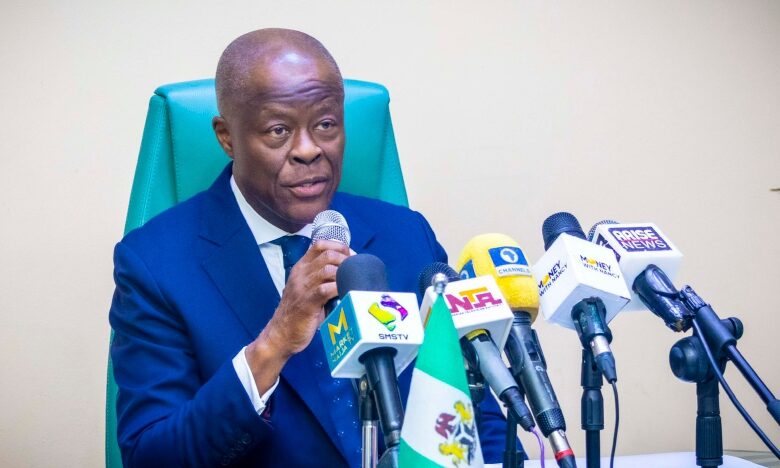
Minister of Finance and Coordinating Minister of the Economy Mr. Wale Edun has stated that the Federal Government has no plan to introduce a fresh levy but rather to harmonise existing tax provisions within a modernised legal framework.
He reassured Nigerians of its unwavering commitment to macroeconomic stability, private sector-led growth, and transparent fiscal management while also clarifying recent concerns surrounding the five per cent fuel surcharge referenced in the Nigeria Tax Administration Act, 2025.
Speaking during a media briefing in Abuja on Tuesday, the Minister reiterated that the surcharge was first introduced under the Federal Roads Maintenance Agency (FERMA) Amendment Act of 2007 to provide sustainable financing for road infrastructure, with 40per cent of the proceeds allocated to FERMA and 60per cent to State Road Maintenance Agencies. Its inclusion in the Nigeria Tax Administration Act, 2025.
He stressed that, as already previously indicated by the Presidency and the Chairman, Presidential Committee on Fiscal Policy and Tax Reforms, Mr. Taiwo Oyedele, the fuel surcharge is not a new tax, and it predates the current administration.



Director, Information and Public Relations, Federal Ministry of finance, Mohammed Manga in a statement stated that the Minister used the opportunity to highlight the transformative nature of the Nigeria Tax Administration Act, 2025, signed into law by President Bola Ahmed Tinubu in June 2025. Describing it as Nigeria’s most comprehensive tax reform to date, he noted that the Act consolidates multiple tax laws into a single, transparent framework, eliminates over 50 overlapping taxes, and modernises revenue administration to simplify compliance, improve efficiency, and attract private investment.
The Minister stressed further that the Act will not become operational until 1st January 2026, providing ample time for institutional restructuring, capacity building, and policy alignment to ensure smooth implementation. He informed that the Ministry has already commenced extensive preparations, including the harmonisation of tax processes across Ministries, Departments, and Agencies (MDAs) of the Federal Government the design of a framework for the Tax Ombudsman, and consultations with subnational governments to strengthen revenue coordination.
This is not just another law; it is a catalyst for growth,* he said. *Its successful implementation will require careful planning and phased execution to avoid disruptions while maximising the benefits for Nigerians.
Reaffirming the administration’s economic vision, HM Edun explained President Bola Ahmed Tinubu’s strategy prioritises private sector-driven growth with government acting as an enabler and catalyst. He highlighted two key priorities underpinning this vision: first, the creation of a stable macroeconomic environment to unlock investments, drive productivity, and stimulate job creation; and second, the strengthening of government savings to fund strategic investments in education, healthcare, infrastructure, and technology — the foundations of inclusive and sustainable growth.
Addressing citizens’ concerns, the Minister reiterated that the government remains sensitive to prevailing economic conditions and that the administration’s priority remains focused on strengthening tax governance, blocking leakages, and enhancing efficiency of revenue collection.
“Our reforms are designed to simplify taxes, strengthen compliance, and create an economy that works for everyone,”Edun stated.
“Macroeconomic stability is our top priority, and every policy decision we make is guided by the need to ease pressures on households and businesses while laying the foundations for long-term prosperity,” the statement added.