Economic reform gains must improve productivity, citizens’ livelihoods, says NESG
Nigeria must move beyond economic stabilisation and ensure that ongoing reforms translate into productive investment, higher productivity, jobs and improved incomes, the Nigerian Economic Summit Group (NESG) has said.
The Chief Executive Officer of the NESG, Tayo Adeloju, said this on Wednesday in Abuja ahead of the 32nd Nigerian Economic Summit, scheduled for October 26 and 27 at the Transcorp Hilton Hotel, Abuja.
Adeloju said reforms undertaken over the past three years, including subsidy removal, exchange-rate unification, fiscal restructuring and bank recapitalisation, had helped restore macroeconomic stability and improve investor confidence. However, he said stability alone would not transform the economy.
“Stabilisation is necessary; it is not sufficient. The question before Nigeria has therefore shifted from restoring stability to converting it into transformation. The next phase must strengthen the transmission from reform to investment, investment to productivity, productivity to jobs, and jobs to shared prosperity. That is the growth that works,” he said.
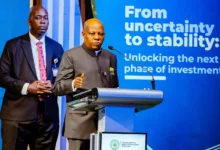



Speaking at a joint world press conference organised by the Federal Ministry of Budget and Economic Planning and the NESG, Adeloju said the summit, themed “Growth that Works: Delivering Jobs, Productivity and Shared Prosperity,” would bring together government, business leaders, labour, development partners, academia and civil society.
He said discussions would focus on five areas: Work Nigeria, Produce Nigeria, Invest Nigeria, Scale Nigeria and Secure Nigeria, covering gaps between education, skills and employment, productive sectors, investment, state-level production and the economic impact of insecurity.
Also speaking, the Minister of State for Budget and Economic Planning, Doris Uzoka-Anite, said the summit should move beyond discussions to actionable solutions that would improve the welfare of Nigerians. She said recommendations from previous summits had informed policies, including the preparation of the National Development Plan 2026–2030 and the Nigeria Industrial Policy launched in February 2026.
Uzoka-Anite said the ministry had also signed an agreement with the International Finance Corporation to develop bankable public-private partnership projects in transport, energy, ICT and sanitation.