Power and money are not a Nigerian exception – A rejoinder, by Kayode Adebiyi
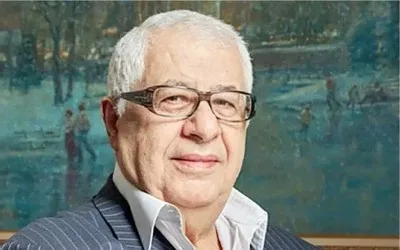
The original article below by Tosin Adeoti on Gilbert Chagoury is compelling, dramatic, and emotionally satisfying. It gives readers a villain, a system to blame, and a familiar conclusion: Nigeria is uniquely broken because rich men know powerful politicians. But that conclusion collapses the moment we step outside Nigeria and look honestly at how power works everywhere else.
What the article describes is not a Nigerian invention. It is how politics functions in every serious economy. The difference is not the existence of big money, big men, and political access. The difference is how openly societies admit it and how strong their institutions are in managing it.
Let us be clear from the start: politics is not a moral seminar. It never has been. It is an arena where interests compete, money moves, alliances form, and power is consolidated. Anyone still expecting sainthood from politics is looking in the wrong place.
In the United States, politics runs on donations. Presidential elections cost billions of dollars. Major donors gain access, influence, and proximity. Lobbying is a fully institutionalised industry. Large corporations openly fund candidates, Super PACs, and policy campaigns. This is not hidden. It is regulated, disclosed, argued over, and constantly litigated. You hear that again – litigated!
In the UK, the situation is no different, only dressed in different clothes. Under Boris Johnson as Prime Minister, the link between party donations, access, honours, and contracts became so visible that it triggered parliamentary inquiries and sustained media backlash.
Wealthy donors to the Conservative Party were awarded peerages, and seats in the House of Lords. During the COVID-19 pandemic, emergency contracts worth hundreds of millions of pounds were awarded to politically connected companies through fast-track procurement processes to some of Boris Johnson’s friends who were mates at Oxford University. Friends, donors, and party loyalists benefited.
The scandal was not that politics and money mixed. The scandal was whether rules were bent and whether value for money was achieved. Yet no serious British commentator claims this proves the UK is irredeemably corrupt or uniquely broken. The debate there is about transparency, accountability, and reform, not moral outrage that rich people dare to influence power.
There is another uncomfortable truth Nigerians often refuse to confront. Big businessmen rarely become rabid critics of any government in power. Not because they are saints. Not because they lack opinions. But because their businesses require stability, access, regulatory certainty, and protection.
This is not hypocrisy. It is rational self-interest.
In Nigeria, Aliko Dangote is widely known to donate substantial sums to major political candidates across party lines. This is not a secret or do you think he’s crazy or wasting money? It is not controversial in elite circles. It is understood as part of positioning, relationship-building, and long-term business protection.
Dangote does not do this because he believes politicians are angels. He does it because politics determines policy, infrastructure, tariffs, licences, and regulatory outcomes that affect billion-dollar investments.
This is exactly why big men are almost always friends of whoever is in power. Not because they are morally flexible, but because business survival demands it.
And this is where many commentators like Adeoti missed the point entirely.
It is easy to be morally pure when you have no factories to protect, no shareholders to answer to, no long-term capital at risk, and no workforce dependent on regulatory stability. Writers, critics, and commentators operate in the world of ideas. Business operators live in the world of consequences.
The moment a man crosses from writing commentaries and articles into raising capital, he learns quickly that no government can be treated as an enemy. Governments change. Interests endure. This is why business leaders donate, attend weddings, shake hands, and stay polite no matter who wins elections.
If Tosin ever moved from the comfort of criticism into the responsibility of protecting real economic interests, he would learn this lesson very quickly. At that point, moral absolutism becomes a luxury he can no longer afford.
And no, this does not make businessmen saints. It makes them human.
Gilbert Chagoury’s history is not spotless. That is not in dispute. He faced legal issues connected to the Abacha era, paid fines, returned funds, and later resolved a US campaign finance violation with a financial penalty. These are facts.
But facts are not the same as perpetual guilt by association.
What Adeoti did is take historical wrongdoing, add proximity to power, sprinkle anecdote and implication, and then present a moral verdict without new evidence of ongoing criminality. That is not accountability. That is narrative construction.
If Nigeria wants better governance, the focus should be on:
- transparent procurement processes.
- clear conflict-of-interest rules.
- open publication of contracts and costs.
- independent audits and benchmarks.
Not on pretending that friendship between politicians and businessmen is itself proof of corruption.
The most damaging habit Nigerians must break is romanticising politics as a moral vocation rather than what it truly is: a competitive struggle for power, influence, and advantage.
Politics everywhere is driven by money. Business everywhere seeks influence. Power everywhere rewards loyalty.
The West does not escape this reality. It simply manages it with stronger institutions and less self-deception.
If Nigerians want progress, the conversation must mature. Stop acting shocked that big men fund politics. Stop pretending that friendships are crimes. Demand process, transparency, and accountability. But abandon the fantasy that politics is, or has ever been, a monastery.
If you are looking for saints, go to a church, a mosque, or a monastery. Politics has never been the place to find them.