A review and cultural analysis of Aníkúlápó: The Ghouls Awaken – by Kenny Adénúgbà
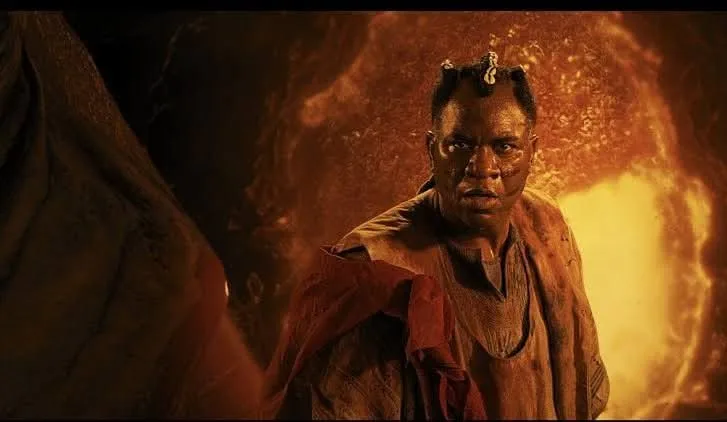
Watching this series was a mixed feeling of excitement and disappointment, as I found myself locked in to a visually ambitious sequel that struggles with cultural fidelity, narrative coherence and historical grounding.
Aníkúlápó: The Ghouls Awaken arrives with the promise of deepening the mythic world that Kúnlé Afọláyan introduced in Season 1, Rise of the Spectre. It is visually ambitious, atmospheric and occasionally gripping. Yet for a series rooted in traditional Yorùbá setting and framed as a historical-fantasy epic, Season 2 feels less savoury than expected. Beneath the spectacle lie cultural inconsistencies, narrative gaps and character choices that strain credibility.
Historical and cultural fidelity is where the story falters. Several depictions in the series challenge the cultural and political logic of the period it seeks to portray, albeit with some flashes of brilliance. Let’s take a dive as we headline the highlights of brilliance and ball-dropping.
Akin as the dramatic and emotional anchor.
One of the brightest points of the season is Gabriel Afọláyan’s performance as Akin. His delivery, command of language and emotional interpretation elevate every scene he appears in. He embodies the cultural grounding the series strives for. His presence alone often rescues moments that would otherwise fall flat. Afọláyan’s performance clearly stands out as both grounded and culturally resonant.


Owóbọ̀ Ògúnde as Baṣọ̀run Ògúnjìnmí also delivers a stronger performance than in Season 1. His growth is evident, and he brings a welcome intensity to his scenes. The old cast comes enriched with new faces like Adéolú Okùsagà (Saga), Kiekie, Táyọ̀ Fáníran, Tẹ́níọlá Aládéṣẹ, Saheed Balógun, Dr. Jọkẹ́ Múyiwá, Antar Láníyan, and a cameo appearance by Àbíkẹ́ Dábírí-Eréwà as Ìyálóde. Yet the absence of Saró leaves a noticeable void. Whether intentional or not, the story feels as though a vital thread has been removed.
The Yorùbá spoken is a commendable effort, but not convincing.
Language is central to Yorùbá identity, particularly within the historical context of the Ọ̀yọ́ Empire. The cast makes a visible effort to speak Yorùbá with seriousness, but the dominance of Lagos Yorùbá over deep Ọ̀yọ́ Yorùbá is unmistakable. For casual viewers, this may pass without issue. For Yorùbá speakers familiar with the dialect, the attempts feel strained. The actors try, but the linguistic texture of the era is not convincingly recreated. It is tolerable, but not fully acceptable.
Misrepresentation of Ọ̀yọ́–Ẹdẹ political relations.
The political dynamics between Ọ̀yọ́ and Ẹdẹ are among the most significant historical inaccuracies in the series. Ẹdẹ is depicted as a bold rival capable of challenging Ọ̀yọ́’s authority. Historically, Ẹdẹ was a subordinate town under Ọ̀yọ́ control. The Tìmì of Ẹdẹ was appointed by the Aláàfin and served as a frontier commander. Open defiance of Ọ̀yọ́ would have been culturally unthinkable and politically suicidal.
This distortion collapses the hierarchical structure of the Ọ̀yọ́ imperial system and misrepresents the nature of vassalage. It also diminishes the historical prestige of the Aláàfin’s court, which was one of the most sophisticated political institutions in precolonial West Africa.
Costuming and the confusion of cultural identity
The costuming of Ẹdẹ warriors and the Tìmì (Àgbàlé Ọlọ́fà-iná) introduces further cultural ambiguity. Their attire often resembles northern Nigerian or Sahelian military dress. While Ẹdẹ had Islamic influences, these did not override Yorùbá sartorial identity. Yorùbá military wears had distinct aesthetics involving leather, cloth, charms and symbolic insignia, while the royal attire would not in any way, and at no time take after the Sheu of Borno or any Khalifa. Not now, not then.
The northern styling creates a visual dissonance that detaches the characters from their Yoruba roots and suggests an unclear artistic direction.
Anachronisms that disrupt historical tone.
The conversation between Akin and Rọ́lákẹ́ about building houses for sale introduces a distinctly modern economic concept into an eighteenth century setting. Precolonial Yorùbá societies did not practise real estate development in the contemporary sense. Land was communally or lineage owned, and houses were built for family expansion rather than commercial profit.
This anachronism imposes twenty‑first century logic on a precolonial society and disrupts the historical tone of the series.
The palace and royal children betray implausible looseness.
The portrayal of the prince and princess’s affairs is one of the weakest aspects of the story. My very good friend, with whom I watched the series, actually referred to the prince and princess as badly raised, and with little làákàyè (discretionary sense). Such is the sorry emotion that the characterisation and plot could elicit from viewers.
The handling of the Ọ̀yọ́ prince’s movements is another point where narrative convenience overrides cultural logic. In the series, the prince roams freely and encounters danger without supervision. In reality, princes were heavily guarded, and their movements were politically significant. Allowing a prince to wander unaccompanied would have been culturally inappropriate and politically reckless. The scene simplifies the complexity of palace protocol and the seriousness with which royal security was treated.
The behaviour of the Ọ̀yọ́ princess also exposes several narrative weaknesses. Her ability to leave a guarded Ẹdẹ palace without detection is implausible, especially given her status and recent return from Ọ̀yọ́. Yorùbá royal women were protected, not to restrict agency but to preserve dynastic continuity. Their movements were supervised by attendants and palace officials.
The journey from Ẹdẹ to Dahomey introduces further inconsistencies. Abena, who had served the princess for at least one full year, fails to recognise her throughout a journey that would have lasted days or weeks. The princess’s ability to feed, travel and remain unnoticed within a small group is difficult to reconcile with the intimacy of precolonial travel. The script glosses over how she located the Fante travellers, how she joined them and how she remained undetected.
Her failure to recognise a slave‑raiding troupe contradicts the cultural expectations of royal upbringing. Princes and princesses of Ọ̀yọ́ were expectedly raised with discretion, political awareness and social intelligence. The suggestion that she could unwittingly join a slave caravan weakens her character through oversight rather than intention.
Abena’s sudden return to Ẹdẹ, while the princess remains lost, introduces yet another loose end. If Abena knew the routes well enough to return alone, it becomes unclear how the princess could not be traced or recovered. These gaps diminish the emotional weight of the princess’s ordeal and weaken the viewer’s investment in her arc.
Mention must, however, be made of Abena’s role interpretation as commendable, particularly her ability to deliver on her Yorùbá lines given her Ghanaian Fante background.
Supernatural ambition and the limits of cosmological grounding.
The supernatural elements of the series are visually imaginative. However, they often feel detached from Yorùbá cosmology. Yorùbá spiritual belief systems include ajogun, (malevolent forces), ancestral intervention and the porous boundary between the physical and spiritual realms. Resurrection, as depicted in the series, is not a common motif in Yorùbá myth. The show blends Yorùbá metaphysics with global horror tropes, creating a hybrid mythology that may confuse viewers seeking cultural specificity.
Visual strength and cinematic ambition
There is no denying the visual ambition of the production. The cinematography is rich, the landscapes are beautifully framed and the set design is mostly impressive. The series succeeds in creating an atmospheric world that feels textured and alive. Yet these strengths cannot fully compensate for the narrative inconsistencies and cultural inaccuracies that run through the story.
The conclusion of the matter is that series is a bold and visually engaging continuation of the Aníkúlápó universe. It offers strong performances, particularly from Gabriel Afọláyan, and delivers moments of genuine cinematic beauty. However, its cultural and historical lapses, linguistic inconsistencies, narrative shortcuts and unresolved plot gaps detract from its promise. The series aims for mythic grandeur, but occasionally loses its footing by drifting away from the cultural foundations that should have anchored it.
It remains an ambitious work, but one that illustrates the importance of cultural consultation, historical fidelity and narrative discipline in the creation of mytho‑historical cinema. One can only hope that Season 3 would prove to be worthier than The Ghouls Awaken.
- Adénúgbà is an author, cultural strategist and communication expert