How the journalism clinic is redefining Nigeria’s media landscape — by Abiola Ayankunbi
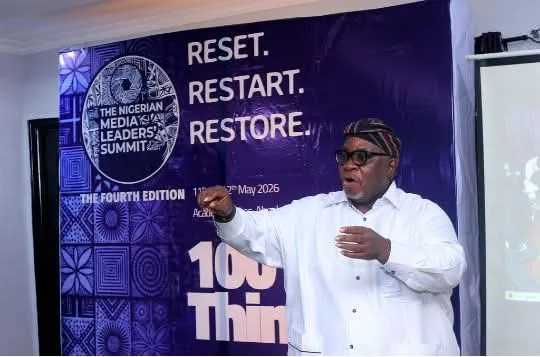
On February 26, 2026, I received an invite from Taiwo Obe, founder of The Journalism Clinic, to the 4th edition of the Nigerian Media Leaders’ Summit. The event was scheduled for May 11 and 12, 2026, in Abeokuta, Ogun State. By April 29, 2026, we were in a WhatsApp group getting real-time updates. Then came the logistics.
The organizers’ attention to detail was evident from the inception because it delivered first-class logistics. Partnering with the Nigerian Railway Corporation (NRC), they secured a dedicated “conference coach” for delegates from Lagos state. Some of us boarded at Mobolaji Johnson Station, Ebute-Metta, while others joined at Babatunde Raji Fashola Station, Agege, for the early-morning trip to Abeokuta on Monday, May 11, 2026. Similar solid arrangements were made for delegates coming from other parts of Nigeria.
We stepped off at Wole Soyinka Train Station in Abeokuta to find two air-conditioned coastal buses already waiting. On arrival at Academy Suites, the summit venue, our pre-tagged luggage was delivered straight to our rooms by the hotel’s facility team. We went straight to the summit hall. No time was wasted at all.
The convener’s keynote, Reset, Restart, Restore: 1001 Things, set the tone. He urged us to trade “pressing lamentations” for deadlines. “We cannot continue to manage decline,” he said. “It’s time for recalibration and resurgence. What no longer works must be changed; what still works must be protected,” he charged.

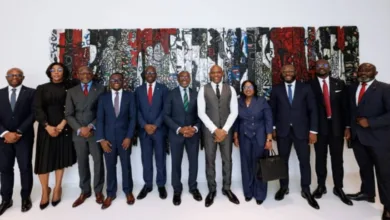
Delegates then split into four cluster groups: Revenue and Sustainability; Audience and News Distribution; Newsroom and Trust; and Technology and AI. Delegates self-selected themselves into groups, a choice that fostered frank discussion and peer learning. Furthermore, that choice deepened engagement, and sparked richer interaction. Each cluster presented its discussions for cross-group critique with cross-group feedback sharpening the ideas.
Day Two focused on “Restart and Restore,” translating proposals into commitments. We moved from diagnosis to resolutions, with practical, actionable solutions for the industry’s toughest challenges. The consensus was clear: execution, not rhetoric, will rewrite Nigeria’s media story.
The final day started with cultural immersion. The coastal buses returned us to Professor Wole Soyinka Train Station for the trip back to Lagos. Before departure, we paid courtesy visits to Iwe Irohin house, the palace of the Alake of Egbaland and the ancestral home of the late Apala music legend, Alhaji Ayinla Omowura, aka Hadji Costly.
What unfolded in Abeokuta makes one thing clear: The Journalism Clinic is actively redefining Nigeria’s media landscape because it created a space where decades of experience met fresh perspectives. The summit brought together veterans from print, digital, and broadcast with a new wave of innovators. The exchange of ideas was candid and generous.
A central takeaway: we must rebuild credibility with skeptical audiences and meet them across multiple platforms without losing our identity. Media practitioners were encouraged to be transparent in all their dealings. This is besides exhibiting full disclosure at all times.
The core question we kept coming back to: How do we win back trust, meet genuine audiences wherever they may be, and stay profitable? The focus was practical solutions, not a mere talk-show. The 4th Nigerian Media Leaders’ Summit proved that intentional design, frank dialogue, and follow-through can reset media industry. I’m already counting down to the 5th edition.