Amaechi: The man at the periphery who claims he’s the live wire of everything — by Olabode Opeseitan
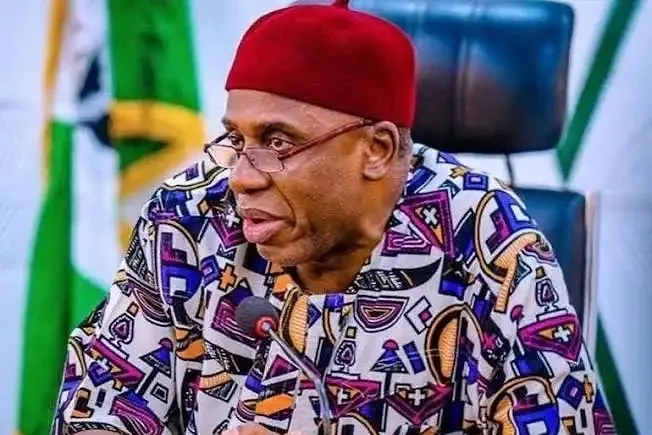
He did not conceive the port. He did not build the party. He was present, but presence, as the record shows, is not the same as the central figure.
There is a particular species of politician found abundantly in Nigerian public life. This is the man who, having spent decades in the corridors of power, mistakes longevity for legacy, volume for veracity, and the patience of his audience for unlimited credulity.
Rotimi Amaechi, former Governor of Rivers State, former Minister of Transportation, and now a peripatetic aspirant in search of a ticket, is perhaps the most industrious practitioner of this dark art. His recent interview with Daily Trust was less a political statement than a masterclass in what the Yoruba call “alaileko”: the man whose upbringing failed to teach him where he ends and where others begin.
The question this piece asks is not whether Amaechi is unintelligent in the clinical sense. The question is whether he possesses the political intelligence that separates the statesman from the showman: the wisdom to know what can be verified, what history has already recorded, and what will, in the fullness of time, be placed beside the facts and found catastrophically wanting.
The Port That Wasn’t His
Let us begin with the Lekki Deep Sea Port.
In the interview, he was unequivocal: “I started and completed it,” he said of the $1.5 billion facility, presenting himself as the sole author of its implementation. He framed it as a monument to his stewardship as Minister of Transportation. The facts, unfortunately, expose his vanity.
The Lekki Deep Sea Port has its roots in a Lagos State Government initiative that predates Amaechi’s ministerial tenure by well over a decade. As far back as February 27, 2002, during Asiwaju Bola Ahmed Tinubu’s governorship, the project received presidential endorsement, with Lekki Port LFTZ Enterprise Limited named as the concessionaire: the very foundation of a port that Amaechi now claims as his achievement. Federal Executive Council approval followed only on May 14, 2014, a constitutional requirement, since port development sits on Nigeria’s Exclusive Legislative List, making Federal Government participation through the Nigerian Ports Authority a procedural necessity rather than a substantive contribution. The Concession Agreement Amaechi presents as his monument was executed on December 12, 2018, on the back of a framework that Lagos State had spent sixteen years building. The port was commissioned in January 2023: twenty-one years after Tinubu’s government first secured presidential backing for it.
The project was physically built and financed by China Harbour Engineering Company (CHEC) and the Tolaram Group, with the China Development Bank providing medium- and long-term funding that ran into hundreds of millions of dollars. Under that December 2018 Concession Agreement, the equity structure was unambiguous. Private investors held 75%. The Lagos State Government held 20%. The Federal Government of Nigeria, represented by the Nigerian Ports Authority, the institution Amaechi actually represented, held precisely 5%.
Pause there. A public officer whose agency held 5% equity in a project he neither conceived, nor financed, nor physically built, and whose foundational framework was laid sixteen years before he arrived at the table, presented himself to a national audience as its core author. He was the man at the edge of every table who claims he cooked the meal.
One might charitably call this a misremembering. One might, more accurately, call it the brand of audacity that flourishes only when a man has gone so long without serious public interrogation that he mistakes the absence of accountability for the presence of fact. The claim is demolished not by partisans but by the Nigerian Ports Authority’s own official records, China Development Bank press releases, and Lagos State equity filings. Would any politically intelligent man have staked his credibility on ground this hollow?
“I Set Up the APC”
The claim about the APC is more philosophically interesting, if no less dishonest.
Amaechi declared, “I have no regrets setting up APC.” The choice of words is revealing. Not “we set up,” but “I set up.” This is an unabashed annexation of collective history.
Before his nPDP group joined the party, the APC’s 2013 coalition was a broad church: the merger of the ACN, CPC, ANPP, and a faction of APGA, convened through the collective political machinery of Tinubu’s Southwest network, the Northern establishment consolidated around Muhammadu Buhari, and the institutional weight of elder statesmen across several geopolitical zones.
Amaechi, at best, was a mobilizer in one state among thirty-six. He was also a man politically embattled at the time, fighting a protracted war with the Jonathan federal government. His contribution was real but narrowly regional, and the votes APC garnered in Rivers State in 2015 told the fuller story. It did not constitute the foundation, the architecture, or the roof of what became the APC. A man of genuine political intelligence, aware of how recorded history works, would have said “we”. The deployment of “I” is either untreated megalomania or deliberate fabrication. Neither is a recommendation for higher office.
To understand the full audacity of this claim, it helps to know where Rotimi Amaechi began. He started his working life as a clerk at PAMO Clinic in Port Harcourt, owned by his then-mentor and political godfather, Peter Odili. When the military announced a transition programme in 1998, it was Odili who encouraged him to obtain a PDP form to contest a seat in the Rivers State House of Assembly, representing Ikwere constituency. When Odili won the governorship, it was Odili who guided Amaechi’s emergence as Speaker of the Rivers State House of Assembly, a position he held for two terms. From Speaker, he became Governor for two terms, and from Governor, he became a two-term minister under Buhari, a relationship cemented, according to widely reported accounts, by his role in co-funding the APC’s 2015 presidential campaign generously. Every rung of Rotimi Amaechi’s political ladder was built by someone else. Yet here he stands, telling Nigeria he set up the APC.
The Hungry Man Who Wasn’t
Perhaps the most tone-deaf performance in his public declaration, which was somehow, reflected in the Daily Trust interview, was Amaechi’s assertion that he was a “hungry man.” The statement is not merely false. It is an insult dressed as relatability. No politically intelligent figure, particularly one who by multiple credible accounts mobilised delegates with American dollars in the 2022 APC presidential primary, would conscript the language of destitution for personal branding.
Former APC National Chairman Adams Oshiomhole was unsparing: “Ask Amaechi how much he gave every delegate. Amaechi can’t look me in the eye and deny it.”
The moral arithmetic here is merciless. A man who spreads American banknotes at a party convention turns around to tell the poor of Nigeria that he is one of them. Whether conscious or unconscious, the contempt embedded in this performance is precisely the kind that has, across generations, drained Nigerian public discourse of its dignity and its people of their faith in those who lead them.
Then there is the “I don’t like money” mantra: a signature Amaechi refrain, repeated with the audacity of a man who has clearly decided that if a myth is told often enough, it becomes biography. The 2022 primary was the full-length rebuttal.
There is one more detail from that interview that deserves its own moment. When the interviewer pressed him on whether he would shelve his presidential ambition and accept the number-two position on his party’s ticket, his response was not a measured deflection or even a firm but dignified refusal. It was this: “Will you stop that nonsense?” He followed it by pointing his finger at the interviewer and saying, “Don’t you ever.” On a national platform. To a journalist doing his job.
The implications are worth sitting with. If a television camera and a national audience could not restrain this instinct, one is left to wonder what the corridors of power, away from public view, looked like for those who served under him. More pressingly, this is the man who presents himself as a candidate to govern a nation of over 233 million people, a country that requires, above all else, a leader whose temperament can absorb pressure without fracturing into contempt. What the Daily Trust interview revealed was not a statesman tested by a hard question. It was a man undone by one.
Nepotism and the Mirror He Refuses
Amaechi lays the charge of nepotism and poor governance at President Tinubu’s door with the assurance of a man apparently unburdened by self-reflection. He served, not at the margins but at the senior table, of the Buhari administration: documented extensively by policy research institutions and civil society monitoring groups as the most ethnically and regionally concentrated federal government in Nigeria’s post-military history.
The Federal Character Commission’s provisions were flouted with near-systematic consistency. Security council memberships, agency headships, and strategic economic appointments were concentrated in a manner that provoked sustained national outrage across the South and the Middle Belt.
The Tinubu administration, by contrast, has extended federal recognition to constituencies that the Buhari years rendered invisible: Southern Kaduna communities, minority groups in Kogi and Kwara, and other historically underserved blocs. These are appointment records, verifiable in the Federal Character Commission’s own filings, not rhetorical claims.
President Tinubu is not a man given to public condemnation of his predecessor. Precisely because of his personal respect for Buhari, he has adopted the deliberate posture of inheriting both the assets and the liabilities of the administration that preceded him: an act of political maturity that is rare in any democracy, let alone one as combustible as Nigeria’s. He did not inherit the debt and the dysfunction to weaponize them. He inherited them to fix them. The contrast with Amaechi’s conduct is instructive. One man governs. The other grieves publicly and loudly that he is not the one governing.
And while Amaechi amplifies his grievances in the press, his fellow Rivers State son, Nyesom Wike, offers a quiet tutorial in what political intelligence inside a government actually looks like. As a minister in the Tinubu administration, Wike has expanded his leverage well beyond any single portfolio, securing infrastructure, appointments, and federal presence for his region through the unglamorous but effective work of governance participation. He is building a legacy. Amaechi is broadcasting toxicity.
The Economy He Left Behind, and the One Being Built
The Buhari government’s economic record is not a matter of partisan interpretation. It is a matter of institutional ledger. Nigeria’s fiscal trajectory under Buhari, its debt accumulation, its chronic foreign exchange dysfunction, its deepening poverty indices, was catalogued not by opposition figures but by the World Bank, the IMF, and the African Development Bank. Amaechi was not a bystander to that record. He was a senior cabinet voice in producing that record.
What the Tinubu administration inherited, and what it has done with that inheritance, is now a matter of documented global assessment. The World Bank reported that Nigeria’s economy grew at its fastest rate in nearly a decade in 2024. The fiscal deficit fell from 5.4% of GDP in 2023 to 3.0% in 2024. National revenue doubled, from N16.8 trillion to N31.9 trillion. In April 2025, Fitch upgraded Nigeria’s long-term foreign-currency issuer default rating from B- to B, revising its outlook from Negative to Stable. Fitch has since affirmed the rating twice, most recently in April 2026.
The investment numbers tell the most compelling story, and they are worth reading slowly. Capital, unlike politicians, does not lie. It follows credibility, and it flees incompetence with a ruthlessness that no media interview can disguise. In 2022, Nigeria recorded a net negative Foreign Direct Investment of minus $186.79 million, as a dollar liquidity crunch drove capital out of the country. Foreign Portfolio Investment that year stood at $2.44 billion, reflecting what little confidence remained. By 2023, in the uncertain atmosphere of a presidential transition, FDI recovered nominally to $1.87 billion while portfolio investment fell to $1.15 billion, a historical low. Then the reforms began to register. In 2024, FPI rebounded sharply to $8.38 billion. In 2025, it exploded to $19.74 billion: portfolio investment alone accounting for 85% of all imported capital into Nigeria that year, with FDI adding a further $923 million. That $19.74 billion figure is not a government press release. It is the verdict of international institutional investors who move money, not mouths. They assessed the Tinubu reform agenda and responded with the only currency that matters in global finance: commitment.
Beyond the macroeconomic data, the administration has introduced programmes that define what government is actually for. The Nigerian Education Loan Fund (NELFUND) has disbursed over ₦242.4 billion in zero-interest student loans to approximately 1.388 million students across 288 tertiary institutions: a scheme that previous administrations discussed endlessly in theory and never once operationalised in practice. The Electricity Act of 2023 restructured Nigeria’s power sector in ways no prior government dared attempt, decentralising generation, transmission, and distribution to states. Primary health centres are being rehabilitated at scale, from basic infrastructure restoration to equipment upgrades that return dignity to rural healthcare. Gas pipelines are nearing completion across the federation.
Legacy debts, the kind that choked the previous administration’s fiscal headroom and crowded out every developmental impulse, are being systematically retired. The Lagos-Calabar coastal highway and the Sokoto-Badagry expressway represent the most ambitious road infrastructure programme in decades, spanning fourteen states and opening corridors of commerce that previous administrations treated as aspirational fiction.
Know Your Mates
There is a final matter that must be addressed with candour, because clarity, not humiliation, is the object here.
Amaechi has a habit of constructing his political castle in the air and then ascending it to measure himself against Asiwaju Bola Tinubu. This is a comparison so asymmetric it borders on political self-harm.
Tinubu built a political structure from Lagos that reshaped Nigeria’s democratic map across three decades: a structure so durable that it survived federal persecution, judiciary manipulation, and the full weight of incumbency deployed against it, and still delivered a presidential mandate. It is a record built brick by brick, election by election, crisis by crisis. Amaechi has struggled, repeatedly, to hold his own state. He does not present any credible matchup with Tinubu, whose contemporary is Peter Odili, the man who gave Amaechi his first political opportunity, and who served as Rivers State Governor between 1999 and 2007, the exact same years Tinubu governed Lagos. Odili and Tinubu are political contemporaries: men who stood on the same national stage, in the same era, and built legacies that outlasted their tenures in entirely different ways. For Amaechi to now present himself as Tinubu’s political equal is not merely an overreach. It is the upstart who equates himself with his father’s agemate. In Yoruba, there is only one expression for that: “omo alaileko.”
The Yoruba have a proverb for this moment: “k’elegbe m’egbe”, know your mates. Understand your league. Locate yourself accurately on the field before you choose your opponent. Political intelligence begins precisely there: not in the grand claim, not in the borrowed credit, not in the performative hunger, not in the castle built on other people’s foundations, but in the honest reckoning with who you are, what you actually built, and what the record, inexorably and permanently, says.
A live wire powers a system. A fringe decorates its edges. The difference is not a matter of opinion. It is a matter of physics.