Accord asks court to dismiss suit seeking disqualification of 2027 candidates

The Accord Party has asked the Federal High Court in Abuja to dismiss a lawsuit seeking to invalidate the nominations of all its candidates for the 2027 general election.
The party, through its counsel, Musibau Adetunbi, filed a preliminary objection challenging the competence of the suit instituted by its National Secretary, Adebukola Ajaja.
The case, marked FHC/ABJ/CV/2524/2026, seeks to disqualify the party’s candidates over alleged irregularities in the submission of their names to the Independent National Electoral Commission (INEC).
In its objection, Accord argued that the suit was statute-barred because it was filed outside the 14-day period prescribed by law.

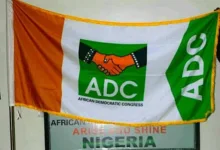


It also challenged the jurisdiction of the court, maintaining that the dispute concerned the nomination of candidates, which it described as an internal affair of the party.
The party further argued that Ajaja lacked the legal standing to institute the action because she was not an aspirant in the party’s primary election held on May 29, 2026.
It also faulted her for failing to join the affected candidates in the suit, insisting that they were necessary parties whose interests could be directly affected by the outcome.
Another ground of objection was that the action was premature because Ajaja allegedly failed to serve the party with the mandatory 21-day pre-action notice.
On the substantive dispute, Accord maintained that INEC had recognised the outcome of its primaries and that the names of successful candidates were submitted to the commission in the prescribed format.
It rejected Ajaja’s argument that the submission was invalid because she did not sign the forwarding letter containing the candidates’ names.
According to the party, its National Chairman and National Organising Secretary were authorised to sign and submit the list in the absence of the national secretary.
It cited Article 18 of its constitution and Regulations 25(3) and 28(2) of INEC’s guidelines to support its position.
“The national executives of the party expressly authorised the fourth defendant to co-sign with the 3rd defendant. No wrong has been done,” the party argued.
Accord also relied on the Supreme Court judgment in Jegede v. INEC, insisting that the signature of its national chairman alone was sufficient to validate the submission.
“The plaintiff’s case is still bound to fail because the signature of the national chairman suffices on the authority of Jegede v. INEC,” it said.
In a counter-affidavit, the party’s National Chairman, Maxwell Mgbudem, accused Ajaja of abandoning her responsibilities, alleging that she had stopped attending meetings of the National Working Committee (NWC).
Mgbudem said the national secretary was absent from the three most recent consecutive NWC meetings, prompting the committee to authorise him and the National Organising Secretary, Ibe Kenechukwu ThankGod, to jointly sign the forwarding letter to INEC.
He said the decision was reached at an NWC meeting held on May 24, 2026, under his leadership.
According to him, he and ThankGod subsequently transmitted the names of the party’s successful candidates electronically to INEC after the May 29 primaries, except for the presidential election, for which no primary was conducted.
The chairman maintained that, as the party’s chief executive, he had the authority under Article 18 of its constitution to sign documents on its behalf and delegate responsibilities to other party officers.
He also explained that electronic submission of INEC forms did not require physical signatures on every document, given the large number of political parties and candidates participating in the 2027 elections.
Mgbudem further questioned Ajaja’s handling of party funds and disputed her claims about the number of court cases arising from the primaries.
He said at least 16 lawsuits had been instituted in connection with the exercise.