Poverty capital of the world, By Peter J. Okocha
Data and statistics are good for planning, governance and policy implementation purposes. To those who have not the necessary tools to analyze them they could be confusing or they just throw the figures around without background knowledge, facts and variables. Using such complex information like global data, GDP, income per capital, PMI, IPI, MPC, etc., are good only for the reasons stated above but what is most important to the common man is how it is felt in real life. So, refuse to be bamboozled by public ideological intellectuals and political pundits who play around with statistics.
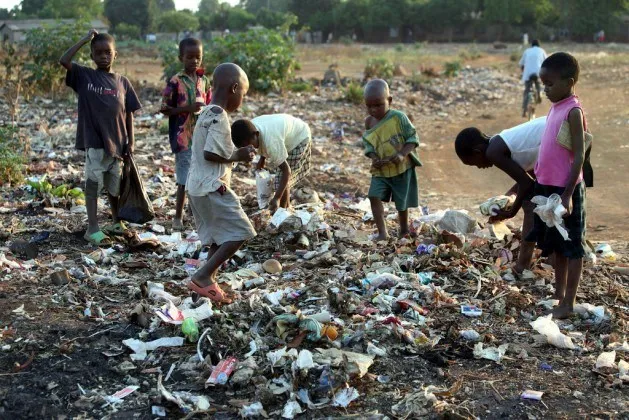
It was a national chorus that Nigeria has become (meaning it was not before) the poverty capital of the world, even though the most public noise is by those who landed us into the mess. If not for politics tell me when you ever or last heard of poverty index before 2018? Where were we before in the ranking. What they never tell you is the relativity of poverty: population size, public infrastructure, healthcare and education access, things we do not easily associate with the economy like public defecation and environmental hygiene. Have you ever wondered why really poorer countries with a population of less than 10 million never fit into the list? And why bigger populated countries with same or lesser challenges like the small ones fall into the list? This is because a large population without proper resource management and utilization constitutes greater percentage poverty.
The most recent and updated 2022 report considered the economic effect of the COVID-19 pandemic, and extremely poor people living on N800-1000 per day (less than $2 per day). Think of what you or your family eat or spend in a day and you will get the bigger picture. Bear in mind that rural people have no measurable or calculable income yet they form the total population used to calculate a country’s poverty rate. According to the NBS, Nigeria had 87 million people in extreme poverty in 2018, compared with India’s 73 million, so we became the poverty capital of the world. The new 2022 data shows that India has overtaken Nigeria with about 83 million compared to Nigeria’s 70 million, representing 6 percent of a population of 1.3 billion and 33 percent of Nigeria’s over 200 million people. The figures say a lot. More effort should be put into proper domestic data gathering and analysis, as NBS POVERTY CAPITAL OF THE WORLD
Data and statistics are good for planning, governance and policy implementation purposes. To those who have not the necessary tools to analyze them they could be confusing or they just throw the figures around without background knowledge, facts and variables. Using such complex information like global data, GDP, income per capital, PMI, IPI, MPC, etc., are good only for the reasons stated above but what is most important to the common man is how it is felt in real life. So, refuse to be bamboozled by public ideological intellectuals and political pundits who play around with statistics.



It was a national chorus that Nigeria has become (meaning it was not before) the poverty capital of the world, even though the most public noise is by those who landed us into the mess. If not for politics tell me when you ever or last heard of poverty index before 2018? Where were we before in the ranking. What they never tell you is the relativity of poverty: population size, public infrastructure, healthcare and education access, things we do not easily associate with the economy like public defecation and environmental hygiene. Have you ever wondered why really poorer countries with a population of less than 10 million never fit into the list? And why bigger populated countries with same or lesser challenges like the small ones fall into the list? This is because a large population without proper resource management and utilization constitutes greater percentage poverty.
The most recent and updated 2022 report considered the economic effect of the COVID-19 pandemic, and extremely poor people living on N800-1000 per day (less than $2 per day). Think of what you or your family eat or spend in a day and you will get the bigger picture. Bear in mind that rural people have no measurable or calculable income yet they form the total population used to calculate a country’s poverty rate. According to the NBS, Nigeria had 87 million people in extreme poverty in 2018, compared with India’s 73 million, so we became the poverty capital of the world. The new 2022 data shows that India has overtaken Nigeria with about 83 million compared to Nigeria’s 70 million, representing 6 percent of a population of 1.3 billion and 33 percent of Nigeria’s over 200 million people. The figures say a lot. More effort should be put into proper domestic data gathering and analysis, as NBS uses 200 million population and $1 extreme poverty while WPC uses 215 million and $2 respectively, and these variables matter, including the inability to factor in non-consumable or non-valued assets and the unbanked population whose mostly not-salaried income are never considered.
This is not to minimize the poverty in the country (not at all) but to put things in a broader and proper context. The reality is that we have not properly harnessed our human and natural resources for national development amidst rising population growth. With high advantage of land, labour and entrepreneurship unable to attract, mobilize and utilize capital the challenges will remaining (3:1 factors of production). More importantly, now that India has retained its global poverty capital ranking, meaning Nigeria improved, has it changed or bettered your living conditions? Will the usual suspects now invite us to the choir practice to fine-tune the new chorus or they will enter voicemail or insist that it either doesn’t matter or it is insignificant? That is why you should be less concerned about political manipulation of statistics and brace up for/with the reality of your life. Refuse to be manipulated.
You can do well to get more information from the website of the World Poverty Clock (WPC).
PJO uses 200 million population and $1 extreme poverty while WPC uses 215 million and $2 respectively, and these variables matter, including the inability to factor in non-consumable or non-valued assets and the unbanked population whose mostly not-salaried income are never considered.
This is not to minimize the poverty in the country (not at all) but to put things in a broader and proper context. The reality is that we have not properly harnessed our human and natural resources for national development amidst rising population growth. With high advantage of land, labour and entrepreneurship unable to attract, mobilize and utilize capital the challenges will remaining (3:1 factors of production). More importantly, now that India has retained its global poverty capital ranking, meaning Nigeria improved, has it changed or bettered your living conditions? Will the usual suspects now invite us to the choir practice to fine-tune the new chorus or they will enter voicemail or insist that it either doesn’t matter or it is insignificant? That is why you should be less concerned about political manipulation of statistics and brace up for/with the reality of your life. Refuse to be manipulated.