A democracy without stable parties is a democracy in danger — by Segun Showunmi
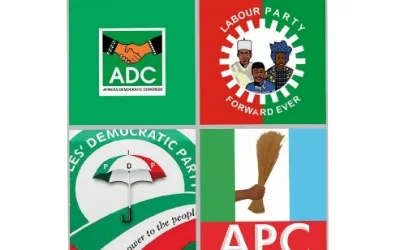
It is becoming painfully clear that Nigeria has failed to build sustainable political parties. What we have instead are fragile platforms vehicles for ambition rather than institutions anchored in ideology, discipline, and internal order.
The cumulative damage caused by unstable and inconsistent political leadership has pushed our democracy into a precarious state. The crisis is not merely electoral. It is structural.
Across the political spectrum, parties are destabilized, fractured by internal disputes, and entangled in endless litigation. The courts are burdened with matters that should never have left party meeting rooms. Internal disagreements over leadership, congresses, primaries, and constitutions routinely escalate into judicial battles. The judiciary is dragged into political management, and when outcomes displease factions, the same judiciary is accused of bias or conspiracy.
The result is a subtle but dangerous delegitimization of institutions.


This crisis is not inevitable. It stems from a failure of political actors to respect their own rules. Party constitutions are drafted, then ignored. Agreements are made, then violated. Processes are manipulated, then challenged. Individuals who should be capable of sitting around a table to resolve internal disputes instead weaponize the courts, the media, and public sentiment.
In doing so, they strain not only their members but the entire democratic ecosystem.
The Illusion of Stability
The ruling party may appear immune, but immunity in Nigerian politics is usually temporary. A party sustained primarily by incumbency power rather than ideological coherence or internal discipline is not structurally stable. It is merely advantaged.
Look closely at many of those who migrate into dominant parties. Their antecedents often reveal a pattern: they weaken previous platforms, abandon them at moments of crisis, and reappear under a new banner. There are exceptions individuals who genuinely build and nurture political institutions but they are fewer than the scavengers who treat parties as disposable instruments.
A multiparty democracy cannot survive if parties are treated as taxis boarded when convenient, abandoned when expedient.
The 2027 Question
Predicting electoral outcomes requires skill. But what is far more troubling than who wins in 2027 is what happens the morning after.
If parties remain hollow, factionalized, and personality-driven, then electoral defeat will not be absorbed institutionally. It will be personalized. And personalized defeat is combustible. In such a climate, even routine transitions of power become destabilizing events.
A serious democracy requires anchors institutions capable of balancing power regardless of who occupies office. Political parties are meant to be those anchors. They aggregate interests, articulate ideology, discipline members, and provide continuity beyond electoral cycles.
When parties collapse into ambition vehicles, that anchor disappears.
The Deeper Imbalance
Nigeria also faces a demographic and civic imbalance: a vast population, limited civic education, and widespread political opportunism. In such an environment, parties should function as filters moderating extremes, refining policy, and channeling public energy into structured governance.
Instead, many parties amplify disorder. They mirror the very instability they should contain.
This is how a nation begins to wobble not through a single catastrophic event, but through gradual institutional decay. Governance falters. Party systems weaken. Courts are overburdened. Public trust erodes. The entire multiparty framework begins to look ornamental rather than foundational.
Rebuilding the Political Architecture
So the question must be asked: shall we begin the process of rebuilding our political parties?
Rebuilding requires:
• Respect for internal party constitutions
• Transparent and credible primaries
• Ideological clarity, however modest
• Internal dispute-resolution mechanisms that function
• Leadership capable of subordinating personal ambition to institutional survival
Without these, Nigeria’s multiparty democracy risks becoming a perpetual contest of unstable coalitions, each election cycle more volatile than the last.
A Moment for Reflection
These thoughts arise not from cynicism but from concern. Nigeria is already fumbling governance. We cannot afford to fumble the very architecture that sustains democratic competition.
If parties cannot endure beyond personalities, if they cannot resolve disputes without judicial warfare, if they cannot build platforms that outlive ambition, then the promise of multiparty democracy becomes hollow.
A country of Nigeria’s scale, complexity, and potential cannot drift without institutional anchors.
The rebuilding must begin before the next crisis forces it upon us.
-Showunmi is PDP Governorship aspirant in Ogun State and founder of
The Alternative Movement