Africa, OTT and business model problem — by Aderemi Ogunpitan
Africa does not have an OTT problem. Africa has a business model problem.
For too long, too many platforms entered the continent with imported assumptions. Build the app. Buy the content. Push subscriptions. Scale fast. Hope the market catches up.
That may sound like strategy in a boardroom. In reality, it has often been an expensive misunderstanding of how African audiences actually consume media.
Let us be honest. Africans love video. They watch, share, discuss, remix, and obsess over content every day. Demand is not the problem. Attention is not the problem. Culture is not the problem.




The problem is asking a price-sensitive, mobile-first audience to carry a heavy subscription model in economies where the real cost of streaming includes not just the monthly fee, but data, devices, payment friction, and shrinking disposable income.
That is where the model begins to crack.
Too many OTT players behaved as though Africa would simply imitate mature markets. It has not. And it should not. This is not Europe. This is not North America. This is a different consumer environment, a different advertising environment, and a different digital behaviour pattern. Yet many platforms kept trying to force the same playbook onto a different field.
The result? Weak monetisation, strained margins, rising content costs, and businesses scaling ahead of commercial reality.
In Africa, ambition without monetisation is not boldness. It is burn.
The industry now needs to face an uncomfortable truth: pure subscription-led OTT is too narrow a foundation for most African markets. Unless your content is so exclusive, so addictive, and so essential that people will fight through every payment and data barrier to get it, the model will keep underperforming.
The smarter path is clear. Stop treating OTT as a closed box. Start treating it as an ecosystem.
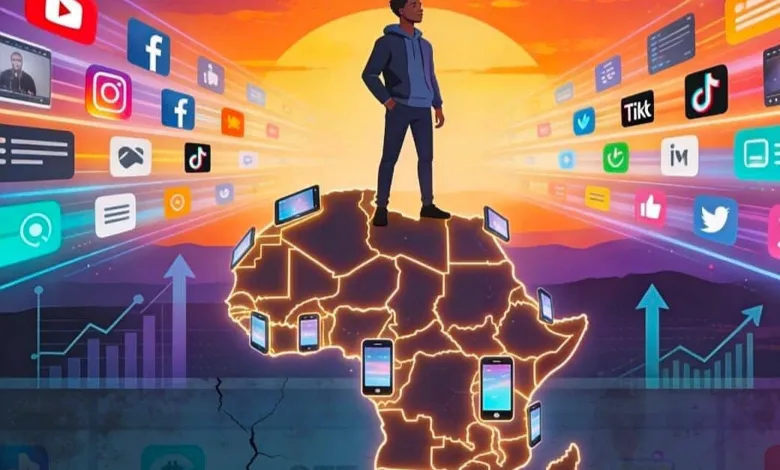
African streaming businesses should use YouTube, Facebook, Instagram, TikTok, X, and other social platforms not as side mirrors, but as growth engines. That is where attention lives. That is where discovery happens. That is where communities form. That is where formats are tested. That is where brands can meet audiences at scale. And that is where revenue can start before the hard sell of subscription even begins.
YouTube, especially, should sit at the heart of this strategy. It gives African media businesses scale, search visibility, recommendation power, ad revenue, audience insight, and global reach. It allows a company to monetise attention first and convert loyalty later.
That is a far more realistic path than building a shiny app and waiting for subscriptions to rescue the economics.
This does not mean owned OTT platforms have no future. It means their role must change. Use them for premium value: exclusive long-form content, archives, live events, niche communities, early access, learning, loyalty, and higher-end brand partnerships. But do not ask them to do all the heavy lifting from day one.
The next African OTT winners will not be the ones who spend the most. They will be the ones who understand the market best. They will build attention first, monetise in layers, and grow with discipline. They will stop copying global models lazily and start designing for African reality intelligently.
That is not retreat. That is strategy.