Power, language, and hypocrisy in global politics — by Wale Bakare
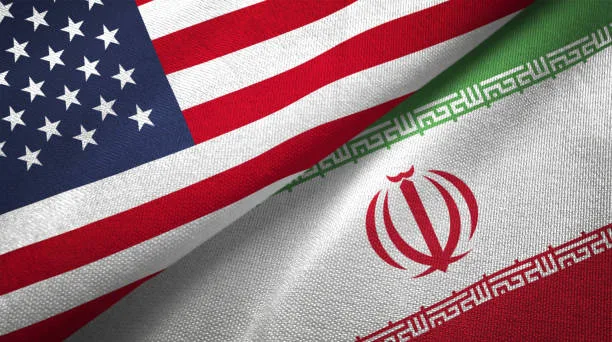
There is a certain way some conversations are framed that tells you, long before the facts are examined, what conclusion you are expected to arrive at. Language, in this regard, is never innocent. It is curated, polished, and deployed with surgical precision. Much like the tendency in some societies to dismiss serious offences as “something everybody does,” global political language has its own accepted distortions—words whose meanings shift depending on who is speaking, and more importantly, who is being spoken about.
One of such words is “regime.”
In its purest academic form, the word simply describes a system of governance. But in the hands of Western media and governments, it has evolved into something far more loaded. It is no longer merely descriptive; it is evaluative. It is not just about how a country is governed, but whether that governance is deemed acceptable. Thus, we hear constantly about the “Iranian regime,” the “Syrian regime,” or the “North Korean regime.” Yet, when the same conversation turns to countries like Saudi Arabia or the United Arab Emirates—states that are hardly democratic by any liberal standard—the language softens. Suddenly, we are dealing with “governments,” “leaders,” and “allies.”
This distinction is not accidental.



It reflects a deeper geopolitical reality where language is used as an instrument of power. Countries that fall outside the orbit of Western strategic interests are framed in ways that subtly undermine their legitimacy. The term “regime” suggests something temporary, something suspect, something that perhaps ought not to exist. On the other hand, “government” conveys normalcy, stability, and implicit acceptance. The difference between the two is not rooted in objective standards of democracy or human rights, but in alignment with Western interests.
This is where the hypocrisy becomes difficult to ignore.
If the standard for being labelled a “regime” is authoritarianism, then consistency would demand that Saudi Arabia—an absolute monarchy with no national elections—be routinely described in the same manner as Iran. Yet this is rarely the case. The reason is not far-fetched. Saudi Arabia is a key ally, a major oil supplier, and an important strategic partner. To label it a “regime” would be to introduce a discomforting tension into that relationship. And so, the language adjusts itself accordingly.
The implications of this linguistic selectivity are profound. Public perception is shaped not just by what is reported, but by how it is reported. When audiences repeatedly hear about the “Iranian regime,” they are subtly conditioned to view Iran as inherently problematic, even illegitimate. The word itself carries a quiet suggestion that change—perhaps even forced change—would be justified. Hence, the willful killing of its leaders does not induce the same revulsion amongst Western citizens as it otherwise should, regardless of the collateral damage of innocent civilians. Conversely, when Saudi Arabia is referred to simply as a “government,” the same audience is less likely to question its internal political structure or human rights record with equal intensity.
It is, in essence, a form of narrative engineering.
To understand how far this selective framing can go, one needs only to consider the murder of Jamal Khashoggi inside the Saudi consulate in Istanbul. Here was a journalist, dismembered in a diplomatic facility in what can only be described as a gruesome and premeditated act. The global outrage was immediate, but remarkably contained. There were strong words, certainly. Some sanctions were imposed. Yet, the fundamental relationship between Saudi Arabia and Western powers remained largely intact. Business continued. Arms deals persisted. Diplomatic ties endured.
Now, imagine for a moment that the same act had been carried out by a country like Rwanda—or Iran, for that matter.
Would the response have been the same?
It is difficult to believe so. The language alone would have shifted dramatically. We would not be reading about the “Rwandan government” being implicated in the killing of a journalist. It would be the “Rwandan regime,” acting with brutality and impunity. Calls for sanctions would likely have been louder, broader, and more sustained. Diplomatic isolation might have followed. There would be no careful balancing of outrage with strategic interest. The moral clarity would have been absolute.
There is a point at which selective language gives way to selective outrage, and selective outrage reveals something deeper—an uncomfortable truth about how power operates in the international system. It is not merely that some countries are called “regimes” and others “governments.” It is that the rules themselves seem to bend, stretch, or disappear depending on who is involved.
Take the issue of nuclear weapons.
Israel is widely understood to possess nuclear weapons, yet it has never signed the Nuclear Non-Proliferation Treaty (NPT), nor does it officially acknowledge its arsenal. This posture of “strategic ambiguity” has been tolerated, even quietly supported, by Western powers. There are no sanctions. No urgent calls for inspections. No threats of pre-emptive strikes. Instead, the justification offered is rooted in Israel’s security concerns—its history, its geography, its perceived vulnerability.
Now place Iran beside Israel in this equation.
Iran is a signatory to the NPT and does not officially possess nuclear weapons. Yet it has faced decades of sanctions, inspections, and increasingly, military action on the suspicion that it might be pursuing nuclear capability. Its facilities have been sabotaged, its scientists assassinated, and its leadership openly discussed as legitimate targets. The contrast is stark.
One state possesses nuclear weapons outside the global non-proliferation framework and faces little consequence. Another is accused of pursuing them and is subjected to extraordinary pressure, including acts of war. If the principle is non-proliferation, then the application is anything but consistent.
And so, the question arises: is the issue truly about nuclear weapons—or about who is allowed to have them?
The same pattern emerges when we examine the use of force.
The United States has justified interventions in countries like Venezuela as necessary steps to restore democracy, using language such as “removal” or “arrest” of leadership. Yet stripped of its rhetorical covering, such actions raise fundamental questions about sovereignty. A foreign power enters another country, removes its leader, and seeks to reshape its political future.
Now consider Russia’s invasion of Ukraine.
Here, the language shifts dramatically. It is described—rightly—as an illegal invasion, a violation of sovereignty, and an act of aggression. Western governments have rallied in unity, framing the conflict as a defence of international law. But if sovereignty is inviolable, it must be inviolable in all cases. We are, however, living (if we are still so lucky) witnesses to the rewriting of the international law books where the rules-based world order is fast giving way to the supremacy of pure brute force where might dictates what is right. If invading another country is unacceptable, then the identity of the invader should not determine the level of outrage.
Yet in practice, it often does.
Russia claims it is protecting its borders and strategic interests. The United States has made similar arguments in various contexts, citing security concerns and pre-emptive defence. The difference lies not in the structure of the argument, but in who is making it—and who has the power to enforce their narrative.
This asymmetry feeds directly into public perception. When Western media consistently frames one set of actions as legitimate and another as illegitimate, audiences internalise these distinctions. The world is divided not along objective lines of legality or morality, but along lines of alignment. Allies are afforded nuance; adversaries are denied it.
In the end, the distinction between “regime” and “government” tells us less about the countries being described and more about the priorities of those doing the describing. It is a reminder that in global politics (and to a great extent, history), the story is rarely just about what happened. It is about who is telling it—and why.