Atiku’s Mambilla’s mess — by Kunle Oyatomi
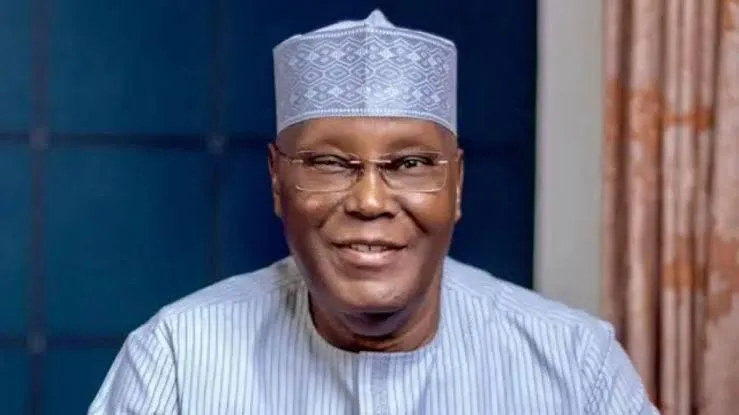
There is no doubt that former Vice President Atiku Abubakar’s presidential ambition has suffered another major setback. As has become a recurring habit, however, he is unlikely to give up his quest to live the life he sees the President living.
But Nigerians are very smart people and would be intentional about whom they confer with political power. They understand the controversies that have followed the name Atiku Abubakar, and the recent development surrounding the Mambilla hydropower project has also bolstered that perception.
Before now, many Nigerians used to define the former Vice President with three words: desperation, inconsistency and a crook. His long-running ambition to become president, despite several unsuccessful attempts, speaks to that desperation. His political inconsistency is also evident in his movement from the Peoples Democratic Party, PDP, to the All Progressives Congress, APC, back to the PDP and now the African Democratic Congress, ADC.
The current controversy surrounding Atiku and the Mambilla project, which is both interesting and troubling, has deepened the perception among some Nigerians who view him as an old “crook” who cannot be trusted with public resources.

Like the destructive power of a bomb, details of Atiku and the Mambilla project, which emerged a few days ago, had shocked his campaign team. While looking for a way to rescue themselves and their master, Atiku’s spokesperson, Phrank Shaibu, hurriedly issued a press statement, saying the APC wants to manufacture a tribunal verdict to indict him. Instead of countering the ICC and clearing his name; again, his desperation to become a president pushed him to the APC.
That said, let us return to the details of Atiku and the project. The latest development on the project occurred on Thursday last week, when the ICC ruled in favour of Nigeria in the $2.35 billion claim brought by Sunrise Power over the Mambilla hydropower project.
The tribunal dismissed Sunrise’s claim that Nigeria had breached its contractual obligations under the settlement agreement and the addendum.
It also directed Sunrise and its promoter, Leno Adesanya, to refund Nigeria’s $11.8 million in legal fees.
Adesanya had told the tribunal that the $500,000 he transferred to Jennifer Douglas, then Atiku’s wife, in January 2003, was part of a foreign-exchange transaction carried out for the former Vice-President.
The payment was made on January 30, 2003, less than four months before Sunrise was purportedly awarded a build-operate-transfer contract for the Mambilla hydropower project through China Castle Investments Limited, an offshore company controlled by Adesanya.
But there is something so annoying about this development. It is the fact that Atiku, who recently hired a Washington-based lobbying firm to look into allegations connected to a 1993 civil forfeiture proceeding involving funds linked to Tinubu, also has a past in which he compromised Nigeria’s best interests for personal, fiduciary gain.
As the ICC Paris Tribunal stated: “There is a close connection in time between the moment the USD 500,000 payment was made to the wife of Vice-President Abubakar on January 30, 2003, and the alleged award of the BOT contract to Sunrise on May 22, 2003.”
Who would have thought that a man fighting so hard to establish the truth in the country and for the sake of integrity also has numerous questions to answer about his past dealings, particularly when it affects the country?
Just to educate those who may not have known the significance of the Mambilla project, the proposed 3,960MW Mambilla Hydroelectric Power Project in Taraba State was expected to become one of Nigeria’s largest power projects, significantly increasing the country’s generation capacity.
More so, it was designed to provide a steady supply of renewable hydroelectric power by harnessing the Donga River on the Mambilla Plateau in Taraba State. Its completion could have contributed to improved power supply and reduced reliance on expensive and polluting diesel generators.
During a fireside conversation with veteran entertainer and activist, Charles Oputa, popularly known as Charly Boy, at the public presentation of Charly Boy’s foundation and memoir, 999: A Memoir in Tribute to Late Justice Chukwudifu Oputa, former President Olusegun Obasanjo called Atiku, his Vice, a mistake.
When Charly Boy sought further clarification on whether he was expressingly referring to Atiku, Obasanjo replied: “My vice president. I don’t know what name you want to give him, but my vice president, I mean that. The man I picked as my running mate, my number two. If I had known him as I came to know him later, I would not have picked him.”
Now, the big question is: do Nigerians want a man described by his boss as his greatest mistake to lead them? To do that, they must consider the record, controversies and unresolved questions that have followed Atiku’s long political journey. If they cannot, then they should be ready to witness the greatest calamity that would befall the country.
Oyatomi Esq., a former Editor of Sunday Vanguard 1999-2010, Author FINGERPRINTS: Nigeria’s Tangled Transition to Nationhood 2008, is currently on the Board of Independent Media & Policy Initiative, a Think-Tank based in Abuja