Buharinomics: Reviewing the high and low points of the Buhari administration’s economic policies
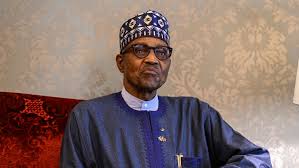
Former President Muhammadu Buhari, who died at 82 in a London clinic on Sunday, was a former military ruler and self-styled converted democrat.
After three failed attempts, Buhari achieved a historic victory in 2015, becoming the country’s first opposition candidate to defeat an incumbent. Re-elected for another four-year term in 2019, he handed over power to President Bola Tinubu in 2023. In this report, WESTERN POST examines his major economic reforms and their impact on Nigerians.
Criticisms & Challenges
On the day Buhari left office, Nigerians were asked what they would remember most about his time in office, and all respondents said, ‘A bag of rice.’
The reason was simple: rice is the staple food in the country.
A standard 50 kg bag of rice, which could help feed a household of between eight and 10 for about a month, cost just N7,500 under President Goodluck Jonathan, who was defeated by Buhari in 2015, but went up to N60,000 naira a few years afterwards. This led to hunger in many parts of the country.
The huge surge in the price of rice was because, in an echo of his earlier policy as a military ruler, Buhari banned the importation of rice to encourage more Nigerian farmers to grow the crop.
However, local producers were unable to meet the high demand, and many of his supporters lost their faith in him.
At one point, even Buhari’s wife threatened not to support his re-election bid. Buhari never accepted that his measures as military ruler were repressive or overzealous. The Nigerian macroeconomy in 2015-2023 remains one of the most interesting in the country’s democratic history.
The Consumer Price Index (CPI) reported by the National Bureau of Statistics (NBS) in March 2023 indicated that Nigeria’s inflation rate accelerated to a new 17-year high of 22.04 per cent.
When President Buhari took over from Jonathan, Nigeria had single-digit inflation, which stood at nine per cent. But as of December 2022, the NBS put the rate at 21.34 per cent.
Inflation, which led to daily increases in the prices of goods and services, resulted in the naira losing more than half its value.
As of April 2023, the country’s CPI for food stood at 640 points compared to 176.3 points it was in May 2015.
Specifically, the index gauges the average fluctuation in prices of major food items.
According to the World Bank, Nigeria has one of the highest inflation rates globally and the seventh highest in sub-Saharan Africa in 2022.
The unprecedented and forceful seizure of cash by the Central Bank of Nigeria (CBN) policy under embattled Godwin Emefiele between 2022 and 2023 plunged Nigerians into penury and a lot of hardships. Businesses collapsed, and many people lost their daily living.
There is a massive road infrastructure gap, and there is also a massive gap in terms of healthcare, provision of electricity and even in the removal of subsidies, causing Nigerian workers and the citizens to become poorer than they were before 2015.
The Revenue Mobilisation and Fiscal Allocation Commission (RMAFC) had disclosed that Buhari, Vice President Yemi Osinbajo, state governors and their deputies earned ₦651 million as hardship allowance in the last eight years.
According to the RMAFC document obtained from the website of the RMAFC, Buhari was entitled to N1.76 million annually as hardship allowance.
From the calculation done by the RMAFC, Buhari would have earned N14.08 million as hardship allowance within a period of eight years of his presidency.
The vice president was entitled to N1.52 million annually as hardship allowance, which simply implies that in eight years, Osinbajo would have been paid N12.16 million.
The RMAFC document also disclosed that a state governor is entitled to N1.11 million annually as hardship allowance, while a deputy governor gets the sum of N1.06 million each year.
Within eight years, from 2015 to 2023, the hardship allowance of the 36 state governors is estimated at N319.68 million. Their deputies earned ₦305.28 million cumulatively amid unemployment and poverty increasing sharply (multidimensional poverty affected 133 million by 2022).
Recall that Buhari, in his inaugural address in 2015, said, “Nigerians will not regret that they have entrusted national responsibility to us. We must not succumb to hopelessness and defeatism. We can fix our problems,” left behind an inheritance fraught with many posers.
The late Buhari, who had premised his campaign on security, economy and anti-corruption, is believed to have failed on the promises eight years later.
He didn’t resolve Nigeria’s age-old socio-economic challenges, yet under his watch, the nation witnessed record-breaking retrogression on several Human Development Indices (HDI) while leaving the nation’s economy from nine per cent inflation to 22 per cent.
The country’s Gross Domestic Product (GDP), which stood at $493.3 billion when he took over office in 2015, declined to $440.8 billion in 2021. The growth rate in 2022 stood at 3.10 per cent, down from the 3.40 per cent recorded in 2021.
On Foreign Direct Investment (FDI) at the time Buhari came to power, Nigeria had attracted $98 billion in the previous administration but got $89.4 billion in Buhari’s eight-year reign, according to an NBS report.
Within the period under review, foreign reserves rose from $29.59 billion in 2015 to $35.31 billion as of April 20, 2023.
The administration before Buhari had 6.07 per cent growth in four years, but the NBS said the economy grew by an average of 1.40 per cent under this Buhari’s administration.
Power sector
On power generation, as of 2015, Nigeria was generating 4,949 megawatts, but it had dropped to 2,409.50 megawatts.
According to the Association of Power Generation Companies, the national grid collapsed 98 times under Buhari’s watch. It observed that total power generation capacity loss in the energy sector rose to N1.76 tn between 2015 and 2022.
Debt profile
Upon assumption of office, Buhari inherited a debt profile of approximately $10.32 billion in 2015, but he is leaving behind total debts of about ₦77 trillion.
The administration of ex-President Obasanjo’s government inherited $28 billion as foreign debt in 1999. When it left in 2007, it was $2.11 billion after successfully securing a write-off of the London and Paris Club debts.
The Yar’adua government added $1.39 billion to what they inherited, while the Jonathan government incurred an additional $3.8 billion.
The continuous spending also saw capital expenditures from the government rise from N1.44 trillion in 2017 to N1.66 trillion in 2018 and N1.17 trillion in 2019, which meant that fiscal efforts were also increasing money in circulation at a frenetic pace.
As cash injection expanded, inflation started to whip up, considering that the “Ways and Means” (which should have been emergency support in a period of recession) became a staple of the Federal Government.
When the economy started to recover, COVID-19 struck in early 2020, collapsing global economies to which Nigeria was not immune.
With the lag in demand coupled with a slip in oil prices, Nigeria entered another round of economic recession with negative growth of -3.62 per cent in Q3 2020. The Federal Government offered an N500 billion economic stimulus programme, with the CBN providing targeted support rising to over N150 billion.
Achievements:
Economic Recovery and Growth Plan (ERGP)
However, the late Buhari scored his administration high on the implementation of high-impact projects nationwide aimed at satisfying the desires of the people, saying his administration is on track to deliver on its mandates before the end of its tenure in May 2023.
In his eight years in office, he implemented a wide range of economic reforms aimed at stabilising and restructuring Nigeria’s economy, especially in response to oil price shocks, inflation, insecurity, and currency instability. His economic agenda was largely driven by the Economic Recovery and Growth Plan (ERGP) and other sectoral reforms.
Between 2017 and 2020, the ERGP and Buhari-led government diversified the economy away from oil dependency. The key focus of the ERGP was macroeconomic stability, agriculture, energy, industrialisation, transportation, and ease of doing business.
FOREX
He reformed the foreign exchange market through multiple exchange rates, which the CBN under Emefiele maintained. Despite criticism, Buhari resisted calls for full currency devaluation.
Capital controls and import restrictions (e.g., 41 banned FX items) were introduced to conserve reserves. These policies hurt investor confidence but helped preserve FX reserves temporarily.
In collaboration with CBN, he launched the Anchor Borrowers’ Programme (ABP) scheme to support smallholder farmers and boost local production of rice, maize, and cotton, among others. Local rice production increased, but food inflation remained high due to insecurity, poor logistics, and border closures.
Infrastructural development
Also, he invested heavily in roads, railways, bridges, and airports using public funds and Chinese loans. Part of the key products includes Abuja–Kaduna rail, Lagos–Ibadan rail, the Second Niger Bridge, and road rehabilitation. Infrastructure spending was one of the administration’s consistent priorities.
TSA
He launched the Treasury Single Account (TSA) to consolidate government revenue and reduce leakages in Social Investment Programs (N-SIP) and hike Value Added Tax (VAT) from five per cent to 7.5 per cent.
In the power sector, he was focused on completing privatisation of the power sector and improving transmission. Part of the power reforms was the Siemens “Presidential Power Initiative” to expand grid capacity.
Between 2019 and 2020, the Nigerian government under Buhari shut land borders to curb smuggling and boost local production. Although the reforms helped rice farmers short-term, they worsened food inflation and trade with neighbours.
Petroleum Industry Act (PIA)
He passed the Petroleum Industry Act (PIA) in 2021, after almost 20 years of delays. The PIA was aimed at restructuring NNPC, promoting transparency, and attracting investment. NNPC became a limited liability company (NNPC Limited) in 2022. However, fuel subsidy removal was deferred until Buhari’s final days, passing the burden to the Tinubu administration.
Buhari’s economic reforms were a blend of state-led interventions, infrastructure development, and selective liberalisation. While some gains were recorded in agriculture, public finance, and infrastructure, the reforms were largely undermined by policy contradictions, weak private sector trust, insecurity, and insufficient structural diversification.