Former Nato chief warns UK’s national security ‘in peril’
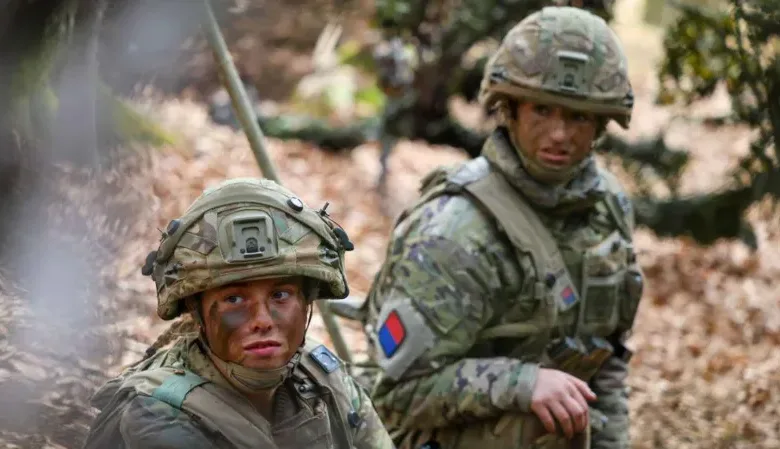
The UK’s security is “in peril” and the country’s leaders have shown “corrosive complacency” towards defence, a former Nato secretary general has said.
Lord George Robertson, the former Labour defence secretary who wrote the government’s Strategic Defence Review (SDR), has accused “non-military experts in the Treasury” of “vandalism”, in a speech to be delivered on Tuesday.
The government has promised to publish a 10-year defence investment plan to fund the SDR’s vision but it has been repeatedly delayed.
A government spokesperson said the SDR was “backed by the largest sustained increase in defence spending since the Cold War, with a total of over £270 billion being invested across this Parliament”.

In a directly political intervention, Lord Robertson – who is now a key government adviser – will warn in a speech later: “We cannot defend Britain with an ever-expanding welfare budget.”
Speaking in Salisbury, Lord Robertson will say: “We are underprepared. We are underinsured. We are under attack. We are not safe… Britain’s national security and safety is in peril.”
He will add: “There is a corrosive complacency today in Britain’s political leadership. Lip service is paid to the risks, the threats, the bright red signals of danger – but even a promised national conversation about defence can’t be started.”
The Prime Minister, Sir Keir Starmer, previously said the investment plan was on his desk and was being “finalised”.
A defence official highlighted the government’s target to spend 3% of GDP on defence by the end of the next parliament.
There have been reports that the plan has been held up over disagreements within government about how to fund it, as well as how to fund existing defence plans.
Lord Robertson’s apparent suggestion that the government could find money by reducing the welfare bill may be one that is shared by the Chancellor Rachel Reeves.
However, the government’s efforts to make savings in that area had to be abandoned last year, following fierce opposition from backbench Labour MPs.
A government spokesperson said: “We are delivering on the Strategic Defence Review to meet the threats we face.”
Speaking to the BBC’s Today programme, General Sir Richard Barrons – another of the SDR report’s authors – agreed with Lord Robertson that “there’s an enormous gap between where we have to be to keep the country safe in the world we now live in and where we actually are”.
Following Russia’s invasion of Ukraine and the re-election of US President Donald Trump, the UK, along with other Nato countries, has come under pressure to boost its defence spending.
Trump has threatened to withdraw US support for Nato, and Sir Richard said in future the organisation will see “a European Nato doing much more and the US doing much less”.
“The US cavalry is not coming to bail us out now,” he added, as he warned that the Royal Navy and Royal Air Force were “too small and too undernourished”.
The head of the British military told the BBC last month he rejected accusations that the UK had been ill-prepared for the current conflict in the Middle East, which began on 28 February with a joint US-Israeli attack on Iran.
There were questions as to why a Royal Navy destroyer was not deployed to the region sooner since the US military build-up in the region had been going on for months.
Chief of the Defence Staff Sir Richard Knighton said it was “probably the most dangerous time of the last 30 years”.
Prime Minister Keir Starmer has repeatedly ruled out direct UK military involvement in the conflict.
Refusing to join Trump’s military blockade of the Strait of Hormuz, Starmer told the BBC: “My decision has been very clearly that whatever the pressure – and there’s been some considerable pressure – we’re not getting dragged into the war”.
“That’s not in our national interest, because I’m not going to act unless there’s a clear, lawful basis and a clear thought-through plan.”
On Tuesday, the prime minister will chair the first meeting of the Middle East Response Committee – a group set up to replace the ad-hoc emergency Cobra meetings that had been held to discuss the war in Iran.
The committee will look at the diplomatic side as well as the economic fallout from the conflict.
Credit: BBC