Funeral rites in Igbo tradition — by Kelechi Deca
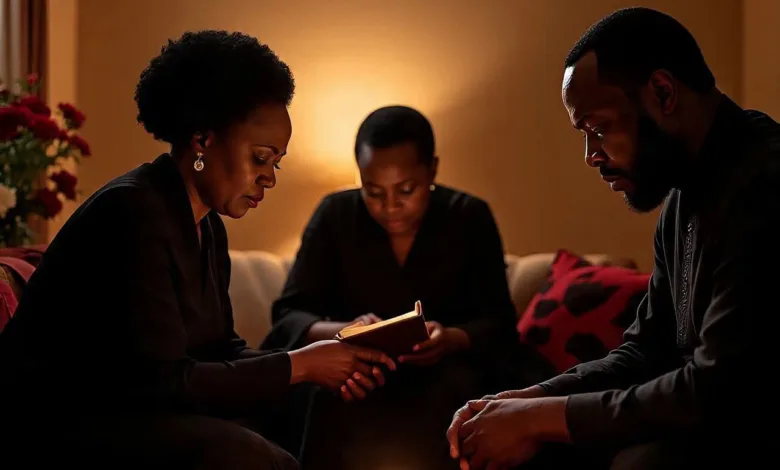
One of the most teary aspect of the modern day apostles of traditional revivalism in Igboland is that it is driven mostly by arrogant ignorance.
Tellingly, a culture that does not adapt is a culture that is dead. But a culture that abandons its core is a culture that has been conquered.
Dynamism, therefore, is the Igbo way of life: moving forward, but always looking back to ensure the flame of our nous is carried safely into the future.
Undoubtedly, there funeral rites in Igboland are like “Ọkwa mba” observed with noticeable variations, which is why lumping entire Igbo race into a single box is wrong.




However, in these variations, there are certain observable customs, and beliefs that cuts across Igboland even as it accommodates all variations while maintaining principal core values shared by all.
In Igboland, in the days of my grandfather and also my father which I still uphold strictly, it is considered a profound taboo for an older person to bury or mourn a younger one.
It is a searing pain that drives deep into the soul of a parent to bury his or her child. That is why our parents always pray that we bury them, and not the other way round. And our people regard it as utmost wealth if a parent lived and is buried by her children thus “Onye nwa liri baara uba”
This stems from the deep-seated Igbo belief in the sacredness of life and the “natural order,” where death is expected only at an old age. A young death is seen as a disruption of that order, and a terrible tragedy.
This is because the death of a younger person mocks the “Natural Order”: Igbo tradition holds that elders must not bury the young, it should be the other way around.
Those days, the highest tangible element of productivity was growing up to have a family. That was why if the death of an unmarried young person happens, the weeping is subdued and cut short.
Close neighbours and relatives would rally round the parents and hush them into subdued quietude, forcing them to dry their tears, because such a child “kụrụ” the parents “ahịa.” It used to be a very a angry spectacle.
A visit to the family where such death happened reveals a thick air of heavy grieving but little sounds. Women groaning in deep, guttural utterances and periodic mournful cries.
While the men are expected to be men by bottling their pains in very low whimpering, or muttering, followed by deep keening. It was such a soberly painful presence to be in.
But today, the painful passage of a 25 year old young man or young lady brings a different vibe. The corpse that should be rushed home and buried would be deposited in the mortuary while burial plans start in earnest. They would even print posters. Posters for a 25 year old?
Last Christmas, we lost a very promising young man in his 30s who died without a child of his own. During the burial, I was shocked to see men in their 70s eating and demanding for their preferred brands of drinks.
Shockingly, when I went inside their living room to commiserate with the mother, I saw two titled men sitting comfortably at the dining table devouring Akpụ with Ọkazi soup and Okporoko. I couldn’t withstand such an abominable presence. They even had few bottles of beer on the table waiting to be addressed.
These are the quality of minds who are titled men in Igboland today. Men who should know that it is Arụ to eat at the burial of someone this young. And these are part of the crowd that is always shouting “let’s go back to our roots.”
I do not think many Igbo people would call for the return to “our roots” if they know some of the things expected of them, which obviously they lack the personal discipline to abide by.
According to Igbo cosmology, the spirit of a young person who dies prematurely is believed to be restless and bitter thus any form of merriment can provoke this spirit, as it implies you are happy they are gone.
Instead, the mood is somber and restrained to appease the spirit and prevent it from cursing the family.
A young death is an “abomination” (aru) that breaks the cosmic cycle. Merriment would be seen as treating this tragic disruption as a celebration, which is an insult to the ancestors who uphold that order.
It denies the raw grief of loss because feasting and dancing are reserved for successful lives, those who married, had children, and achieved status.
For a young person who died without fulfilling these milestones, celebrations would ignore the parents’ devastating loss and the unfulfilled potential of the deceased.
Our ancestors viewed such show-offism as lacking in empathy because I’m practicing, the community’s role is to weep with the bereaved parents, not distract them with issues regarding food and drinks.
Mourning is quiet, involving wailing and prayer, because the parents have lost their “staff of old age,” they have lost “onye ga ele ha nka,” and it doesn’t matter if food and drinks were provided.
Must you eat anywhere, and everywhere?