Global trade shifts and Nigeria’s AfCFTA opportunity — by Olisa Agbakoba & Collins Okeke
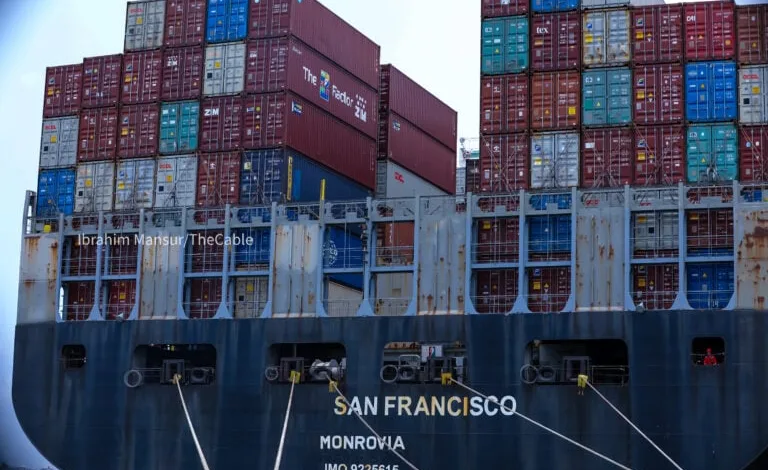
The international trade architecture established after World War II is undergoing its most significant transformation since the Treaty of Westphalia. This shift includes the erosion of multilateral consensus, de-dollarisation trends, the rise of alternative trading blocs, and the emergence of new economic powers. The authors analyse the implications of these changes for Nigeria’s strategic positioning within the African Continental Free Trade Area (AfCFTA).
Nigeria faces a critical choice: to passively adapt to global trade fragmentation or to actively lead the institutionalisation of AfCFTA, positioning Africa as a coherent bloc in the emerging multipolar trading system. The authors recommend policy interventions such as appointing a dedicated Trade Ambassador, developing a comprehensive National Trade Policy Framework, and building supranational AfCFTA institutions modelled on European Union structures.
The post-war trade order, built on the WTO, Bretton Woods institutions, and the US dollar, is weakening. The WTO faces paralysis, and major powers pursue preferential agreements outside it. De-dollarisation efforts and alternative payment systems, led by China, Russia, and India, are reshaping global commerce. China’s Belt and Road Initiative and the Regional Comprehensive Economic Partnership highlight emerging trade blocs, while AfCFTA represents Africa’s largest free trade area by number of countries, yet implementation challenges persist.
Fragmentation is driven by geopolitical competition, digital economy divergences, populist backlash against globalization, and the energy transition. Nigeria remains highly dependent on oil exports and imports most manufactured goods, making it vulnerable. AfCFTA, however, offers opportunities for industrialisation, job creation, and continental economic leverage.



To maximise AfCFTA benefits, Nigeria needs institutional reforms, including a Trade Ambassador, a Trade Policy Analysis Unit, and a cadre of skilled negotiators. A National Trade Policy Framework should integrate trade, industrial, fiscal, and monetary policies with clear objectives: reducing oil export dependence, increasing manufactured exports, boosting intra-African trade, and growing the manufacturing sector.
Trade facilitation reforms are crucial, including port modernisation, streamlined customs procedures, digitalisation, and reduced cargo clearance times. Nigeria should assert leadership in AfCFTA institution-building, establishing a Court of Justice, Trade Facilitation Authority, Competition Authority, and Development Finance Mechanism, complemented by an Arbitration Centre to resolve disputes.
Nigeria’s contribution also includes exemplary implementation of AfCFTA, removal of non-tariff barriers, clear tariff procedures, and customs training. Acting alone, Nigeria cannot match China, India, or the EU, which leverage regional blocs. Nigeria’s path to economic power requires leading the construction of robust continental institutions, strengthening the African Union and regional communities, and championing continental transformation.
The authors conclude that Nigeria’s historic role in the 21st century is to complete the vision of African unity articulated by Kwame Nkrumah and pursued by Muammar Gaddafi, building a strong, institutionally cohesive Africa capable of defending its interests in a multipolar world. This requires decisive leadership and visionary policy-making.
Dr Olisa Agbakoba, SAN, is a senior partner at OAL, while Collins Okeke is a partner at OAL.