Lagos Polo: The club that outlasted everything — by Kio Amachree
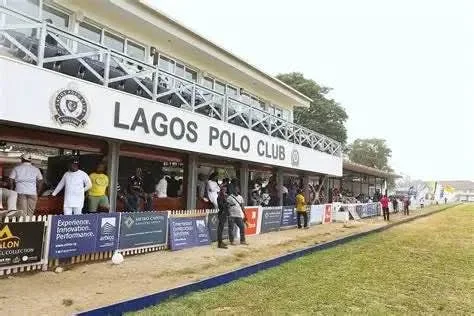
Six decades at the Lagos Polo Club — and what it taught me about power, race, and who Nigeria really belongs to
I judge the economic health of Nigeria by observing the membership of the Lagos Polo Club.
When a club keeps on surviving the ups and downs of Nigerian politics and economic development, one should ask: why do the members never seem to be affected by the sad state of affairs in Nigeria?
When I first joined the polo club in 1965, it was ninety percent white — mostly British expatriates. It sounded British. It looked British. The Nigerian membership was mostly senior military and police officers and a few rich, powerful Nigerians. I would feel uncomfortable walking into that club for many years. Even after I graduated from college, the British influence was still very much in control. Walking in was still met with stares. Why is that Black man in our club?
In the sixties and seventies it was terrible — the feeling of being a foreigner in a polo club situated in the middle of Lagos, Nigeria.
Coming from boarding school in England into this environment of colonial mentality was an eye-opener. Because England was undergoing serious cultural changes and the end of empire was accepted by the high and mighty. They once controlled the empire. But in Nigeria the remnants of the British colonial system still lingered, still ran many companies, and still lived very good lives in beautiful homes in Ikoyi and Victoria Island.
I grew tired of listening to angry white men talking about how backwards the locals were and how they would never survive without the white man.
On one visit to the Lagos Polo Club in 1974, I got into an altercation with a drunk British managing director who was openly racist and used that same boring line: Without us British, you people would not know how to run Nigeria.
By this time I had a reputation as a troublemaker. I was the Nigerian guy who was a student at Eton College — the most elite upper-class school in England — and this upset their social status. Why? Because I was the one Nigerian who lived and drank and played with the British aristocracy, the very people who looked down on the middle-class company managers who could not make it in London and so were shipped out to Nigeria. I was friends with Dukes, Princes, Lords and Ladies. They were nobodies from Yorkshire.
I was nicknamed Government by the loudest of them all — Colin Edwards — a British businessman who was very close to General Hassan Katsina, his adopted father. The story went that Colin’s parents were about to return to England following the end of their tour in Kaduna, where Colin was born. He was so native, so Hausa, loved Nigeria so much that he ran away to the General’s home in Kaduna and begged him to take him in as his son. He refused to return to England. He spoke fluent Hausa and played polo like he was born to play the sport, making him very popular with the locals. The General took him in, coming to an agreement with his parents to school him in England, but he would continue to be Nigerian in all things. As the General became more and more powerful, so did Colin. When he moved to Lagos, he was the de facto king of the British at the Polo Club.
The others didn’t like him. To them he was just as bad as a Nigerian — loud, boisterous, threw his weight around, and spent more time speaking Hausa than English. But his godfather was the number two man in Nigeria, so he was protected by the Nigerian political system, who saw Colin as a Hausa man with blonde hair.
Colin called me Government and he would mimic my upper-class British accent. But we got on. We Nigerians liked Colin. We did not like the others. And when they tried it on with me, they had a problem — because of the Eton connection. Britain is a class system country, and to this day I have never met any cockney at any of the dinner parties my friends throw in London or wherever they live. They only socialise within their social class, with people who sound like them when they talk English.
It was an interesting time to be in Nigeria. I saw a lot. I learnt a lot.
And I have watched that club go from one extreme to what is called today the Yoruba country club.
I could write a book on the Polo Club. But the last time I visited, the security guard refused me entry.
“Oga, I no know you. You no be member. This be big man club. I no fit let you in.”
I looked at that northern security guard doing his job — not at all intimidated by my presence — and left for Sweden.
A relic of the past. Irrelevant in today’s Nigeria, where money talks and history walks.
–Amachree | Stockholm, Sweden | President, Worldview International